Sign in. It’s quick, free and it’s up to you.
An account is an optional way to support the work we do. Find out more.
Sign in. It’s quick, free and it’s up to you.
An account is an optional way to support the work we do. Find out more.
LAST UPDATE | 2 hrs ago
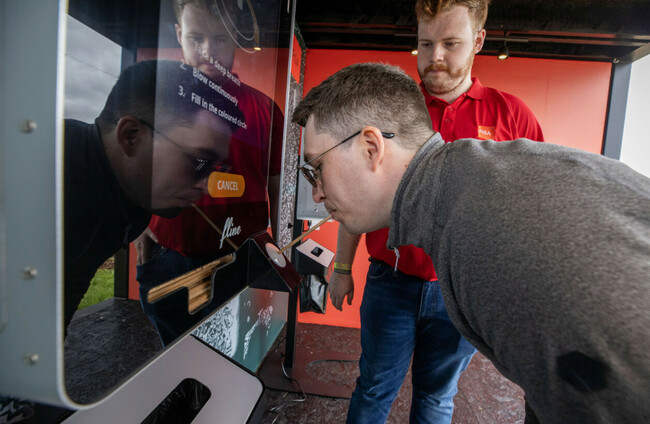
THE ROAD SAFETY Authority (RSA) is to spend around €1.5 million on the deployment of breathalyser terminals in hotels and pubs around the country to allow motorists to check if they are over the legal driving limit before going behind the wheel.
The move has been blasted as “disgraceful” and “neglectful” by Social Democrats transport spokesperson TD Aidan Farrelly, who said it was “a sharp turn away from a zero-tolerance approach to drink-driving”.
The RSA said the purpose of the initiative is to raise awareness among adults who consume alcohol and to challenge the perception of when it’s safe to drive.’
It follows a pilot programme last year which revealed how a high proportion of motorists mistakenly believed they were under the legal limit.
The research showed that 45% of people in over 24,000 tests conducted thought they were under the legal limit when their actual breath test results found they exceeded the limit.
The RSA had made breathalysers available at hospitality locations and events across Ireland over a six-month period between August 2024 and February 2025.
The results showed 64% of those who exceeded the blood alcohol legal limit of 0.50g/l had said they were going to drive.
In addition, 77% of those who mistakenly believed they were under the limit had indicated they were going to drive.
The research found young males aged 18-34 were most likely to underestimate their alcohol levels and say they were going to drive.
The RSA has now issued a tender for the provision of 20 terminals which will be deployed across hotels, pubs, golf clubs and large sports venues.
It is estimated the value of the three-year contract will be around €1.5 million, with the potential to extend it for a further two years twice.
The RSA said the terminals will be deployed across a minimum of 12 counties with at least one terminal to be placed in each of the six counties with the highest rate of individuals killed and seriously injured in road traffic collisions. They currently are Monaghan, Donegal, Mayo, Leitrim, Roscommon and Kerry.
“The message every placement serves is ‘never, ever drink and drive,’” the RSA said.
It said the placement, venue type and audience mix of where the terminals will be used will be based on reaching the people most likely to be driving to a venue.
The RSA said hotels would be “the backbone of the fleet” with terminals being used at events and special occasions in hotels where there will be “constant fresh crowds.”
Selection of the specific locations will be based on venues which have a constant turnover of guests, car-dependent patrons and “an encouraging host.”
The RSA also intends that a further 20 “summer” terminals will be deployed between May and September each year at high-profile events such as the Electric Picnic, the Galway Races and the National Ploughing Championships.
The breathalysers use Dräger alcohol sensor technology and provide accurate alcohol readings within 10 seconds.
Users blow into a straw with the results showing if motorists are under or over the limit. If over the limit, the equipment estimates how long it will take before it is safe to drive.
The RSA said the measure was designed to reduce fatal and serious casualties on Irish roads, where 182 people were killed last year – the highest level in the past five years.
It said education and behaviour change were central to reversing the trend.
Criticism
Farrelly said the move “should be stood down”.
“The RSA has plucked an arbitrary figure of 20 terminals to be installed across 12 counties at an estimated cost of €1.5 million,” he said in a statement.
“The message going out to drivers from the RSA should be a simple one – never ever drink and drive, not drink as much as you will get away with, which is what this policy conveys.
“I am deeply concerned with this move by the RSA, and I would question the extent to which the Minister for Transport has been included. If the minister has sanctioned the use of taxpayers’ money on this policy, he ought to be ashamed.
“This approach is neglectful and a sharp turn away from a zero-tolerance approach to drink-driving, as it endorses a narrative that “just the one” is fine. It must be revoked immediately.”
In response, a spokesperson for the RSA said: “The RSA’s message on drink-driving has not changed: if you are drinking, don’t drive.”
They said the purpose of the initiative is not to suggest that any amount of alcohol is safe before driving.
“The €1.5 million figure is the estimated total value of the tender across its potential seven-year duration. This includes deployment at festivals, concerts, sporting and other events as well as 20 terminals proposed for hospitality locations,” they said.
“The RSA has already used interactive breathalysers extensively at major public events, including Malahide Castle, Marlay Park, Electric Picnic and the National Ploughing Championships. The terminals have been used 121,390 times at events to date. The terminals also display road safety messaging and collect information that supports evaluation of the intervention; they are not simply standalone breath-testing devices.
“The tender was published last week following RSA Board approval and is intended to provide a scalable continuation of this road safety intervention. The RSA will continue to reinforce the core message alongside it: never drink and drive, and always plan a safe journey home in advance.”
With reporting from Jane Matthews
To embed this post, copy the code below on your site












have your say