Sign in. It’s quick, free and it’s up to you.
An account is an optional way to support the work we do. Find out more.
Sign in. It’s quick, free and it’s up to you.
An account is an optional way to support the work we do. Find out more.
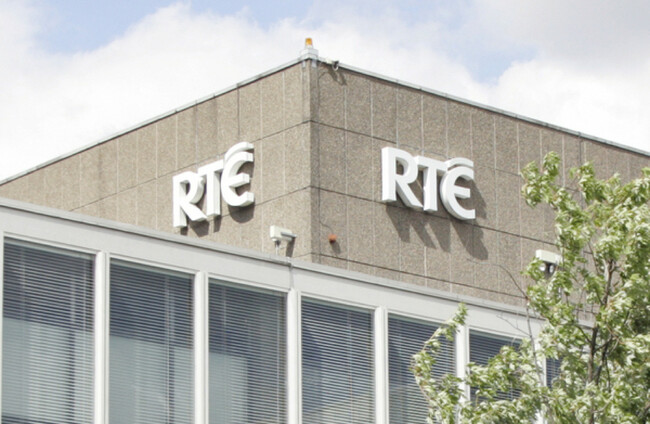
THE OIREACHTAS PUBLIC Accounts Committee has called on RTÉ to reduce its dependence on State funding.
The committee said today it is concerned at how long it is taking for decisions to be made on the future of funding for public service broadcasting and reforms to the TV licence system.
It published a report today with criticisms of RTÉ’s funding model, as well as issues with the gender pay gap and pay for Irish-language staff at the national broadcaster.
RTÉ’s commercial revenue has declined from €158.2 million in 2016 to €134.5 million in 2020.
In that time, exchequer funding to the broadcaster increased from €179.3 million to €197.6 million.
Brian Stanley, the chair of the Public Accounts Committee, said in a statement today: “While solutions need to be found for reforming the TV licence fee system, there may be ways in which RTÉ can decrease its reliance on funding from the Exchequer, and increase funding streams from commercial sources.
“For example, RTÉ does not collect any revenue from content accessed via social media.
The committee is concerned that while exchequer funding to RTÉ has increased from 2016 to 2020, the broadcaster is not doing enough to reduce its dependence on State funding
Stanley said the Department of Culture and Media should engage with RTÉ to explore options for reducing its dependence on state funding, and provide the Public Accounts Committe with a report on their progress by November.
Stanley said: “Reforms of the TV licence system have been recommended twice in recent years; by an Oireachtas Committee in 2017 and the Working Group on the Future Funding of Public Service Broadcasting in 2019.
“The Future of Media Commission, set up in 2020, also examined the matter, including ‘making recommendations on RTÉ’s role, financing and structure’. This report was recently presented to Government and the Committee would like to see the report published without delay so that any implications for public expenditure can be assessed.”
The Future of Media Commission was set up in 2020 to examine the challenges the media faces in Ireland and how they can be addressed.
The Commission was chaired by Professor Brian MacCraith, former president of DCU, and its members include disability activist Sinéad Burke, Professor of media economics Gillian Doyle, and broadcast historian Dr Finola Doyle-O’Neill.
The committee also warned that RTÉ must ensure that its commercial revenue streams, not state funding, are used to cover any liabilities to the exchequer arising from the Department of Social Protection’s investigation into the broadcaster’s use of contractors.
In 2018, an external report commissioned by RTÉ revealed that up to 157 of its employees could have been wrongly classified as self-employed, meaning they lost out on employment benefits.
Stanley said: “The Committee is concerned at the potential loss of revenue to the Exchequer in terms of the PRSI that should have been paid by RTÉ in respect of any contractors found to have been misclassified for PRSI purposes.
“A further amount of PRSI may be liable if any individual was misclassified for PRSI purposes prior to 2015.”
The Committee also examined two issues at RTÉ arising from the 2017 Review of Role and Gender Equality conducted by the broadcaster. The first is the liability to the Exchequer resulting from the use of contractors by RTÉ, while the second relates to the gender pay gap and the remuneration of Irish-language workers at RTÉ.
Stanley the committee is disappointed that RTÉ has not published information in relation to the gender pay gap at the broadcaster since a 2017 review that found such a gap of 4%.
He said: “The Committee recommends that RTÉ publishes information in its accounts on the gender pay gap at the broadcaster, and strives to reduce the gap within an appropriate timeframe.
RTÉ has also committed to conducting a review into the remuneration of Irish-language staff compared with their English-language counterparts.
“As well as gender parity, we further recommend that the Department ensures parity of remuneration for workers at RTÉ regardless of the language through which their work is conducted.”

To embed this post, copy the code below on your site














have your say