Sign in. It’s quick, free and it’s up to you.
An account is an optional way to support the work we do. Find out more.
Sign in. It’s quick, free and it’s up to you.
An account is an optional way to support the work we do. Find out more.
LAST UPDATE | 6 hrs ago

LATE ON FRIDAY evening, the penny finally dropped – that the parading distance from the Drumcree Church to the Garvaghy Road and back to the Orange Hall at Carleton Street in Portadown is too many steps too far.
Just hours after a protest at the Northern Ireland Office in Belfast, UK Secretary of State Chris Bryant banned the parade from walking a route that has been out of bounds for 28 years.
In giving permission for the march, the Parades Commission (that rules on these matters) failed to read the room. Its decision put everything on the line – the policing and political projects plus negotiated accommodations in the wider parading frame. As last week developed, so it became clear that the story was no longer just about the Garvaghy Road – that other disputes could be reopened.
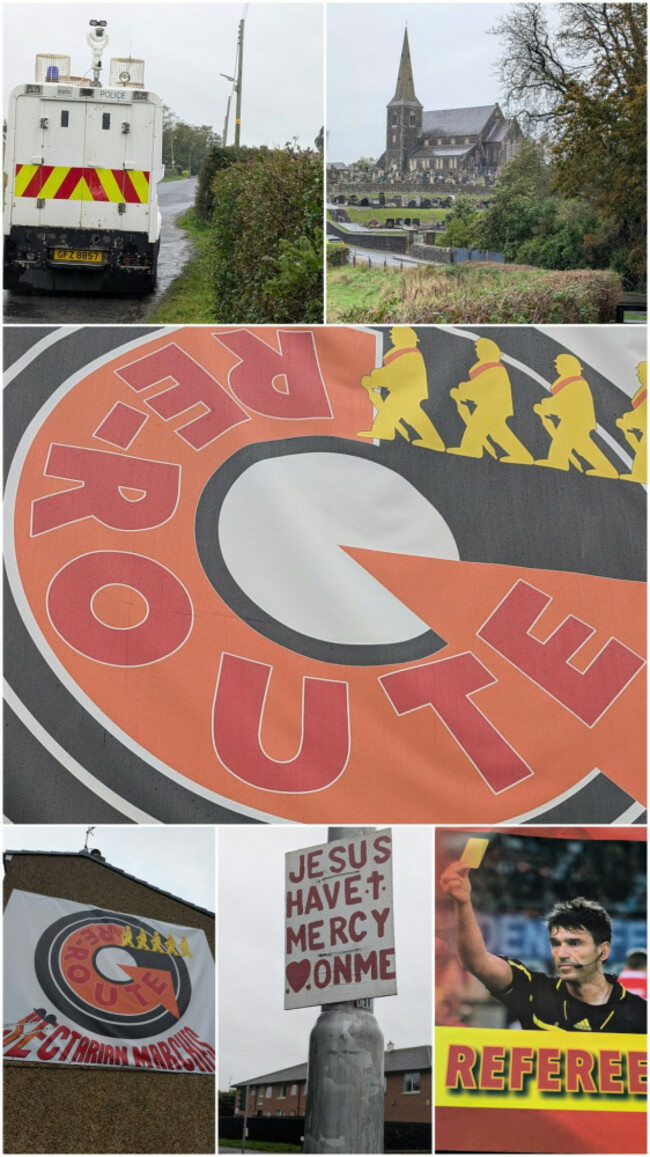
It was PSNI Chief Constable Jon Boutcher who asked Bryant to review the Commission’s ruling.
“I outlined in my letter to the Secretary of State that my current assessment was that all available, lawful and proportionate options to facilitate completion of the procession had been exhausted,” a statement from Boutcher read.
“Any remaining options would have required a substantial public order intervention that was not assessed to be proportionate, and which would have carried an unacceptable risk of serious injury, disorder and a wider contagion effect across Northern Ireland.”
A fortnight ago, a police source had given me a two-word summary of the above when he spoke the words “shit show”.
In the build up to the scheduled parade on 27 September, the PSNI planned for all scenarios. Additional police units arrived from Scotland (what is called mutual aid) and there were restrictions on leave. Given all the history, this was never going to be a Sunday picnic.
For weeks, my own view was this, that even if the Commission allowed the parade, the nationalist community would not. I was reading the tea leaves. I did not need a deep intelligence assessment. Clearly, the Commission was drinking out of the wrong cups.
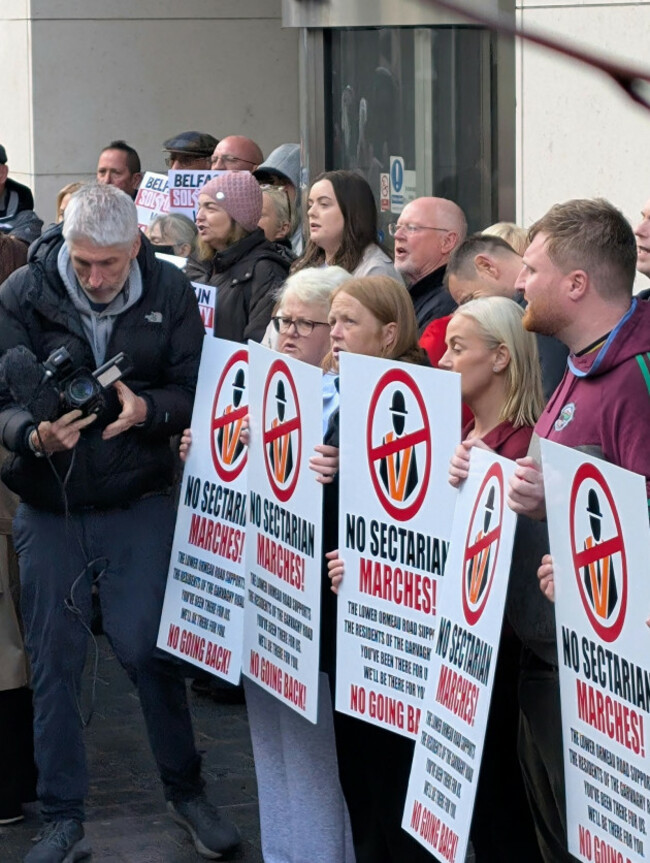
There is no reason why Orangemen have to walk this route to return to Carleton Street. Nobody I know would consider a republican parade on The Shankill Road or through Sandy Row in Belfast to be wise or acceptable. Decisions of this type need to be made in the real world.
On Thursday of last week, not far from the train station in Portadown, I stepped into a shop to buy an umbrella. It was one of those days when the rain refused to go away.
I was in the town to retrace my steps from the 1990s; to remember the bad history and to remind myself of those roads where parade and protest collided. No amount of rain will wash away the hurts of those times:
That Special Branch report included these words: During Drumcree 2000, Adair gave his unequivocal support to members of the LVF. He encouraged public disorder, and he was involved in the exchange of weapons. Adair was present in Portadown during the evening of 3 July 2000 when several other masked men at a loyalist show of strength fired shots.
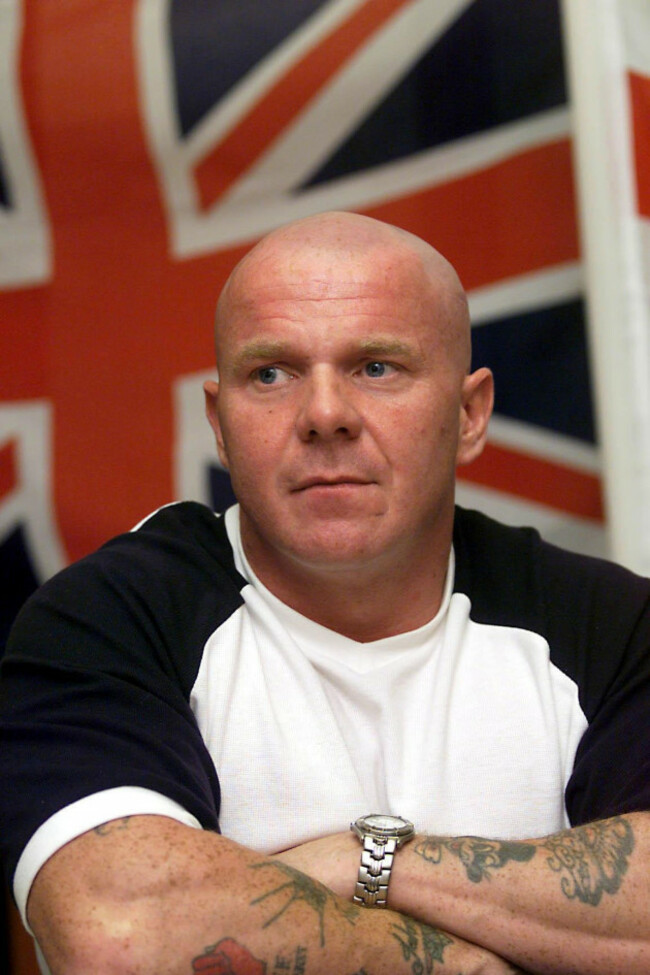
Adair addressed a large number of loyalists near Portadown town centre, pledging his full support for the Drumcree dispute and urging all able-bodied men in Portadown to take to the streets immediately. He added that the war has started here and now; and he added that the instruments of war were available for those who wished to use them.
So, the Drumcree story is not just about a parade, but about those - such as Adair – who played on the tensions of those times.
The news from Portadown faded in the early 2000s and I stepped away, believing it to be over. That was then, and this is now; a now that begins with the decision of the Parades Commission – a decision, that given all of the fallout of the past fortnight – both needs and demands further explanation.
My walk in Portadown last Thursday was along the way of the protest camp on the Garvaghy Road and down towards the Drumcree church. The new umbrella didn’t save me from the rain.
As I walked, I was remembering so much. The house I stayed in with colleagues in 1998. The broadcast points we used across the years. Names, including Michael McGoldrick, the young Quinn boys and police officer Frank O’Reilly, all of whom lost their lives in that rage of the 1990s.
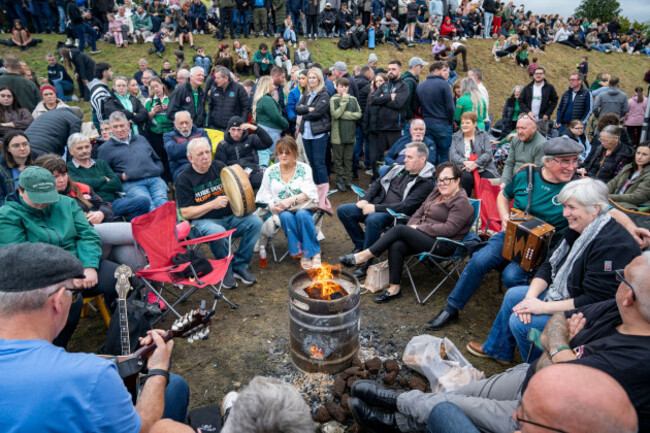
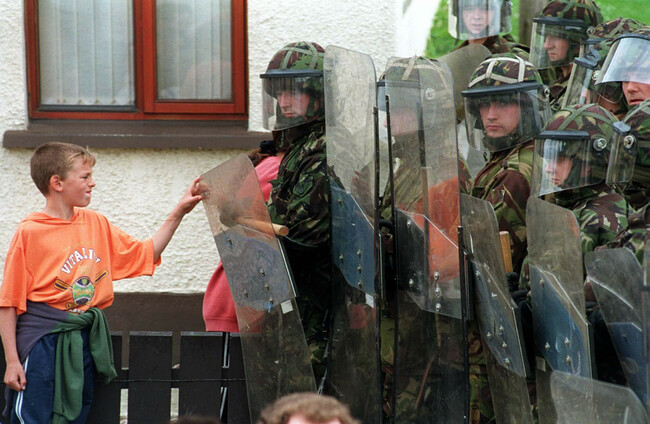
I recalled the night when soldiers with shields and batons were dropped into a nearby field and the crowd gathered at the church below scattered in panic. I shared some of this with a young PSNI sergeant (Andy) who got out of a police vehicle to talk with me as I walked towards the Drumcree hill.
This row in 2026 is a product of bad decision-making. We are not witnessing the violence of the 1990s, but we are reminded that the poisons of yesteryear are but a scratch beneath the surface.
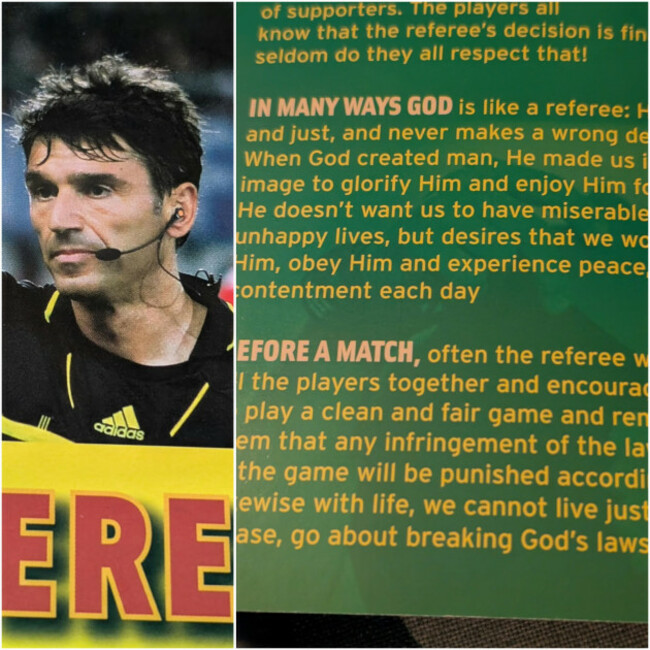
Last week, in a coffee shop in Portadown, a woman asked did I like football and then placed a religious tract on my table: “In many ways God is like a referee,” it read, and, hours later, I smiled at the thought that crossed my mind of Secretary of State Chris Bryant being a political equivalent of football’s VAR – the Video Assistant Referee. How he would have to review what the Parades Commission missed; and make a decision that would bring very different reactions from the opposing sides on this parading ground.
This row will continue. It’s not over. There will be more noise, especially in the Stormont chamber. But there will be no parade.
The political and policing cost of trying to ‘take’ the road to force the march through would be catastrophic. Might Stormont fall? There is plenty of huffing and puffing right now, but this will come down to a question of who needs it most. It is not Sinn Féin.
There has to be learning in this, including for the media. Balance is not the Orange Order says versus the residents say. This story is about what happened to create this mess; the decision of the Parades Commission that upended 28 years of other decisions and raised false hopes.
The story on the Garvaghy Road is not about ‘mob rule’, but about a leadership that stood with a small community in its time of need; a leadership that would be finished had it looked the other way (not that that was ever going to happen).
It is not just about what happened on the Garvaghy Road, but why it happened.
Brian Rowan is a journalist and author. He is a former BBC correspondent in Belfast. Brian is the author of several books on Northern Ireland’s peace process. His new book, “Living With Ghosts” is out now at Merrion Press.
To embed this post, copy the code below on your site








have your say