Sign in. It’s quick, free and it’s up to you.
An account is an optional way to support the work we do. Find out more.
Sign in. It’s quick, free and it’s up to you.
An account is an optional way to support the work we do. Find out more.
A NEW INITIATIVE to help identify scam text messages has been launched today by the Commission for Communications Regulation (ComReg).
A registry has been established for organisations who send text messages to their customers, such as banks, delivery services, insurance providers, to register their sender IDs.
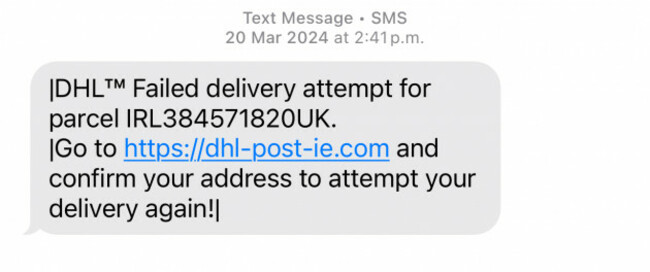
Application-to-Person messages often contain a Sender ID to indicate where the text message originated (for example, eFlow). Many scam messages will also have a Sender ID that imitates a legitimate service to attempt to appear trustworthy to the recipient.
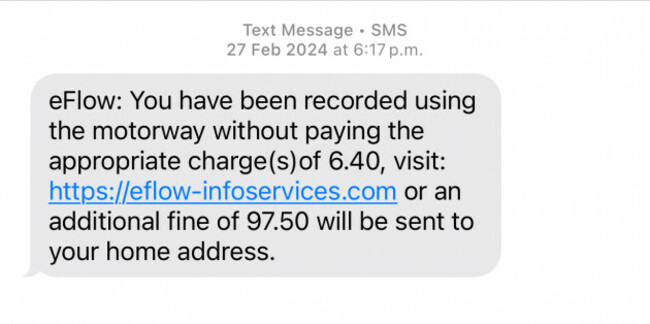
The registry launched today would mean that SMS providers can check the Sender ID against the registered Sender ID to identify scam. Messages that do not match will arrive in a consumer’s inbox labelled “Likely Scam” from 3 July to alert the consumer that it may not be legitimate.
From 3 October, SMS messages from unregistered SMS Sender IDs will be blocked.
ComReg is asking all organisations using SMS Sender IDs in their SMS communications with customers, clients and service users to register their Sender ID now.
Over 7,000 SMS Sender IDs have already been pre-registered by SMS providers managing A2P SMS traffic on behalf of organisations.
“If an SMS Sender ID has not been pre-registered, it is crucial that it is registered now,” a statement from ComReg said. “Organisations may register their own SMS Sender ID or their SMS provider may register the SMS Sender ID on their behalf.
“SMS Sender ID registrations will be on a first come, first served basis. Organisations can register SMS Sender IDs and check if their SMS Sender ID has been pre-registered.”
ComReg’s chairperson Garrett Blaney said that the registry is just one of several interventions introduced by the commission to mitigate scam calls and texts.
“Europe Economics estimate the annual level of harm to Irish consumers and businesses from scam calls and texts at over €300 million, of which approximately €115 million is attributed to scam texts,” he said.

To embed this post, copy the code below on your site














have your say