Sign in. It’s quick, free and it’s up to you.
An account is an optional way to support the work we do. Find out more.
Sign in. It’s quick, free and it’s up to you.
An account is an optional way to support the work we do. Find out more.
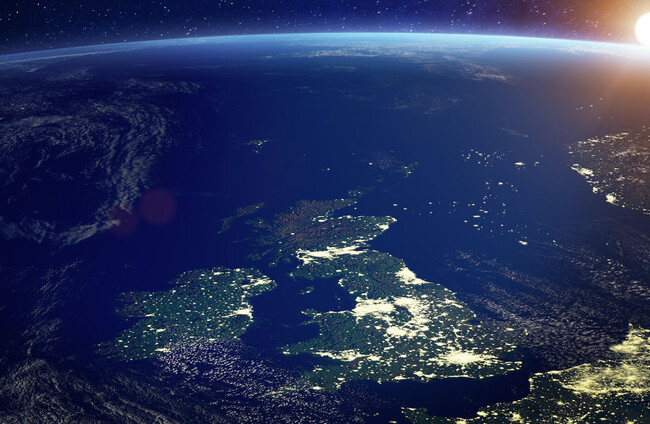
SPACE TRAVEL IS going to become a trillion dollar industry, and Ireland should think about how it could get a piece of it.
That’s according to the former chief economist for Nasa, Alex MacDonald, who says Ireland is uniquely placed to join the modern-day space race, thanks to close links to America and the fact that we’re an English speaking nation.
MacDonald, who helped establish the US space agency’s Mars to Moon strategy, said opening a small space centre for research could help Irish businesses creating new technologies to gain access to the American market.
“Just like AI, it’s another technology domain that Ireland can make a policy choice about,” MacDonald said.
“The total space economy is probably on the order of $600 to $700 billion a year around the world. That’s likely to grow significantly to over a trillion dollars over the next decade.
“Space as a policy tool area can be applied to almost whatever it is that you think is important.”
Ireland has nearly doubled its investment in the European Space Agency in recent years, going from €21.31 million in 2018 to €40.28 million in 2024.
MacDonald said knowledge gleaned from space exploration can contribute towards research on issues like climate change and agriculture.
He said there are ways Ireland has contributed to space exploration already and the idea that the Irish “don’t really do that sort of thing” is wrong.
The Great Telescope at Birr Castle in Offaly was used in the 1800s to discover that some galaxies have a spiral shape, and the Rosse Observatory at the Co Offaly site is still used by Trinity College to study radio emissions from astronomical objects, such as the Sun.
More recently, in 2023, researchers at University College Dublin launched the EIRSAT-1 satellite, costing €7.9 million, the country’s largest investment in a space project. Pupils from DEIS schools helped write a poem that was carved into the side of the spacecraft, which is still in orbit.
MacDonald says incorporating history and the arts into how we learn about space exploration could help people connect with it.
Ireland, he says, could work towards becoming a world leader in astronomy, and “have independent missions, maybe even in cooperation with other space agencies around the world”.
MacDonald was speaking at the Global Economic Summit in Killarney, where politicians, businesspeople and tech experts met to discuss a range of modern-day challenges, from artifical intelligence to space warfare.

To embed this post, copy the code below on your site










have your say