Sign in. It’s quick, free and it’s up to you.
An account is an optional way to support the work we do. Find out more.
Sign in. It’s quick, free and it’s up to you.
An account is an optional way to support the work we do. Find out more.
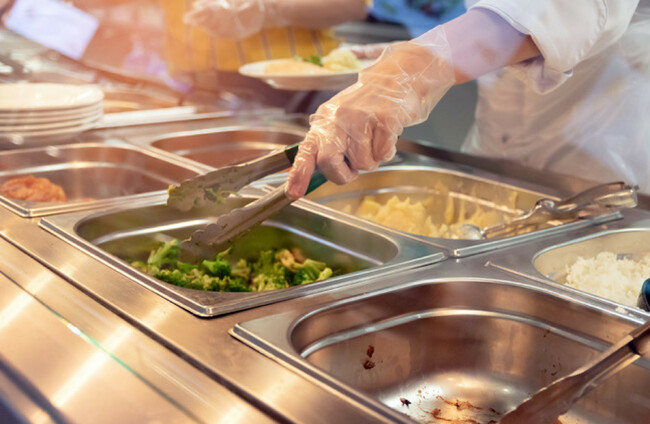
TAOISEACH SIMON HARRIS has said he is “very conscious” of the need to ensure that hot school meals are healthy.
Harris added that he is looking at ways to expand the scheme into the school holidays for children from disadvantaged backgrounds.
The Hot Schools Meals scheme is an addition to the Schools Meal Programme that aims to provide “regular, nutritious food to children to support them in taking full advantage of the education provided to them”.
The Hot School Meals element was introduced in 2019, growing from 30 pilot schools to over 2,000 primary schools following a significant expansion in April.
All DEIS Primary Schools are now eligible to receive a hot meal and last year, Social Protection Minister Heather Humphreys announced plans to expand the programme to all primary schools by 2030.
Professor Donal O’Shea noted that while the scheme includes healthy options, it also allows schools to order ultra-processed meals once a week.
“If you allow an open choice between a healthy option and an ultra-processed option, the human brain leans towards the addictive, ultra-processed option,” said O’Shea.
He said primary school staff have informed him that healthier options are being eaten less and this is resulting in more food waste, while children readily consume ultra-processed food.
O’Shea added that there “should be zero option for ultra-processed food” and that it’s “unacceptable” for it to be an option for hot school meals.
While the Department of Social Protection notes that the scheme is for food “which must be of suitable quality and nutritional value”, it adds that the “type and range of meals provided are decided by the individual local groups and schools”.
Guidelines for the programme provided by Healthy Ireland state that “processed meat and processed chicken products, fried foods, foods cooked in batter or breadcrumbs or foods containing pastry, should only be provided once a week maximum, if at all”.
Foods that fall into the category include bacon, ham, sausages, and chicken nuggets.
O’Shea said a “structure” is needed to monitor this scheme and voiced concern about whether it is being monitored, though the Department said it can carry out site visits to ensure the guidelines are being maintained.
When asked today about these remarks by O’Shea, Harris said he is “very conscious of the fact that as hot school meals are procured, ensuring that those hot school meals are healthy is absolutely a factor”.
Harris added that he has “huge respect for Donal O’Shea in terms of his expertise in relation to obesity”.
“But I would also say, even in a wealthy country, there are still too many children who go to school, and sometimes come home from school, hungry,” said Harris.
He added that “we need to make sure we fill that gap, and that’s what we’ve done by making sure that hot school meals are rolled out to more schools.”
Harris also remarked that the “next step” is addressing “holiday hunger”.
“If you’re in a school where they’re providing hot school meals, parents are guaranteed that their child is getting a nutritious meal five days a week.
“When school is closed during the school holidays, I’d like to see in the context of the Budget, how we can continue to provide meals to children, particularly children from a disadvantaged economic background, during the school holidays.
“That is something that is being looked at.”

To embed this post, copy the code below on your site













have your say