Sign in. It’s quick, free and it’s up to you.
An account is an optional way to support the work we do. Find out more.
Sign in. It’s quick, free and it’s up to you.
An account is an optional way to support the work we do. Find out more.
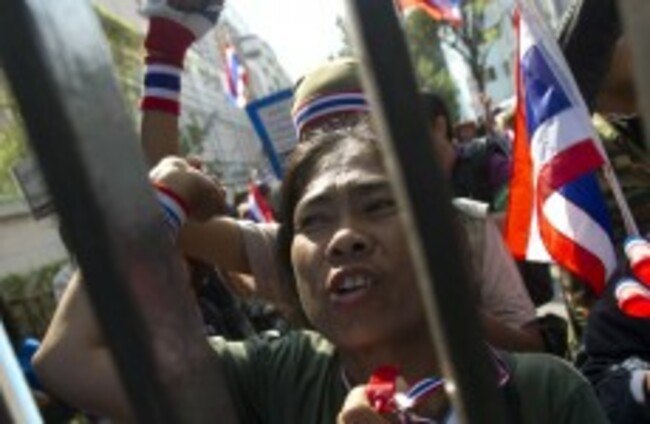
A STATE OF emergency has come into force across the tense capital of Thailand today, although defiant opposition protesters have refused to abandon their fight to bring down the government.
Prime Minister Yingluck Shinawatra is under intense pressure to step down after more than two months of street rallies aimed at ousting her elected government and installing an unelected “people’s council”.
“We’re not taking any notice of the state of emergency and are continuing our protest as usual,” rally spokesman Akanat Promphan told AFP.
It shows that the government is getting desperate because the momentum is with us.
The backdrop to the protests is a years-long political struggle pitting the kingdom’s royalist establishment against fugitive former premier Thaksin Shinawatra, Yingluck’s older brother who was ousted by the military seven years ago.
The 60-day state of emergency enables authorities to impose a curfew, ban public gatherings of more than five people, detain suspects for 30 days without charge and censor media in Bangkok and surrounding areas.
The government has not yet used any of those measures and has said police will keep the leading security role, unlike during pro-Thaksin “Red Shirts” rallies in 2010 when the military was ordered onto the streets by the previous government.
Boycott
Yingluck has called an election for February 2 but the main opposition party is boycotting the vote.
The Election Commission on Wednesday asked the Constitutional Court to delay the polls due to the unrest, its Secretary-General Puchong Nutrawong told AFP, after the government rejected its call for a postponement.
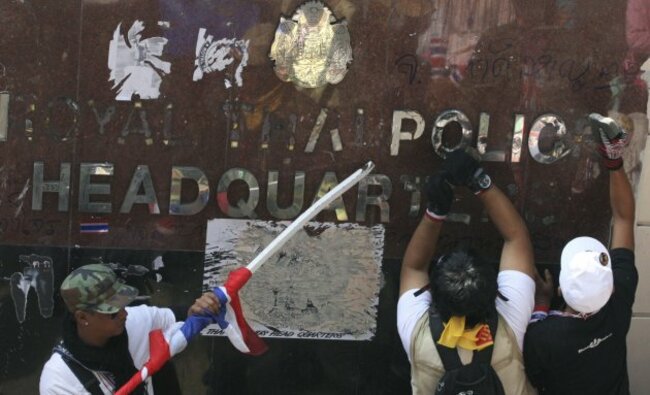
Anti-government protesters remove letters from the exterior of the Royal Thai police headquarters during a rally today. (Sakchai Lalit/AP/Press Association Images)
Nine people have been killed and hundreds injured in grenade attacks, drive-by shootings and street clashes since the latest protests began at the end of October.
In an incident likely to fan anger among his supporters, a prominent Red Shirt leader, Kwanchai Praipana, was shot and wounded by an unknown gunman at his house in northeast Thailand.
Roadblocks
The demonstrators have staged a self-styled “shutdown” of Bangkok since January 13, erecting roadblocks and rally stages at several main intersections.
The number of protesters on the streets has steadily fallen in recent days, with some rally sites almost deserted during the daytime, although turnout tends to swell in the evening when people leave work.
The Metropolitan Police Bureau estimated there were about 5,000 protesters spread across seven rally sites this morning.
When the state of emergency was last imposed in 2010 by the previous government more than 90 people were killed and nearly 1,900 injured in a crackdown by soldiers firing live rounds and backed by armoured vehicles.

To embed this post, copy the code below on your site










have your say