Sign in. It’s quick, free and it’s up to you.
An account is an optional way to support the work we do. Find out more.
Sign in. It’s quick, free and it’s up to you.
An account is an optional way to support the work we do. Find out more.
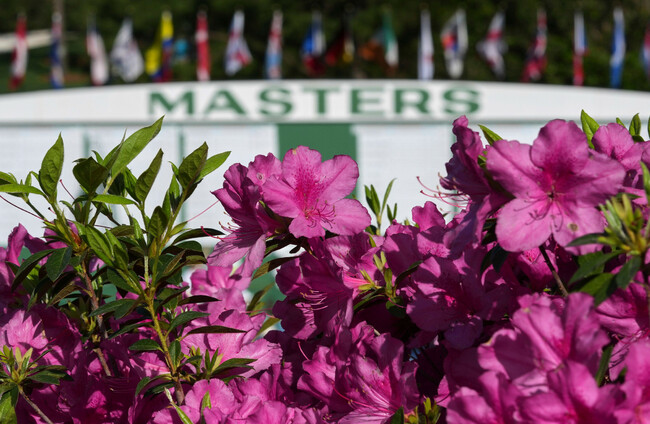

AMONG THE MASTERS’ most stringent rules is that nobody is permitted their phone on the grounds. This includes journalists, who must leave theirs in the opulent, walnut-walled media centre. (Some media involved in broadcasting the Masters are permitted their phone on the course, which has to be marked with a special sticker. This writer heard a tale a few years ago in which a Wall Street mover and shaker offered an ungodly amount of money to a broadcaster for his phone sticker, in order to be able to log on to work.)
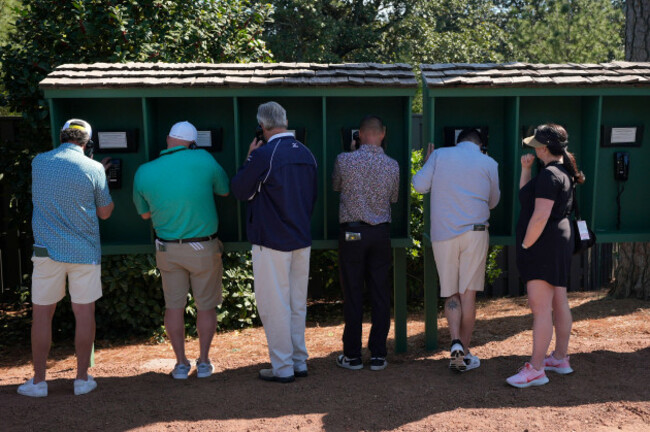
The rule ensures far fewer on-course distractions for the players, while also greatly enhancing the atmosphere: without their phones, patrons are far more attentive to what is going on in front of them, while applause around the course is far louder given patrons’ hands are generally empty. Augusta National have addressed any communication concerns by installing a series of free payphones around the course.
The lack of phones means staying in touch with scoring and the tournament’s drama from around the course is delightfully analogue: everyone is reliant on the giant scoreboards scattered across the grounds, all of which are hand-operated.
The Masters are sticklers for the rules. Patrons who get a ticket – and journalists who are fortunate enough to be accredited – are all handed a code of conduct upon entry, which carries a quote from the club’s co-founder Bobby Jones, stressing that “in golf, the customs of etiquette and decorum are just as important as rules governing play.”
Among the rules are that nobody is allowed to run on the course, or really break into anything beyond a brisk walk. If they do, they’ll be politely reprimanded by a nearby steward.
It’s an attitude consistent with the golf course, which penalises any golfer who gets too impatient.
The Masters are sticklers for their verbiage, too. Hence, you’ll hear a few nouns on the TV coverage this week you won’t hear on any other week of the year. The fans on the course are referred to as “patrons”, while you won’t hear any talk of the rough this week: at the Masters, it’s known as “the second cut.” Such is this tournament’s attention to detail, they announce at the start of each week the heights of the various cuts of grass around the course, so you can impress* your friends by telling them that the second cut at the 2026 Masters measures 1.375 inches.
*may not necessarily be impressed
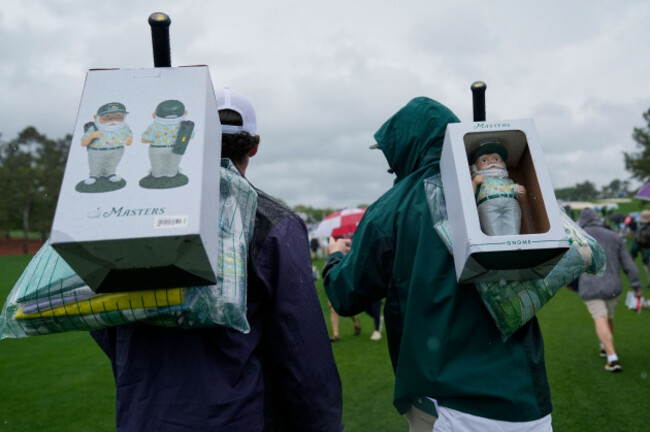
Yes, you may ask why anyone would want to buy any garden gnome in the first place, but they offer a window into the fascinating world of Masters merchandise. The Masters do not sell any of their merchandise online: the only place to buy it legally is on site during the tournament. Given the lack of smartphones on site, buying gear is the best way to show people that you’ve walked the hallowed land of Augusta National.
The store is a phenomenon, with a recent Golf Digest piece estimating it to be worth north of $70 million over the course of the week. Among the most in-demand pieces of merch is the garden gnome, retailing for less than $50 but now fetching at least four figures on the secondary market. The demand comes from scarcity: there are a limited number on sale each day, and are strictly limited to one per customer. They nonetheless sell out within an hour of the shop’s opening each day.
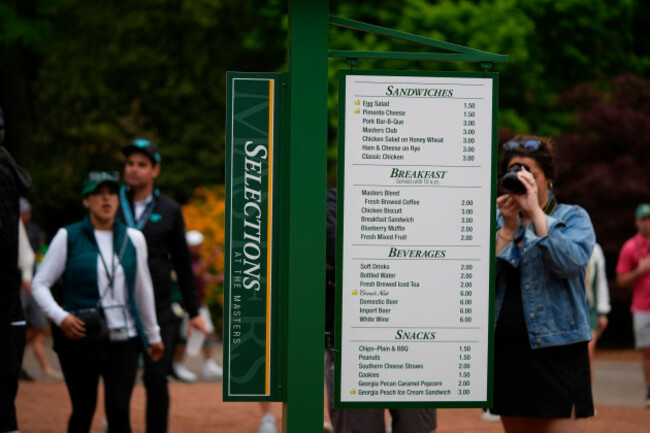
The Masters has no interest in price gouging their patrons once they are through their gates, and so beers are priced at around $5, and you’ll get a signature pimento cheese sandwich for around $2.
But the Masters does offer an opportunity for some classic American capitalism to get to work outside the gates, and accommodation costs around the course are eye-watering, with $50 motels jacking up their prices by 1000%. Locals often rent out their houses to travelling players, media and fans, and spring break in Augusta has been moved to ensure it coincides with the Masters tournament and gives everyone an opportunity to bolt away and make some cash.
Former US president Dwight Eisenhower was once a member of Augusta National, and he gave back to the locality by helping to introduce a tax break for those living nearby: they can rent out their homes for up to 14 days a year without having to pay any tax on the income.
Read all of Gavin Cooney’s reporting and analysis from The Masters on The 42 >

To embed this post, copy the code below on your site








have your say