Sign in. It’s quick, free and it’s up to you.
An account is an optional way to support the work we do. Find out more.
Sign in. It’s quick, free and it’s up to you.
An account is an optional way to support the work we do. Find out more.
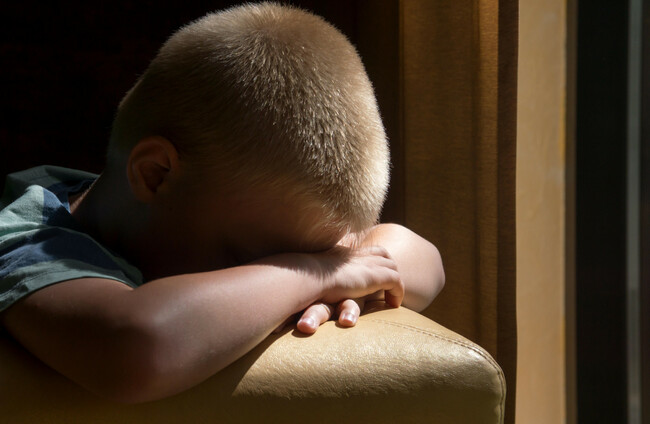
TRINITY COLLEGE DUBLIN is seeking participants for a new study on the impact of name-calling during childhood by a parent.
The new study will explore how name-calling by a parent during childhood can affect emotional development and mental health in later life.
Trinity said that such verbal abuse can have “serious and lasting effects” but is a form of maltreatment that remains “under-recognised and under-researched”.
Such verbal abuse is now considered the most common form of child maltreatment worldwide.
A recent paper in the British Medical Journal found that verbal abuse can be as damaging as physical abuse.
In a study of more than 20,000 adults in the UK, 41% reported experiencing verbal abuse as children.
Adults who experienced verbal abuse were also found to have a 64% higher likelihood of poor mental health outcomes.
The Trinity study will focus on name-calling by a parent and on how such experiences influence an individual’s sense of self and relationships later in life.
The Trinity researchers, led by Deirdre Moran, Psychologist in Clinical Training, are inviting adults aged 18 and older who experienced name-calling by a parent during childhood, and who no longer live with their parents, to take part in the study.
Participation involves three confidential one-hour interviews, which can be done online or in person at Trinity.
While there is no “hard deadline” for people to get in touch, the researchers are hoping to conduct the interviews before Christmas.
People can get in touch with the researchers by emailing morand3@tcd.ie or visiting www.tcd-
Researchers hope the findings will contribute to greater awareness of verbal abuse as a “serious and preventable form of harm” and that the study will help inform supports for parents, clinicians and policymakers.
Speaking to The Journal, lead researcher Deirdre Moran, said that for some clients she has worked with, the “harsh words they heard as a child really have stayed with them”.
“That was something that I noticed in my clinical work and that brought me into this area of research,” she added.
While she noted that verbal abuse can take lots of different forms, such as shouting, insults and humiliation, she is “particularly interested in name calling in terms of what that experience is like for people as a child”.
“A parent or caregiver is a really formative person in a child’s life in terms of shaping their sense of who they are, a sense of identity and when that form of verbal use comes from a parent, it can be a particularly tricky dynamic to figure out.”
She added that the name-calling the researchers are interested in “can cover all bases”.
“There’s a big spectrum and it’s often very subjective,” Moran adds.
While there are “obvious insults that would stand out to anyone”, Moran said she is also interested in “terms that are significant to the person within the family context”.
“The majority are very easily identifiable but it’s not always the case, so it’s open to a spectrum,” said Moran.
While Moran said there has been some research on different outcomes of verbal abuse, she cautioned that there’s a “gap in what the experience is like from a more qualitative perspective”.
“People talking about the experience will add a real depth to our understanding and help us shape service provision and supports that might be relevant,” she added.
“It will also hopefully increase awareness about this as a phenomenon in our society, to try to almost prevent it before it happens.”

To embed this post, copy the code below on your site














have your say