Sign in. It’s quick, free and it’s up to you.
An account is an optional way to support the work we do. Find out more.
Sign in. It’s quick, free and it’s up to you.
An account is an optional way to support the work we do. Find out more.
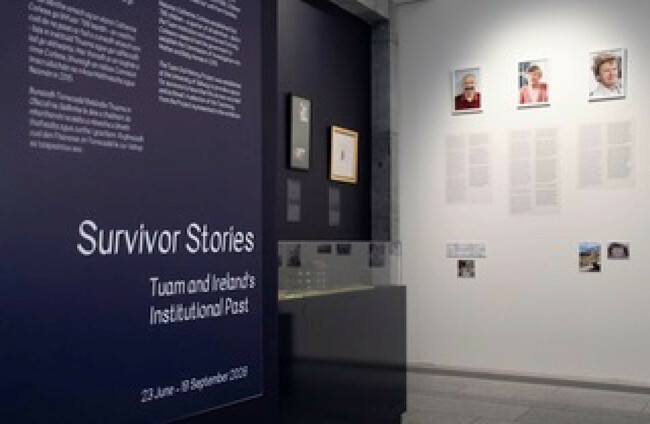
THE FIRST MUSEUM exhibition about the history of mother and baby homes in Ireland has opened in Galway.
Entitled Survivor Stories: Tuam and Ireland’s Institutional Past, it tells the story of 18 survivors of the long-running mother and baby home in Co Galway.
Tuam historian Catherine Corless has described the exhibition as a ”vital project to gather the life stories of the Tuam home survivors, which otherwise would be forgotten in time”.
The exhibition opens as debate over remembrance of Ireland’s institutional past continues, with survivors of Cork’s Bessborough mother and baby home and their supporters holding a vigil there last weekend. Apartments are planned for the site, but there have been calls for it to be instead preserved as a site of national conscience.
The Tuam exhibition includes oral histories, photographs and personal artefacts from survivors. The aim is to promote engagement with the first-hand experiences of institutional life and its lasting impact on Irish society. An accompanying podcast series has also been created.
The exhibition is developed as part of the Tuam oral history project at the University of Galway which began in 2018. The project works with survivors, their families and others effected by the history.
Historian Sarah-Anne Buckley has worked extensively on the project, collecting survivor testimonies over a period of three years.
She credited the ”humanity and generosity of survivors” in bringing the project to fruition.
Buckley said she hoped that visitors ”will see the real human side to this, consider how long institutions were open and how Irish society operated at the time”. She said it could be of particular interest to younger generations with a renewed interest in this history.
For survivors themselves she emphasised the importance of the physical exhibition space.
”They want to walk into a museum and see that they are represented”, she said.
Tuam was one of the 18 institutions examined during the Commission of Investigation into Mother and Baby Homes which produced its final report in 2021.
As of this year, the remains of 77 infants have been discovered at the Tuam site which was run by the Sisters of Bon Secours.
In April the government revised the Insitutional Burials Act to include first cousins in DNA identification processes. These amendments widened the net to increase the possibility of identifying remains, especially when a generation of relatives passes away.
A national centre for research and remembrance is currently being developed at the former Magdalene laundry site at Seán McDermott Street in Dublin city centre.
The Tuam exhibition will run from July to September 2026 at the Galway City Museum. A programme of public talks, workshops and screenings will accompany the exhibition.
More information is available on the museum website.
To embed this post, copy the code below on your site














have your say