Sign in. It’s quick, free and it’s up to you.
An account is an optional way to support the work we do. Find out more.
Sign in. It’s quick, free and it’s up to you.
An account is an optional way to support the work we do. Find out more.
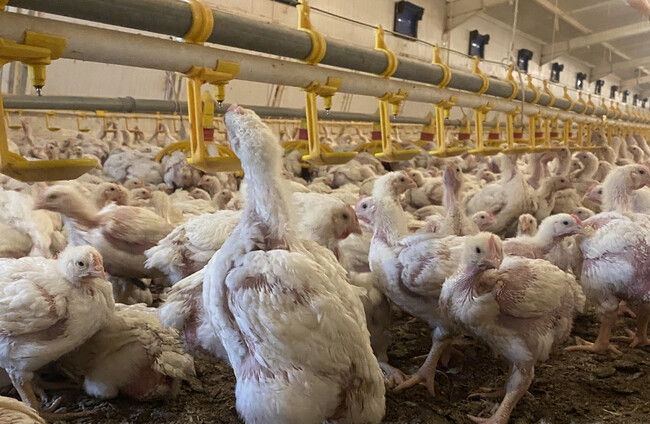
DENMARK’S ANIMAL WELFARE minister has said he wants a ban on fast-growing chickens nationally and across the EU over animal welfare concerns.
An outcry in Denmark over chicken welfare has now sparked debate in Ireland, where the fast-growing Ross 308 chicken breed dominates the broiler (chickens raised for meat rather than eggs) sector, which produces over 100 million birds each year for the domestic and export markets.
The breed is also the mainstay in Denmark, where it is being referred to in the press as “turbo chicken” because the birds can grow to their full weight in just over five weeks, compared with eight weeks and more for slower-growing breeds.
A study published last year by Aarhus University scientists concluded that chickens’ walking ability was negatively affected by this faster growth.
In a statement to The Journal, the Department of Agriculture acknowledged that Irish commercial producers typically use fast-growing broilers. It noted that a 2023 review by the EU food science agency had identified animal welfare issues associated with fast growth rates.
The Irish Farmers’ Organisation warned that any European ban on Ross 308, a “very efficient breed”, would leave Irish farmers at a major disadvantage against imports, and would exacerbate food price inflation.
Chicken is by far Ireland’s favourite meat, with poultry accounting for more than half of the average Irish person’s meat consumption, according to Central Statistics Office data.
The Irish National Society for the Prevention of Cruelty to Animals (NSPCA) said it had concerns about the welfare of all fast-growing chicken breeds due to their rapid weight gain, but this was just one of the issues in relation to intensive chicken farming, with the amount of space given to the animals also a problem.
In the Nordic countries, there has been intensive scrutiny of the farming of fast-growing chickens over animal welfare fears.
Denmark’s animal welfare minister said this week that the government was working towards a national and EU ban, after journalists from the country’s TV 2 news filmed with a hidden camera at one of Denmark’s largest chicken producers.
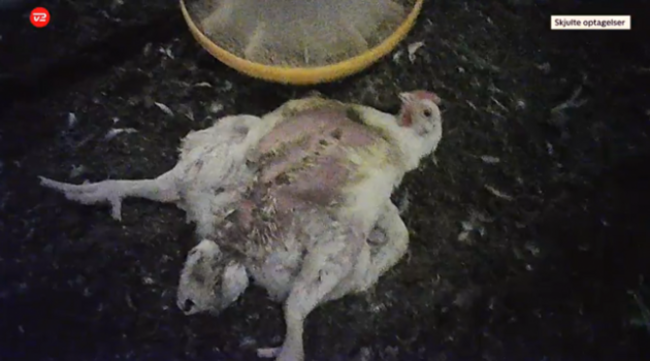
The investigation revealed that chickens were being kept in fewer hours of darkness than required by law, to make them eat more and reach a higher slaughter weight.
It also showed chickens that had serious problems walking and standing on their legs, with some lying on their backs.
In January, following years of campaigning by animal welfare organisations, the Norwegian meat industry made a voluntary commitment to phase out the use of fast-growing breeds such as Ross 308 by the end of 2027.
Animal welfare organisations have argued that fast-growing chickens suffer because their skeletal systems and leg muscles cannot keep up with their rapid growth and weight gain. Campaigners have also claimed that the birds can develop lesions from spending more time sitting because of their rapid weight gain.
Brendan Soden, chair of the Irish Farmers’ Association poultry committee, said he was shocked to hear from a Danish colleague at a recent meeting of Copa, the European farming lobby, that a ban on Ross 308 was being mooted. He said it would be “lunacy” to ban this breed if it can be imported from outside the bloc.
Ireland is a net importer of poultry meat. Most poultry sold by restaurants and takeaways is imported, while most raw chicken sold in supermarkets is Irish.
“It is a very efficient bird at converting feed to protein,” Soden said of Ross 308.
“A slower-growing bird is done at maybe 56 days-plus and your conventional bird would be anywhere from 38 to 42 days.”
One of the main concerns put forward by the Danish representative at Copa was whether consumers would be willing to pay more for slower-growing birds, Soden said.
“It is going to cause food [price] inflation if they’re banned and leave us wide open to imports,” he said.
He added that farmers are using this “efficient” breed because they have to operate based on the price they are paid by processors and supermarkets.
Soden said that companies will not buy animals for slaughter with skeletal problems or leg problems and farmers do not want that.
“I know lots of broiler growers, and they do their very best for the birds and for welfare. There are Bord Bia standards, and we have lower stocking density than outside the EU,” Soden said.
The Department of Agriculture said commercial broiler producers in Ireland typically use fast-growing broilers in a short-production cycle, but slower growing breeds are used here in free-range production.
“The European Union has committed to reviewing the EU animal welfare legislation, including that relating to poultry welfare including broiler chickens,” it said.
It said any reform needed to be based on the most up-to-date science and include “reasonable transition periods, as well as technical and financial supports” for farmers. It said it would support any review of the law provided measures to help farmers and the industry adapt were in place.
The Ross 308 was developed by Aviagen, a broiler breeding company. The Alabama-based company told The Journal it offers “both conventional and slower-growing breeds” to serve consumer choice.
“All of our breeds are selected for health and welfare characteristics, including leg health, cardiovascular fitness and overall resilience, at the same time as offering excellent breeder and broiler performance,” it said.
It said the Ross 308 is sold widely in Europe and provides a balance between “affordable” meat production and “high welfare standards” required in Europe. On-farm welfare also depends on housing, nutrition and management, it added.
The Aarhus University study compared the walking ability of 30 flocks of conventional Ross 308 broilers with 26 flocks of welfare-labelled chickens – slower growing breeds (Rustic Gold and Ranger Gold) that are allowed more space. The field research was conducted in 2022.
The researchers found increasing body weight resulted in higher odds of walking impairment in the conventional, fast-growing broilers, but not in the slower-growing, welfare-labelled birds.
Of the two ‘welfare’ breeds, the slower-growing – Ranger Gold – had better walking ability than the other.
The study also found that the walking abilities of conventional broilers had deteriorated compared with a previous survey in 2016 and 2017, although the causes of this were not clear.
The growth rate of the conventional broilers in this study was 62-63g per day. Conor Dowling, director of advocacy at the NSPCA, noted that the European Food Safety Authority, the EU food regulator in 2023 recommended a maximum growth rate of 50g per day to improve welfare.
With reporting from AFP.

To embed this post, copy the code below on your site













have your say