Sign in. It’s quick, free and it’s up to you.
An account is an optional way to support the work we do. Find out more.
Sign in. It’s quick, free and it’s up to you.
An account is an optional way to support the work we do. Find out more.
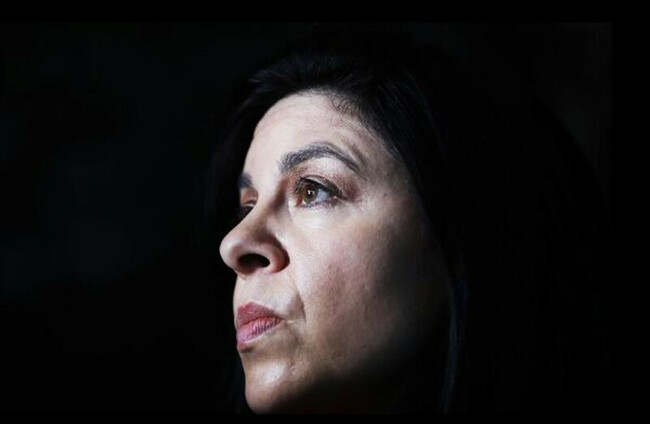
THE MINISTER FOR Children Norma Foley has today announced that the CEO of the Children’s Rights Alliance charity Tanya Ward will independently chair efforts to conduct a wellbeing check on every child whose case was closed by Tusla during the pandemic.
Ward today said that this checks process has emerged “after two desperately sad and distressing cases of young children going missing for several years.”
“Every effort should be made to ensure that we learn from Kyran Durnin and Daniel Aruebose’s cases,” she added.
Ward said that this process will be a “substantial undertaking”.
The Children’s Rights Alliance lobbies on children’s rights issues and conducts research on children’s access to their rights in Ireland and the UK.
Before acting as CEO for the charity, Ward was a human rights lecturer at Trinity College Dublin, and she also served at the Deputy Director of the Irish Council for Civil Liberties.
The wellbeing check process was announced in the wake of the news that Tusla had extensive involvement with Daniel Aruebose, a child whose remains have been recovered by gardaí following a search that went on for over two weeks.
Daniel is believed to have died when he was between 3 and 4 years of age, and he would be seven if he were alive today.
He was discovered missing because the Department of Social Welfare flagged with Tusla that all of the required documentation to prove his existence was not supplied when a family member submitted a social welfare claim concerning him.
Tusla initially said that it was involved in Daniel’s case “at the request of the parents” when he was born, but that the agency’s involvement ceased in 2020.
The agency also said that after it closed off Daniel’s case, no child protection concerns were ever raised by any party concerning him.
It later emerged that he was in fact in foster care for the first year of his life, and on a respite basis for the following six months of his life.
In an interview with The Journal, his foster sister said that his foster family did not want him to leave their care at the time.
Tusla placed the child back in the care of his biological family midway through 2019 and ceased contact with him after a few months. Initially his parents had wanted to put him up for adoption, and it was Tusla who set up a fostering arrangement.
After facing calls from organisations and opposition politicians, Minister for Children Norma Foley’s department said that it would set up an independent steering group to oversee each of the 42,000 children between the ages of 0-18 who had their cases closed between 1 March 2020 and 28 February 2022.
It’s expected that around three quarters of the 42,000 cases relate to child welfare, which can include requests for advice and assistance from families.
The remaining cases are expected to relate to child protection concerns, “where referrals were received”.
“These child protection cases are expected to be prioritised in the wellbeing check,” a spokesperson for the Department of Children said.
Minister Foley said: “This wellbeing check will seek to provide that assurance in relation to children whose cases were closed during the pandemic. I am committed to providing all necessary resources to support its work.”
The steering group is to include representatives from Government departments, the HSE, Tusla, and community and voluntary workers, and social work professionals.
A mechanism to rank cases according to risk so they can be prioritised (i.e high, medium, and low risk cases) is to be developed.
Work is apparently underway to put together a team of individuals who can carry out the wellbeing checks.
This could include retired Tusla staff.
The Department of Children has said that the impact of this review process on frontline staff will be “kept to a minimum”.
A spokesperson said that a particular challenge will be addressing cases where the children concerned have left the country.
“There is no legal requirement for [families] to notify the state of whether these departures abroad are for temporary purposes, such as holidays, or on a permanent basis,” they added.
Foley is set to chair a meeting of the Children First Interdepartmental Group.
She said it will discuss ways of “enhancing check-ins on young children right across the system.”
The terms of reference for the steering group have yet to be developed.
The department said the public will be given regular updates every six weeks on the progress of their work, which is expected to be completed by the end of March next year.
If you work in the area of child protection and want to speak about your experiences on an anonymous basis contact eimermcauley@thejournal.ie.
To embed this post, copy the code below on your site













have your say