Sign in. It’s quick, free and it’s up to you.
An account is an optional way to support the work we do. Find out more.
Sign in. It’s quick, free and it’s up to you.
An account is an optional way to support the work we do. Find out more.
THE ONGOING STAND-OFF in Drumcree may be dominating the media in Ireland both north and south, but it has struggled to make similar waves in Britain.
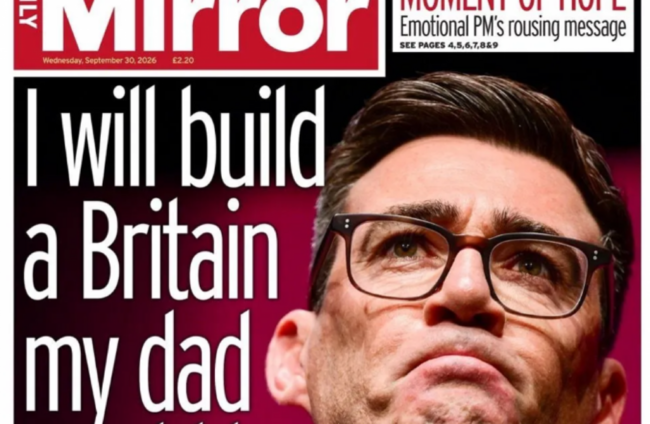
In a busy week of news that’s included goings-on at RAF Fairford, Manchester City’s cheating and Andy Burnham’s first conference speech as Prime Minister, the Drumcree dispute hasn’t been the top story on any of the front pages of the British papers.
Drumcree essentially returned to the top of the headlines in Ireland last Friday following the decision by the Parades Commission that the Orange Order march could take place down the Garvaghy Road after being banned from doing so since 1998.
The blocking of the parade by protesters on Sunday, when the march was scheduled to take place, has led to near rolling coverage across outlets north and south in Ireland, but this has not been matched by reporting by British media.
After Sunday’s events, Monday was the only day when British front pages contained any mention of Drumcree this past week.
Three such papers featured the story on their front pages on Monday to varying degrees.
While no paper made it the top story, the paper that gave it the most prominence was the Financial Times, which made it the second lead and also made the Garvaghy Road its main front page photo.
The FT’s front page gave three paragraphs to the Drumcree dispute under the headline:
Roadblock: Tensions high in Northern Ireland after protesters hal Orange Order marchers
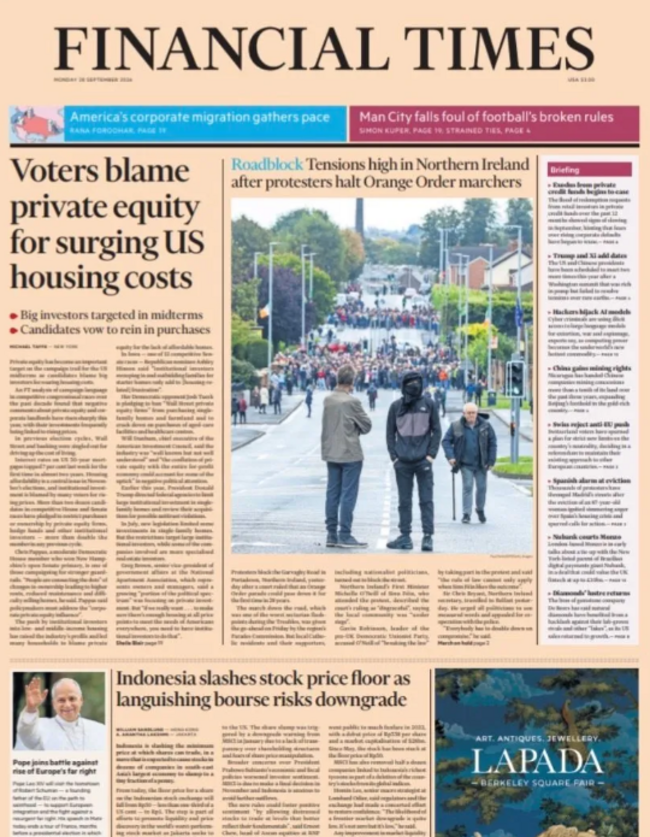
In the years following the Brexit vote, the resultant negotiations about the UK’s exit and the potential effect on Northern Ireland were often given prominence by the Financial Times.
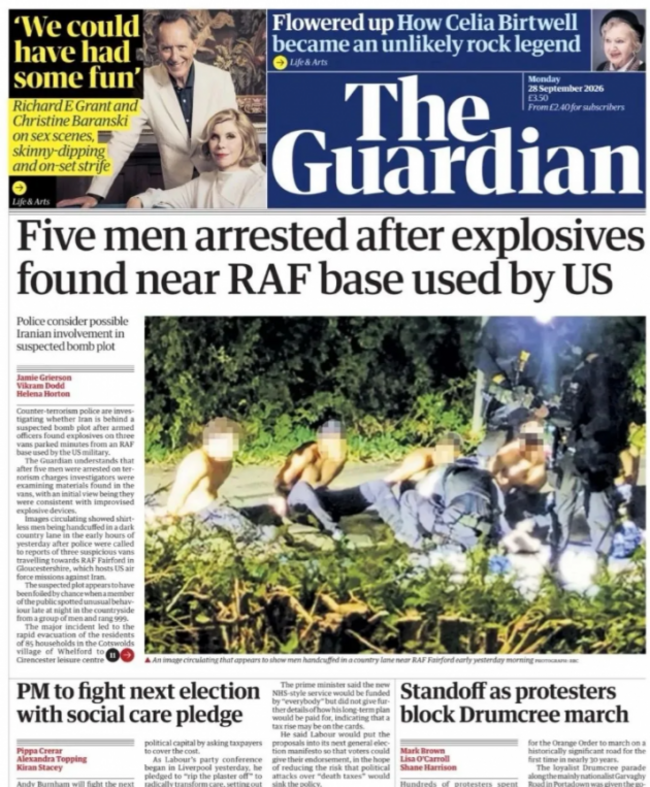
The paper which gave the next greatest prominence to the Drumcree dispute was The Guardian, which made it the third story on its front page on Monday.
Unlike the Financial Times, there was no picture, but it also gave Drumcree two paragraphs on the front page under the headline: Standoff as protesters block Drumcree march.
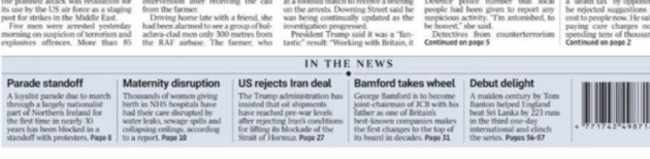
The only other UK paper to feature Drumcree on its front page was The Times, but it did so in the form of a news-in-brief teaser along with several other stories from around the world.
There were five such ‘In The News’ summaries on the bottom of the front page, with Drumcree being the first under the heading: Parade standoff
Tracking UK TV coverage of the event is more difficult, but there have been various live reports from the scene in Portadown by BBC News, Sky News, GB News and others.
At the height of the stand-off on Sunday afternoon, Drumcree was the second item across the Sky News Radio feed, which is provided to newsrooms across the UK.
The RAF Fairford incident was the top story, as it was almost uniformly everywhere in British media.
BBC News carried a TV news package about the history of Drumcree on its dedicated news channel and online on Sunday, but the story was not the lead item on BBC’s News at Ten.
The BBC’s primary news podcast, Newscast, was broadcasting from the Labour Party conference on Monday and made only a short reference to Drumcree, noting that Secretary of State Chris Bryant had to leave the event to “fly over to Northern Ireland to sort out this stand-off about a parade in Drumcree”.
Bryant himself made a speech at the conference and was clearly disappointed to be speaking about a dispute many had hoped would be in the rear window, stating that he “wanted to shout out that Northern Ireland is being transformed”.
On Drumcree, Bryant said the Labour government would “go the extra mile for peace”.
UK Prime Minister Andy Burnham did not mention Drumcree in a conference speech that sought to strike an unrelentingly positive note and set the tone for his premiership.
Burnham said he wanted to “draw a line on a decade of division” and bring “a spirit of unity and positivity back to our country”.
The one mention the North did get was in conjunction with the other constituent parts of the UK, which Burnham said he would “fight with everything I’ve got” to keep it together
“Driving power out of Whitehall and into every postcode of Wales, Scotland, Northern Ireland and England and closing divides between people and places,” he said.

To embed this post, copy the code below on your site







have your say