Sign in. It’s quick, free and it’s up to you.
An account is an optional way to support the work we do. Find out more.
Sign in. It’s quick, free and it’s up to you.
An account is an optional way to support the work we do. Find out more.
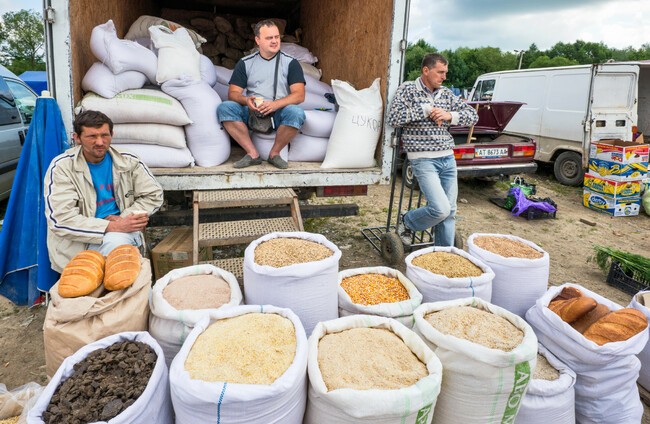
Media outlets across Europe – including The Journal – have worked together to produce a series of articles on Ukraine, Moldova and the EU, covering areas such as security, disinformation, and this one, on what it would mean for European agriculture if/when those countries join the EU.
IT’S SUMMER HOLIDAYS but regardless of where you might travel in Europe, farmers there are likely to have recently taken their tractors to the streets in protest against one policy or another.
It may be due to the rising cost of fuel, unfair competition from much cheaper products coming from less developed markets, or any cut to the CAP, the European Common Agricultural Policy.
The CAP is likely to require a further rethink due to the proposed accession of Ukraine and Moldova into the EU – a move that will mean the “breadbasket of the world” forming part of the European bloc. What would that mean for Ukraine, and everyone else?
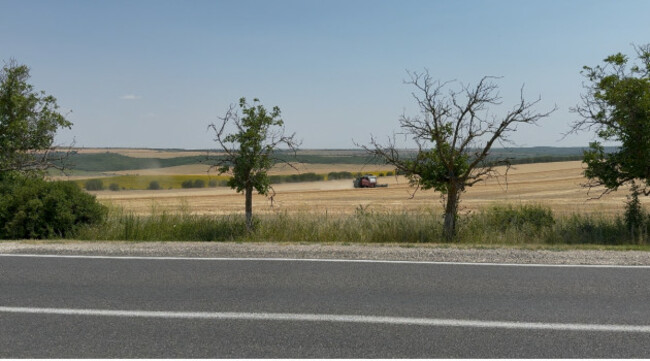
Even discounting the territorial losses due to the Russian invasion, Ukraine still has 32 million hectares of usable agricultural land, of which 26 million are already under cultivation – twice the amount of arable land in France and three times that of Spain and Poland. In the event of accession, Ukraine would become the EU’s leading producer of cereals and oilseeds—rapeseed, sunflower and soybeans.
Moldova, with 1.87 million hectares, is moving towards EU accession in tandem with Ukraine.
But unlike Moldova, Ukraine’s land ownership structure poses a particular challenge for the European Union. A legacy of Soviet-era collectivisation, Ukrainian farmland is organised into medium and large enterprises. The average farm size is 649 hectares (compared to 60–70 in France and 11–12 in Poland), with medium enterprises around 1,493 hectares and large agri-holdings spanning thousands more.
This agricultural element “is considered among the most difficult in the EU accession process,” according to researcher Elsa Régnier in a 2024 study from Sciences Po.
The European Commission has already acknowledged that Ukraine and Moldova “will need time and effort,” as the EU “must ensure that its policies, including the CAP, are fit for an enlarged Union.”
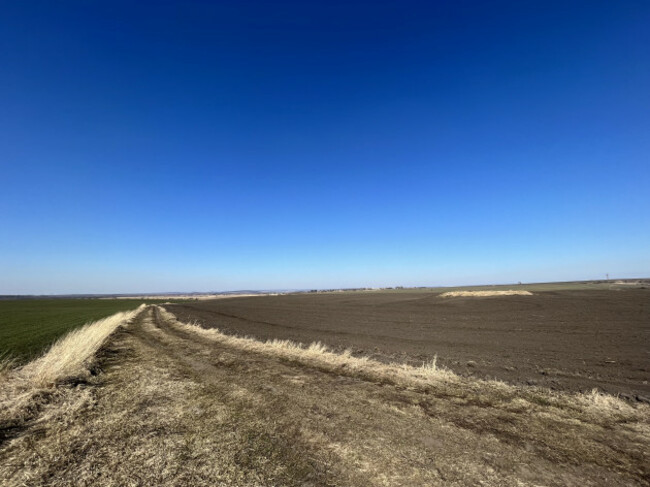
Ukrainian soil is among the richest in the world. Scientists call it chernozem (black earth), due to the characteristic dark colour created by the accumulation of organic matter in the soil.
“In some areas of central Ukraine, the humus layer can reach up to one metre in thickness, which is extraordinary,” says Mykhailo Mulenko, researcher at the Khortytsia National Reserve. The depth of the humus makes it more resistant to the aggressive techniques of modern agriculture, helping preserve its fertility.
The Russian invasion cast huge doubt on Ukraine’s capacity to continue producing from its soil. Russian ships blockaded the port of Odessa, which accounted for more than 80% of Ukraine’s agricultural exports; missiles destroyed factories that processed food and seeds in Kharkiv; and Russian bombs deliberately targeted crops and agricultural machinery in Chernihiv and Sumy. Mines contaminated the soil across areas crossed by Russian forces.
But Ukraine managed to retain control of Odessa, established new export routes by sea and rail, saved its seeds and harvests, and reorganised its logistics and fuel supply chains.
According to Roman Leshchenko, former minister of Agrarian Policy and Food of Ukraine: “It is like another front line: bread is sacred for us, and sowing is a symbol of life. You cannot imagine what it means for Ukrainians, who have survived two world wars and a famine.”
Yet Ukraine’s huge agricultural capacity has not always prompted smiles across Europe.
A new export agreement between the EU and Ukraine last autumn underlined the difficulties that could come with integrating that country into the Union.
At the time, Ukraine was accused of unfair competition. Hungary, Poland and Slovakia went as far as imposing bans on Ukrainian imports.
Dănuț Andruș was a farmer whose face became emblematic of Romanian farmers’ protests against Ukrainian products, during which tractors blocked the main road into Bucharest.
Today, he is no longer so radically opposed to Ukraine and Moldova’s integration.
“I don’t think it’s good, because it will destabilise the market, but every people has the right to do what it wants,” he said.
If they comply with the rules, I have no problem.
According to Yves Le Morvan, head of supply chains and markets at the Agridées think tank in France, a minor adjustment of the CAP will not be sufficient.
“Ukraine is not Poland; it has an agricultural economic model inherited from the former Soviet Union, with land ownership structures and business forms that are external to the EU system.”
He believes there are two options: either an accession that “is not full membership,” or a major reform of the CAP including long-term protective mechanisms.
With Ukraine’s accession, the European Union could either significantly increase the CAP budget (currently around 23–25% of the EU budget), reduce the allocation received by member states, or propose a decoupled scheme for Ukraine based on its agricultural area.
Arguably, this could represent an opportunity for the EU.
Russia’s invasion, then the war in Iran, and the ever-present shadow of China underline the importance of food sovereignty. Ukraine’s accession could position the EU as a leading agricultural producer and exporter, while also strengthening its internal resilience.
In 2014, Moldova signed an Association Agreement that included entry into the Deep and Comprehensive Free Trade Area (DCFTA), designed to gradually integrate the Moldovan economy into the EU single market.
The DCFTA has opened access to the world’s largest consumer market, with more than 450 million consumers. In 2025 Moldova became the EU’s main supplier of sunflower, with a 57.5% share. The EU is also the main export market for Moldovan fruit, including plums, apples, table grapes and cherries.
But these successes also come with significant sacrifices. The DCFTA forces small Moldovan farmers to adapt their production to EU phytosanitary and traceability standards, which are far more demanding.
“We already produce according to European Union rules, but without the support European farmers receive,” said Daniel Leahu, a farmer from northern Moldova.
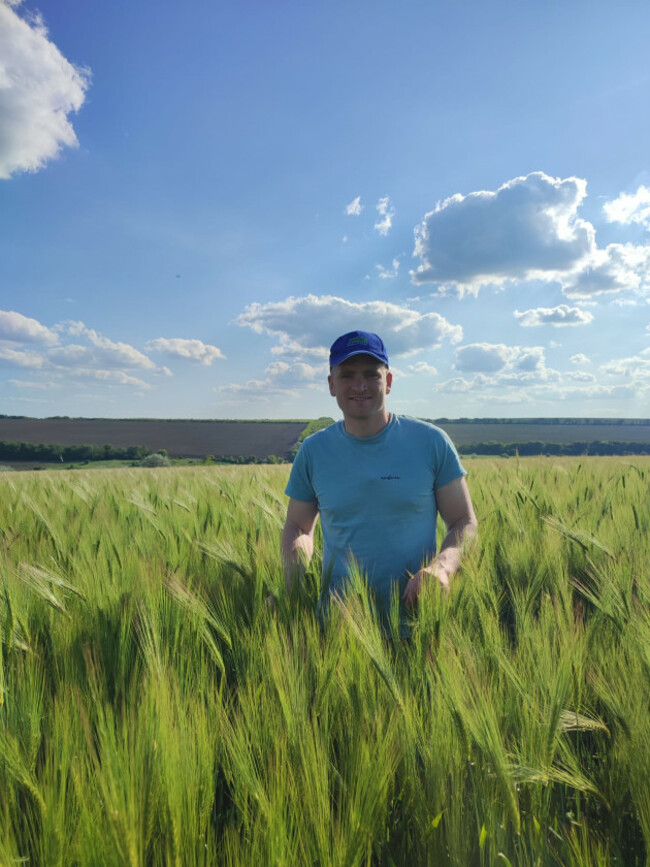
His products (wheat, barley, peas, rapeseed, sunflower and sorghum) reach the EU market through trading intermediaries. He says those exporters “have no problem” with his goods because farmers are “100% aligned with EU requirements, from technology to fertilisers and pesticides.”
But all of this costs money. “We are no longer allowed to do what was previously permitted, and that leads to more expensive production. We comply with the rules but receive nothing in return. European farmers are paid for organic farming, healthy food production, emission reductions. We do the same, but without the payments.”
According to Dinu Todos, another Moldovan farmer who sees limited prospects for joining EU supply chains: “The European market is very tough. It has extremely high requirements in terms of quality, volume and delivery consistency.”
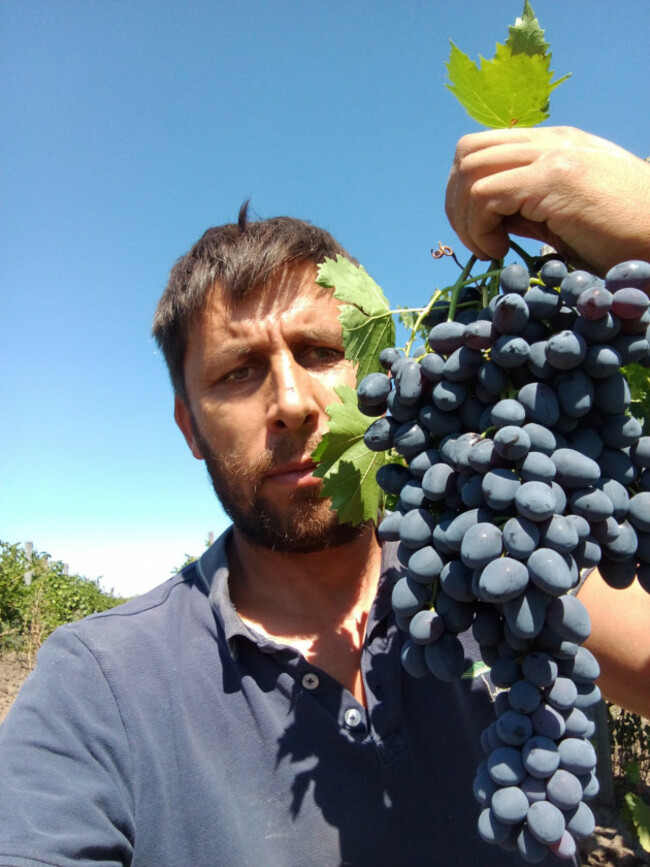
Fear of new agricultural enlargement is often voiced by farmers in France, Spain or Poland, who worry that a large influx of cheaper agricultural products – even if they meet phytosanitary standards, production costs in Ukraine and Moldova are generally lower – could destabilise the market.
Yet Serghei Ivanov, head of the Agriculture Committee of the Moldovan Parliament, and a farmer by profession who was elected MP in 2025 on the list of the opposition Our Party, said farmers there see integration “as a double-edged sword”.
One issue is that Moldovan land is among the cheapest in Europe.
“We need a clear moratorium,” he said. “We can’t allow a farmer from Germany, where land costs €30,000 per hectare, to come and buy land en masse in Moldova. We need a protection period until our farmers become economically viable and can compete on equal footing.”
“This is a year of intense internal work for us,” said Ukrainian Deputy Prime Minister Taras Kachka, who has already told one meeting that the country faces “a year of intense work”.
It will be a challenge, but according to Volodymyr Rever, a farmer from Lviv in western Ukraine: “More difficult than the war? I don’t think so. We will adapt.”
Reporters: Oxana Bodnar (Hotnews.ro – Moldova); Lola García Ajofrín (El Confidencial – Romania); Alicia Alamillos (El Confidencial – Ukraine / Madrid)
This article was written as part of a cross-border European journalistic collaboration within the framework of the EU NEIGHBOURS EAST programme. A longer version of this article was published by El Confidencial.
To embed this post, copy the code below on your site









have your say