Sign in. It’s quick, free and it’s up to you.
An account is an optional way to support the work we do. Find out more.
Sign in. It’s quick, free and it’s up to you.
An account is an optional way to support the work we do. Find out more.
LAST UPDATE | 25 Oct 2025

THIS PRESIDENTIAL ELECTION was a testing ground for the left.
Could they unite under one candidate and could they move on from their fractured past?
The answer to both those questions is yes.
The next big question is can they maintain their ‘togetherness’ and actually build a united left bloc that rivals the government parties?
After the general election, the left-wing parties first dipped their toes in the waters of working together by unifying under the speaking rights row.
While it could have been a flash in the pan, the parties learned that together they could achieve a lot more than working in a silo.
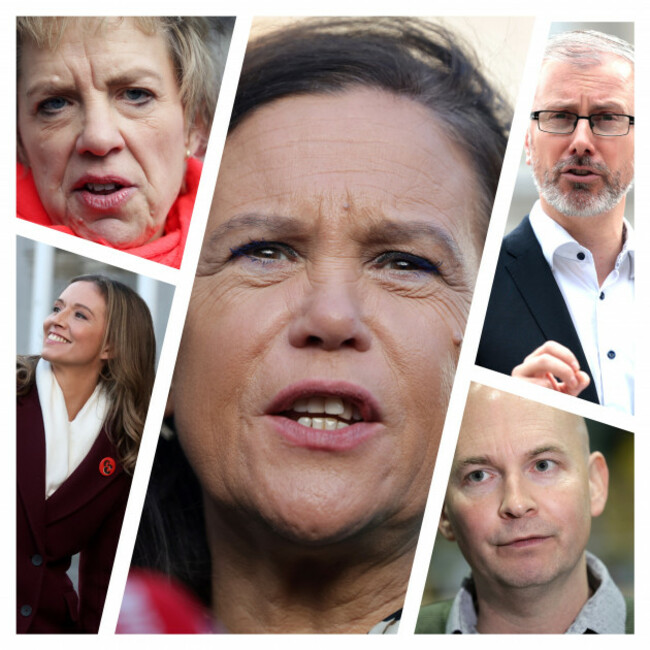
Fast forward to this presidential election, backing one candidate, Catherine Connolly, has heralded success for Labour, the Social Democrats, People Before Profit, the Green Party and Sinn Féin.
The left are viewing this as a stunning blow to the government and are pushing the narrative that just under a year after the general election, the public are fed up Fianna Fáil and Fine Gael.
“People are looking for an alternative vision,” Labour leader Ivana Bacik said today, adding that a united left government after the next election is a possibility.
“We’re seeing a real rejection of the politics of the past, represented by Fine Gael and we’re seeing an immensely positive response to Catherine’s calm and steady and steadfast message, an alternative type of politics.
“We’re very excited about this. It’s been a really united and really strong campaign, and we’ve been really proud to be part,” she told reporters at Dublin Castle.
Green Party leader Roderic O’Gorman told The Journal that the reason Connolly was able to unite so many from diverse political traditions and approaches was because she had a really positive offering.
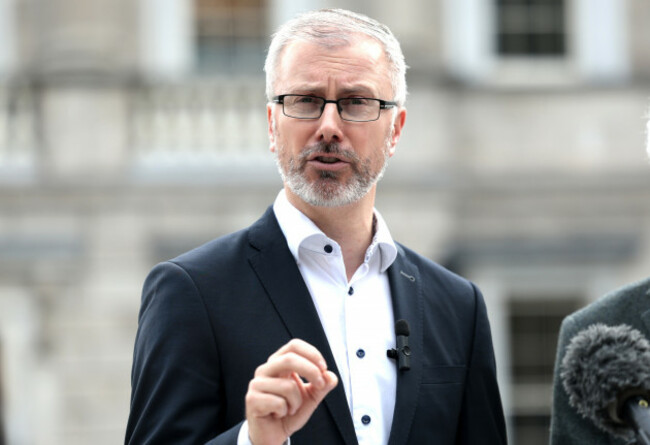
“She was asking people to come behind, to vote for something, not against something. So I see it being cooperation between parties on specific issues where we’re able to really hone in on an issue,” he said, giving the Occupied Territories Bill as an example.
He said the “trust has to be built on” when it comes to other policy issues, which he indicated could pose problems in the run up to a general election.
“I think when it comes to the election, the Irish people want to vote for something. I don’t think the platform of, you know, vote Fianna Fáil and Fine Gael out … I don’t think that’s going to work. Like, to be honest, that was the platform in 2024 and it didn’t work.
“So there has to be something positive there to convince people that there is an alternative government, but you know that has to be built on policy agreement, and you know there will be challenges in that.”
It was easy for the left to unite on the Dáil speaking rights row at the start of this year, “because it was such a stroke”, he added, but finding commonality when it comes to policy issues will be more challenging.
“I think what we’ve done in terms of Catherine Connolly is significant. It’s a step forward, but you’re right. It is a long way to the next election and certainly from the Green Party’s point of view, we’ll absolutely continue cooperation.
“But as leader, my number one job is to rebuild the Green Party and look to regain our council seats, our EU parliament seats, and our Dáil seats as well.”
Bacik said the left would “build on this” result, but that it was a long way to the next general election.
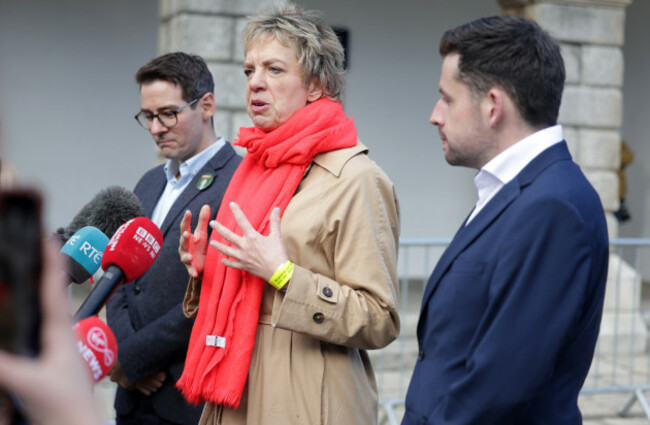
People Before Profit TD Paul Murphy said “when the left unite, they win”, with Social Democrats leader Holly Cairns stating that her party has always said, “vote left, transfer left”.
“We would continue to say that, I think. You know, in the lead up to the last election, we said we would talk to all parties, and we would favour talking to parties on the left first. So that remains.
“What I think that this campaign has done is made it seem tangible for people out there that there is another option. I think it’s always existed, but now we can really kind of feel it at our fingertips. So I hope that will mobilise people to get out and campaign.”
Sinn Féin was the last party to jump on the Connolly bandwagon – just last month.
Mary Lou McDonald said her party’s intervention would be a game-changer, and looking at how the campaign played out, that was probably true.
“We arrived right on time. Our timing in this instance was absolutely impeccable. Sinn Fein arrived at the moment where momentum had to be established and built and we achieved precisely that,” McDonald said today.
When asked did Connolly need Sinn Féin to win, McDonald said:
“Yes, I think the campaign needed every element of it, and for Sinn Fein as the largest political party component of it, of course, it was a significant element of the campaign.
“And I think Catherine has asserted quite correctly that she is an independent candidate, a woman with a very independent mind. But I think she has repeatedly acknowledged all of the constituent parts of the campaign and the importance of it.”
So what about Sinn Féin’s role in any future left bloc going up against Fianna Fáil and Fine Gael?
Sinn Féin Dublin Central TD Aengus Ó Snodaigh said all parties of the left would build on this win.
“This is the first major political test. We worked well together,” he said, adding that obviously each party has different politics and different nuances, but the left working together was appreciated by those on the doors in this election.
“People understood, and they were saying, ‘this is the challenge for you. You have to continue this, we need to see an alternative at the next election’.”
He said the last time we there was any major attempt to try and put forward a united left front was in the 2016 general election when the trade union movement asked parties to sign up to a coalition checklist. “But that seemed to be dropped, and then we all went our own way. Now the challenge is for us to continue this.”
Ó Snodaigh said each party will obviously stand their own candidates but he said the message to transfer left needs to hammered home.
“I think we need to be going to the electorate to say they need to transfer left. I think that needs to be a lot more forceful. We’ve said it over the years, but it hasn’t been repeated.
“And in between the election, we need to build up that comradeship, but also send the message to the electorate, if you vote for us as a collective, you will get us as a collective.”

To embed this post, copy the code below on your site















have your say