Sign in. It’s quick, free and it’s up to you.
An account is an optional way to support the work we do. Find out more.
Sign in. It’s quick, free and it’s up to you.
An account is an optional way to support the work we do. Find out more.
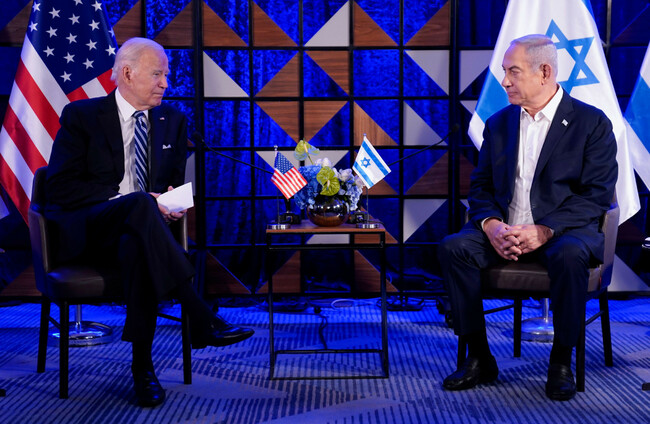
THE UNITED STATES has taken a public distance from Israel as never before over the Gaza war but the decisive test will be Rafah and if Israel will heed American warnings against an offensive in the packed city.
The United States on Monday abstained at the Security Council, allowing a resolution to pass for the first time that called for an immediate ceasefire.
This move infuriated Prime Minister Benjamin Netanyahu who later delayed an Israeli delegation to Washington, which was to discuss US concerns on Rafah.
But in a stance surely noted by Netanyahu, President Joe Biden has made clear he will not use his key point of leverage – cutting US military assistance to Israel.
Annelle Sheline, who recently resigned in protest from the State Department, where she had been on a fellowship working on human rights, said the Biden administration may be shifting.
But Sheline added that its actions so far – including the resolution and plans for an emergency pier to bring in aid – amounted to “PR stunts.”
“I can only hope that things are starting to change. Unfortunately, I don’t yet see the US actually using its leverage as far as ending or withdrawing support for Israeli military operations, turning off the tap of weapons,” she told AFP.
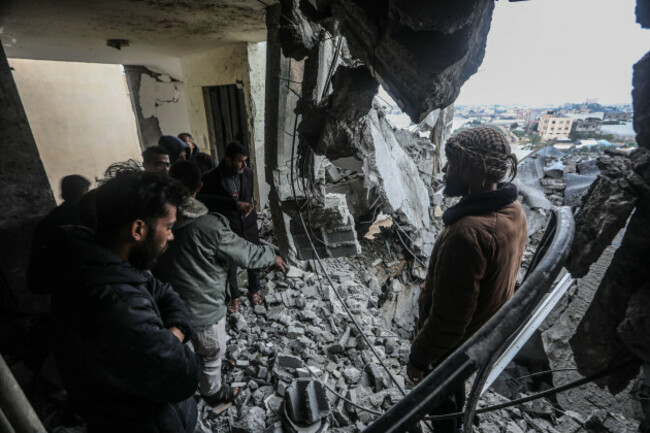
The United States has repeatedly warned Israel not to attack Rafah, the southern city where more than 1.4 million Palestinians have taken shelter.
Netanyahu last week vowed to press ahead after a direct appeal from visiting Secretary of State Antony Blinken. US officials say they will present alternatives to the Israeli delegation on Rafah, that will focus on striking targets while limiting civilian casualties.
Stephen Wertheim, a senior fellow at the Carnegie Endowment for International Peace, said that US officials’ presentation of alternatives “indicates to me that they believe some sort of military operations will occur and they’re trying to limit the damage of that operation.”
Singh said the holding pattern on Rafah hurt the United States and Israel as international pressure builds.
“I would say that probably there’s a desire in Washington for them to get on with whatever they’re going to do one way or the other – absolutely protect civilians from harm, but this kind of perpetual indecision, I think, is itself harmful,” Singh said.
US criticism has been mounting against Netanyahu with Senate Majority Leader Chuck Schumer, a staunch backer of Israel and the highest-level elected American Jew, in a bombshell speech criticizing the conduct of the war and urging new elections.
A Gallup poll released Wednesday said only 36% of Americans approved of Israel’s actions, down from 50% in November.
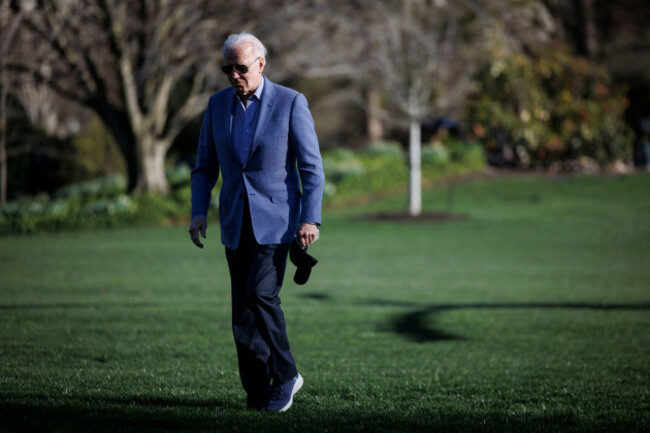
Biden is a lifelong supporter of Israel who, facing a tough reelection fight in November, is feeling the wrath of the left in his Democratic Party on Gaza, where the United Nations is predicting famine.
Netanyahu, also battling for his political life at the helm of a far-right coalition, is a veteran fighter in Washington who has aligned himself with much of the Republican Party and clashed with three Democratic presidents.
“Both Biden and Netanyahu benefit from having some degree of friction between them,” Wertheim said.
“Possibly the one thing that could save Netanyahu government once a new election occurs is for Netanyahu to be able to say to the public, I’m the one figure who was able to stand up to the Americans and also preserve America’s support for us,” he said.
Biden, in turn, is eager to show he is pushing back against Israeli “brutality” without imposing costs by restricting weapons.
“What we’re seeing is a lot of theater that serves the political interests of the leaders,” Wertheim said.

To embed this post, copy the code below on your site













have your say