Sign in. It’s quick, free and it’s up to you.
An account is an optional way to support the work we do. Find out more.
Sign in. It’s quick, free and it’s up to you.
An account is an optional way to support the work we do. Find out more.
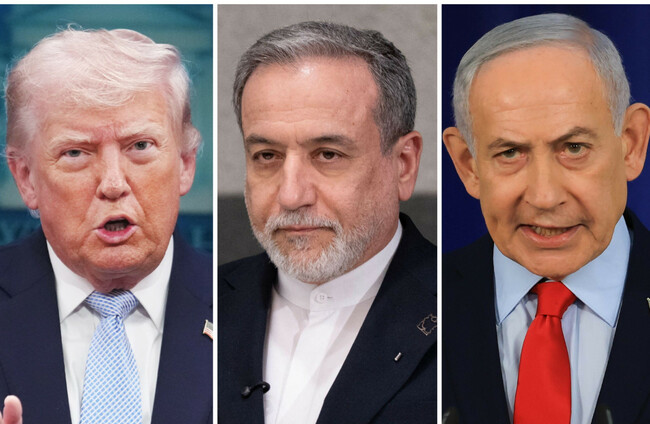
THE US AND Iran agreed to a two-week ceasefire last night, some 90 minutes before Donald Trump’s deadline to obliterate Iranian civilisation expired.
Tehran has agreed to reopen the Strait of Hormuz temporarily as part of the agreement, with the US president saying America will be “helping with the traffic buildup” in the waterway, through which 20% of the world’s oil passes.
Israel said it supports Trump’s decision, but insisted that the two-week halt to the conflict did not include Lebanon.
Here’s everything we know about the deal so far.
Trump said last night that the US received a 10-point ceasefire proposal from Iran, saying he believes it is “a workable basis on which to negotiate”.
“Almost all of the various points of past contention have been agreed to between the United States and Iran, but a two week period will allow the Agreement to be finalized and consummated,” he wrote on Truth Social.
This came after the US sent a 15-point proposal to Iran via Pakistan. Details of the proposal have not been released officially, but the New York Times reported that it addressed Iran’s ballistic missile and nuclear programmes.
🚨 President Donald J. Trump makes a statement on Iran: pic.twitter.com/9mqTayL0Q3
— The White House (@WhiteHouse) April 7, 2026
Trump said the agreement came about after he spoke to leaders in Pakistan, which has played a key role in mediating the war launched by the US and Israel on 28 February.
The ceasefire will be subject to Iran “agreeing to the COMPLETE, IMMEDIATE, and SAFE OPENING of the Strait of Hormuz,” he added.
He told AFP that Iran’s enriched uranium would be “perfectly taken care of” under the two-week truce.
The Republican leader has justified the war by accusing Tehran of enriching uranium with the aim of building an atomic weapon, an assertion not backed by the UN nuclear watchdog and which Iran has denied.
In a previous plan to end hostilities, which Tehran did not agree to, the US demanded Iran stop further enrichment, agree to limits on its missile programme and cease support for militant groups in the region.
Those requirements have not been detailed in the latest truce.
Trump has been inconsistent in his conditions for ending fighting, regularly backtracking from hardline demands. Last month, the US leader said Iran’s “unconditional surrender” would be the only acceptable outcome to end the war.
Iran’s foreign minister Abbas Araghchi confirmed last night that “safe passage through the Strait of Hormuz will be possible via coordination with Iran’s Armed Forces and with due consideration of technical limitations”.
Already this morning, maritime monitor Marine Traffic has said that two ships, the Greek-owned bulk carrier NJ Earth and the Liberia-flagged Daytona Beach, passed through the strait in the last few hours.
Statement on behalf of the Supreme National Security Council of the Islamic Republic of Iran: pic.twitter.com/cEtBNCLnWT
— Seyed Abbas Araghchi (@araghchi) April 7, 2026
The country has issued a 10-point plan for ending the war, which includes several sticking points that the US has previously said were unfeasible.
According to Iran’s state broadcaster, the plan includes continued Iranian control over the Strait of Hormuz, “acceptance of enrichment”, the lifting of all primary and secondary sanctions and a UN Security Council resolution to make the deal binding.
It also includes the payment of compensation to Iran, the withdrawal of the US military from the Middle East, the release of frozen Iranian assets and a “cessation of war on all fronts, including against the heroic Islamic Resistance of Lebanon”.
A statement from Benjamin Netanyahu’s office last night said Israel supports Trump’s decision “to suspend strikes against Iran for two weeks subject to Iran immediately opening the straits and stopping all attacks on the US, Israel and countries in the region.”
The statement said Israel also supports US efforts “to ensure that Iran no longer poses a nuclear, missile and terror threat”.
However, it added: “The two-weeks ceasefire does not include Lebanon.”
⭕️ In accordance with directives from the political echelon, the IDF has ceased fire in the operation against Iran, and is highly prepared to respond defensively against any violation.
— Israel Defense Forces (@IDF) April 8, 2026
Overnight, the IDF conducted a wide-scale wave of strikes targeting missile launch sites and…
Pakistani prime minister Shehbaz Sharif had said the two-week ceasefire applied “everywhere including Lebanon”.
Israel has resumed strikes in southern Lebanon this morning, with the IDF issuing an evacuation order for an area more than 40 kilometres inside the country.
Israel has been consistently striking Lebanon since the first week of the war on Iran. It came after Iran-linked Hezbollah launched attacks on Israel to avenge the killing of Iranian supreme leader Ayatollah Ali Khamenei.
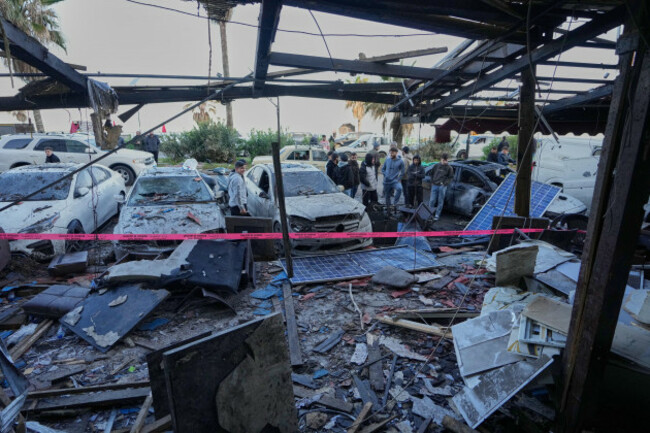
The strikes have led to more than 1,500 deaths, according to Lebanese authorities.
Sharif said the ceasefire would start immediately.
He said delegations from both the US and Iran were invited to Islamabad on Friday “to further negotiate for a conclusive agreement to settle all disputes”.
The talks would be aimed at reaching a “conclusive agreement,” he said.
Iran said it would allocate two weeks for the negotiations.
White House press secretary Karoline Leavitt said the Trump administration was considering talks in Pakistan, but plans were not finalised.
Whatever form they take, the talks are expected to be difficult.
Both sides are already disagreeing on proposals in their respective plans, and Iran will likely find it hard to trust the US in any talks considering that it has bombed the country twice already when it was at the negotiating table.

To embed this post, copy the code below on your site













have your say