Sign in. It’s quick, free and it’s up to you.
An account is an optional way to support the work we do. Find out more.
Sign in. It’s quick, free and it’s up to you.
An account is an optional way to support the work we do. Find out more.
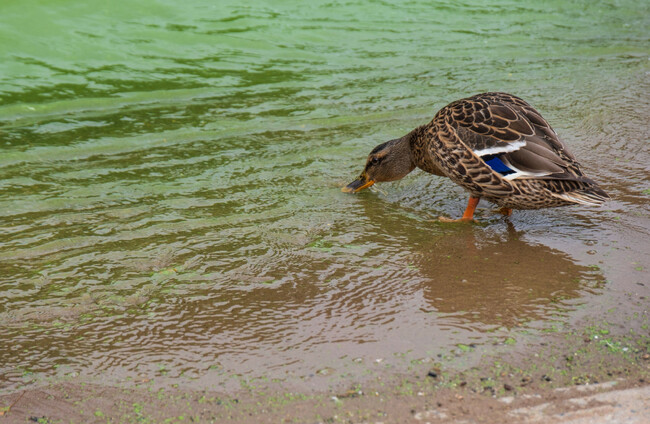
THE UK’S OFFICE of Environmental Protection has said the plan to protect Northern Ireland’s waters needs to be implemented “without further delay”, with the ongoing algae blooms in Lough Neagh a particular cause for concern.
The OEP has carried out a review of the key legislation regarding water quality and how those laws are being implemented by the Department of Agriculture, Environment and Rural Affairs (DAERA) and the Northern Ireland Environment Agency (NIEA) through river basin management planning.
Regulations require DAERA to develop and roll out river basin management plans every six years. The latest plan was due by December 2021, but the draft plan has yet to be finalised, the OEP said.
OEP CEO Natalie Posser said that the agency’s report finds that although the approach of the regulations is “broadly sound”, they are not being implemented or delivering as they should in terms of protecting Northern Ireland’s lakes, rivers and coastal waters.
“This paints a very worrying picture,” she said. “Unfortunately, we don’t have far to go to see the serious consequences when water quality is neglected, as the ongoing crisis at Lough Neagh shows.”
Bacteria commonly associated with faeces from livestock or human effluent has been discovered around the bank of Lough Neagh, prompting public health concerns. The condition of the lake has become a significant political issue in recent years.
She said the report identifies the “urgent” need for DAERA to publish the latest river basin plan and put it into action.
The OEP’s report also recommends that the draft plan should be strengthened by including specific environmental objectives for all individual water bodies.
Just 31% of surface water bodies in Northern Ireland are in a good ecological condition, the report found, a fall of 1% since 2015.
This is despite DAERA setting a target of bringing 70% of water bodies to “good status” by 2027.
The failure to effectively implement regulations means this target and others are now unlikely to be met, according to the OEP report.
“As things stand, we assess that the 2027 target is likely to be missed by a considerable margin. We also assess that Northern Ireland is not on track to meet the Environmental Objectives in the Water Framework Directive NI Regulations,” Posser said.
“This failure to meet the 2027 target will then have a detrimental knock-on effect on the Northern Ireland Executive’s other environmental aims, such as the ‘excellent water quality’ goal in the draft Environment Strategy and ‘thriving, resilient and connected nature and wildlife’ goal .”
She added: “There needs to be stronger leadership from the Northern Ireland Executive in implementing the WFD NI Regulations. It must speed up and scale up its efforts to protect and improve its waters.”
The OEP has made 16 recommendations to the Northern Ireland Executive, Northern Ireland Assembly and DAERA, “designed to increase the prospects of protecting and improving the water environment”.
The full report and list of recommendations is available here.

To embed this post, copy the code below on your site













have your say