Sign in. It’s quick, free and it’s up to you.
An account is an optional way to support the work we do. Find out more.
Sign in. It’s quick, free and it’s up to you.
An account is an optional way to support the work we do. Find out more.
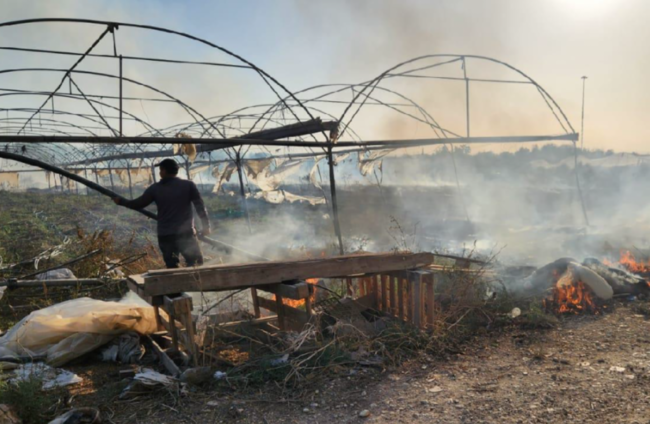
WHILE EYES AROUND the world have been trained on the Gaza Strip since last October, violence against Palestinians at the hands of Israeli settlers and soldiers in the West Bank has intensified dramatically.
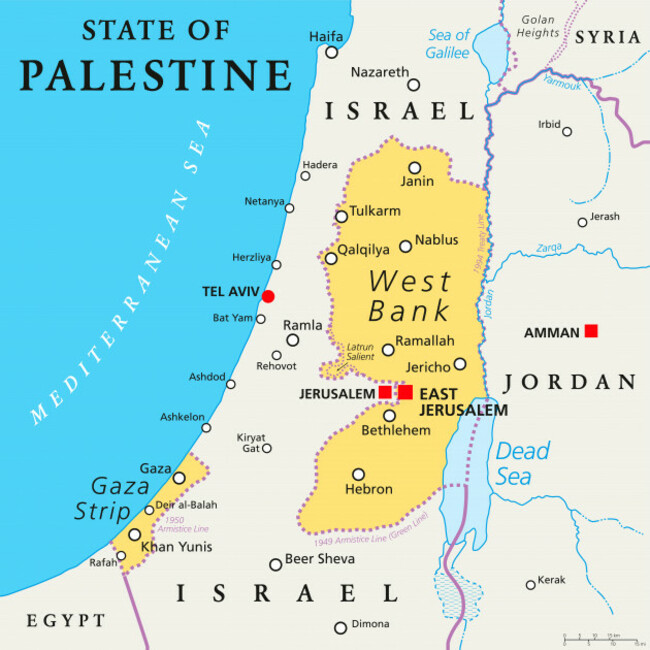
The West Bank, named for its location next to the River Jordan, is the largest section of the now broken up Palestine. It is territorially separate from the much smaller Gaza strip and a mainstay of its economy is agriculture.
The West Bank has been under Israeli military occupation since 1967 and since then Israeli colonisers (known as settlers) have been displacing the native population and establishing colonies. Around 700,000 Israelis now live in illegal settlements in the West bank and occupied East Jerusalem.
2023 was already on course to be the most violent year on record in the West Bank and that was before the 7 October attack on Israel launched from Gaza.
Since October, at least 635 Palestinians have been killed by troops and settlers, according to an AFP tally, while at least 19 Israelis, including soldiers, have been killed by Palestinians, according to Israeli figures.
Farmers are among those subjected to increasing attacks, dispossession and restrictions preventing them from accessing their lands and livelihoods.
“The Israeli occupation has put so many restrictions on farmers, especially in areas behind and just outside the separation wall,” Oxfam’s Feda Al Husseini told The Journal.
Al Husseini is a programme director with the NGO and works with West Bank farmers on an educational project through which they share modern farming techniques.
She explained that last year’s olive harvest was particularly badly affected by newly introduced restrictions on movement.
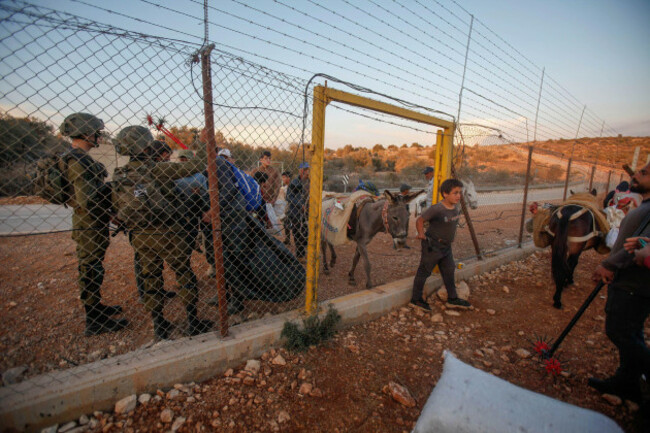
“The Israelis prevented farmers from accessing their land to harvest their olive crops, and they lost all of the production of the olives, especially for land that is inside the separation wall, because there is total denial for them to enter their land.”
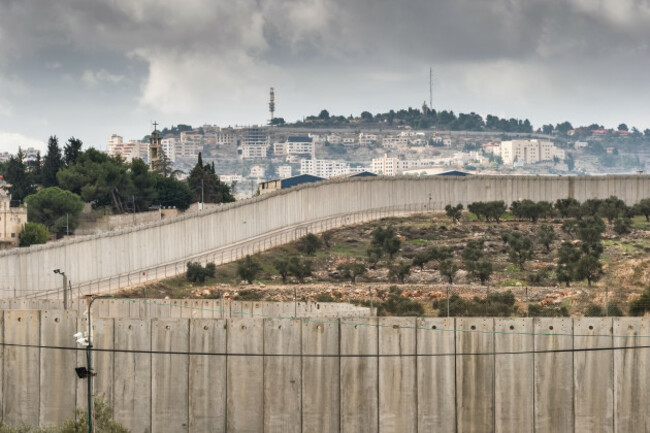
The separation wall, often called the Wall of Apartheid, runs between Israel and the West Bank but it cuts through some Palestinian territory, meaning some farmers have to pass through checkpoints.
Al Husseini said that Israel has been fortifying sections of the barrier in recent months, upgrading parts from fences to concrete walls.
For Al Husseini and many other observers, Israel is using the war in Gaza as an opportunity.
With international attention fixed on the devastation there, Israeli settlers, with Government and military support, have stolen more land in the West Bank.
The Journal spoke to one farmer from the West Bank area of Tulkarem, whose story typifies how life under Israeli occupation has become more and more precarious since last October.
Odai al Taneeb, whose farm lies in the shadow of an Israeli watchtower right next to the separation wall, described repeated attacks on his farm by Israeli soldiers that have devastated his crops and infrastructure.
His farm was used as an Oxfam demonstration site, where university students and other farmers came to see agricultural techniques showcased. Those demos have been put on hold in the area due to safety concerns.
On 7 July, when Odai tried to enter his farm to pick tomatoes with his mother, he says that nearby soldiers noticed them and threw flares at their crops, setting them on fire.
The blaze spread across the rows of vegetables and partially burnt the family home.
As Odai and his mother put out the fire in their house, neighbours said that they saw soldiers continuing to throw flares onto his crops.
In the end, the farm was destroyed and the family suffered a heavy financial loss totalling roughly half a million shekels (€126,000).
Calling the fire brigade, Oxfam workers explained, would have been pointless because they would need to get a permit to enter the area, by which time it’s usually too late to act.
If firefighters attend the scene without a permit, they risk being shot.
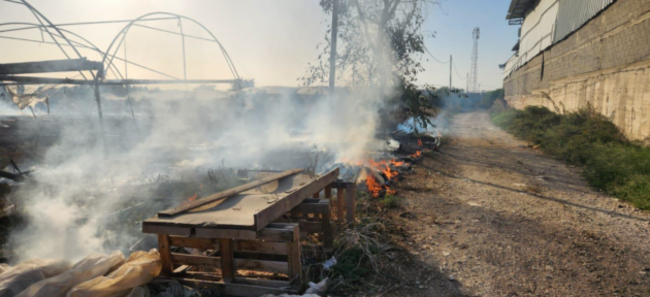
It was not the first time that the farm, which has been Odai’s family home for generations, had been attacked. It was destroyed in 1989, then again in 1995 and for a third time in 2002.
Odai says that he and other local farmers were also prevented from accessing their land following the start of the latest conflict in Gaza last year. When they finally got to their farms, they found their greenhouses and irrigation systems had been destroyed.
“One time, for five months I couldn’t come to the farm,” Odai said. “I couldn’t come and everything I planted was dead.”
Odai also lost 30 chickens to starvation because he was not able to go and feed them. He had a fish farm too, but the generator was destroyed and the fish perished.
In a video call, he showed the za’atar he has planted in the shell of a burnt out greenhouse and gave a tour of the others, now empty.
“Right now, I use this greenhouse, but the other greenhouses, I can’t do anything. I can’t plant because the situation is not safe,” he said.
He also showed his neighbour’s barren, untended farm, a common site in the area.
Odai said that around 90% of his neighbours have now completely abandoned their farms due to the soldiers’ attacks, and the heavy cost of starting over.
Even though the damage done to Odai’s farm was worse on previous occasions, he says that what makes things more difficult now is the cost of starting again.
Oxfam’s Zahia Salem described the economic situation in the West Bank as “catastrophic”.
“Because the economic and financial situation is so bad and there isn’t as much support from international NGOs and from the Government itself, it’s harder for farmers to rebuild.”
In addition to financial losses, farmers also suffer the emotional pain of being denied access to land their families have been working for generations.
Odai still tries to reach their farm every day, holding onto the dream of returning and hoping he won’t lose it forever.
“The hope is always there,” he said, adding that he has no doubt he will return permanently some day.
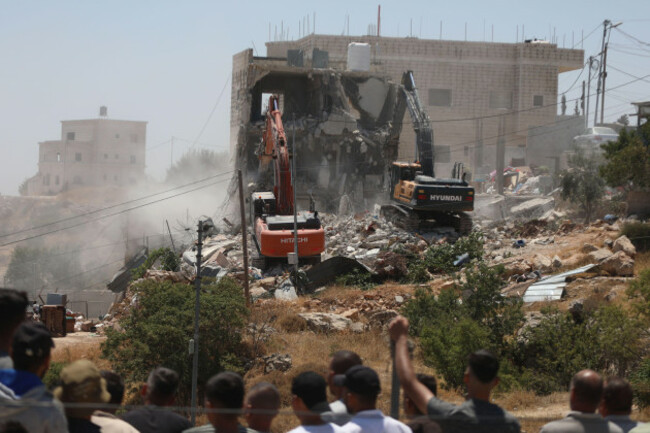
The UN’s High Commissioner for Human Rights, Volker Turk, recently described the situation in the West Bank as “a matter of grave concern”.
“Israel allows and facilitates an environment characterised by fear forcing communities from their homes and lands,” he said.
According to the UN, 3,070 people have been displaced by the demolition or confiscation of their homes since 7 October, more than double the number displaced in the ten preceding months.
In the same period, the UN has documented more than 1,000 settler attacks against Palestinians in the West Bank and East Jerusalem.

To embed this post, copy the code below on your site










have your say