Sign in. It’s quick, free and it’s up to you.
An account is an optional way to support the work we do. Find out more.
Sign in. It’s quick, free and it’s up to you.
An account is an optional way to support the work we do. Find out more.
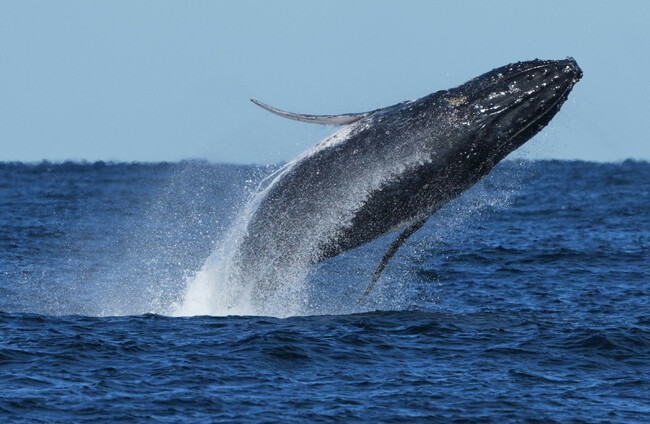
THE FERRY WAS late, but not because of the usual traffic.
Sydney commuters watched from an idling boat this month as humpback whales the size of buses surfaced nearby, halting the vessel’s passage across the harbour.
The curious mammals seemed to be watching them back.
In June and July, it is not uncommon for whales to stop water traffic in Sydney.
Winter heralds the opening of the so-called humpback highway, a migratory corridor along Australia’s east coast used by about 40,000 of the massive creatures as they travel from feeding grounds in freezing Antarctica to tropical breeding areas off Queensland state.
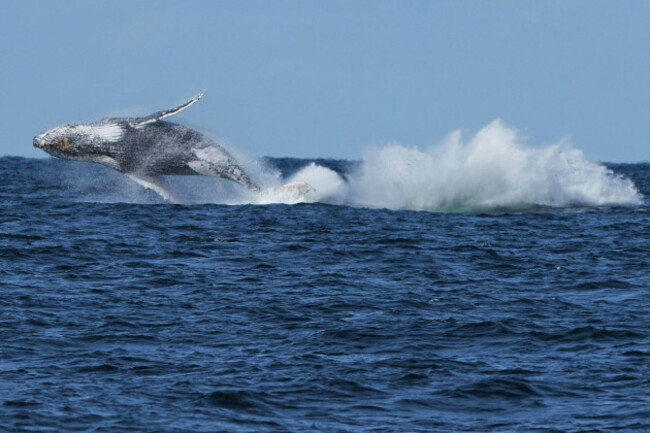
“It’s blubber to blubber,” said Vanessa Pirotta, a wildlife scientist at Macquarie University in Sydney and author of the book Humpback Highway.
During peak traffic periods the bustling coastal city of 5.5 million people becomes one of the world’s few urban centres where you might see a breaching whale on your morning walk, while buying a coffee, or waiting at a bus stop – any place you can see the sea.
The reason humpbacks on the highway are so visible is because of their size – adults can be 52ft to 56ft long and weigh 40 tonnes – and their proximity to people.
On their 6,000 mile journey from icy to balmy waters, one of the world’s longest mammal migrations, the creatures stay close to shore.
“They are incredibly curious,” said Ms Pirotta. “There’s been times where there’s been whales in the harbour this year where they’ve literally halted traffic.”
Australians get so close to the creatures that some have attracted fans.
Among them are Migaloo, an all-white humpback whose sightings spanned 1991 to 2020, and Blade Runner, named for her tussle with a boat propeller that created her long, distinctive scars.
Some keen whale watchers seek a closer look. On a recent morning, Ben Armstrong, a veteran skipper of a whale-watching boat in Port Stephens, a scenic harbour north of Sydney, slowed the engine as two humpbacks breached nearby.
He encouraged passengers to put down their phones and enjoy the spectacle.
Mr Armstrong keeps his tourist boat at distances mandated by Australia’s state laws, but inquisitive whales often go off-script.
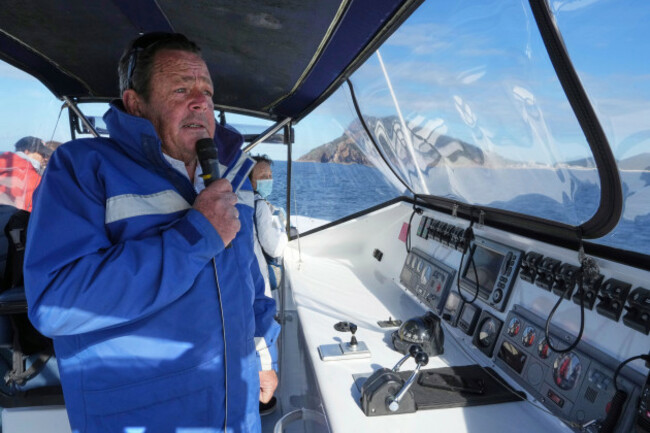
Once, the skipper let his boat drift for an hour while four or five humpbacks treated the vessel “like a bath toy”, playfully preventing it from moving forward or back.
Vincent Kelly, who travelled from Geelong, Victoria, to witness the migration was a recent passenger. Over two hours, he watched half a dozen humpbacks perform breath-taking aerial manoeuvres.
“It was unbelievable to me,” Mr Kelly said. “I didn’t expect to actually see a whale. But they were everywhere.”
The humpback gridlock marks a sharp reversal of fortune for the whales. They were once hunted for meat and oil, and numbers dwindled to a few hundred before humpbacks became a protected species in the southern hemisphere in 1963.
The humpback boom to about 40,000 since has brought the creatures into more frequent contact with people than before.
The population is still growing steadily, amplifying concerns about how humans and giants of the sea can safely share the coastline.
But it also puts millions of Australians a short walk and a little luck away from encountering one of the largest mammals on the planet.

To embed this post, copy the code below on your site












have your say