We need your help now

Support from readers like you keeps The Journal open.

You are visiting us because we have something you value. Independent, unbiased news that tells the truth. Advertising revenue goes some way to support our mission, but this year it has not been enough.

If you've seen value in our reporting, please contribute what you can, so we can continue to produce accurate and meaningful journalism. For everyone who needs it.

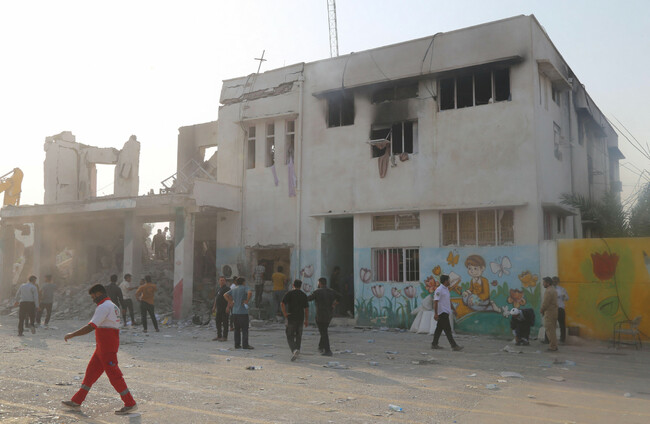
The ruins of a girl's primary school in Minab, Iran, following a fatal blast. Alamy Stock Photo

What do we know, and not know, about a devastating school bombing in Iran?

False claims that the Iranian government admitted blame for the blast were seen by millions.

AN EXPLOSION AT a school in southern Iran has sparked arguments over who is to blame for the blast that is said to have killed more than 165 people, most of them children.

Shortly after news of Saturday’s explosion spread, blame was cast on US and Israeli forces who have launched an extensive bombing campaign across Iran, which has seen much of the country’s leadership assassinated, including the head of state, as well as hundreds more fatalities across the country.

However, counter claims quickly appeared that images of a rocket at the scene, as well as admissions by Iranian officials, indicated that the blast was the result of a faulty missile launched by the Iranian military itself.

“The regime in Iran has now confessed that the IRGC mistakenly bombed an Iranian school yesterday, killing many children,” read one post on X, viewed more than 5,300,000 times.

The IRGC, or Islamic Revolutionary Guard Corps, is part of the Iranian state military.

Multiple posts, including some in other languages, also posted the claim that the Iranian government admitted they were responsible for the explosion, or said that images from the area proved that the blast was caused by an Iranian rocket.

According to figures on X, these have been viewed millions of times.

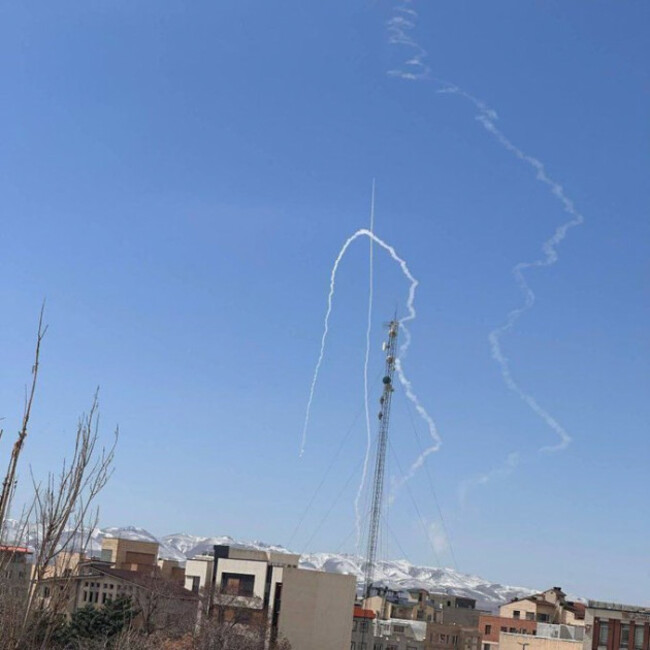
These claims are false. No such admission was made by Iranian authorities, and images used as evidence that an Iranian rocket caused the blast were proven to have no connection with the incident—in one case the photo used as evidence was taken more than 1,000 kilometres away from the school.

Rocket An image fasely said to prove that a misfired Iranian rocket caused the blast.

Due to the nature of the war, as well as restrictions imposed by the Iranian regime, there is much that we do not know about the attack, and plenty of commentators who are trying to push their own theories without any regard for evidence.

Here’s what we do know.

Location

A blast did occur at the Shajarah Tayyebeh school in Minab, a small city in the south-east of Iran.

The location was published by Iranian sources before footage from the scene of the explosion was released and verified by multiple independent media outlets.

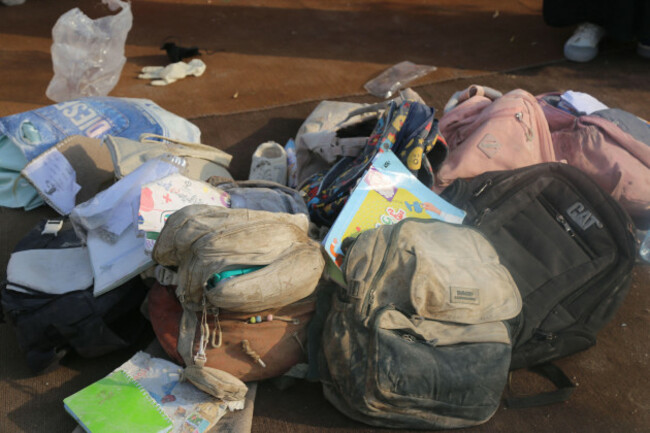
While there was some confusion about what was hit — some claimed that the footage actually showed an IRGC building, or at least a school on an IRGC base — some verified footage showed brightly coloured murals on walls, depicting children, butterflies and crayons, as well as children’s backpack, textbooks and other paraphernalia associated with a primary school.

260301-tehran-march-1-2026-xinhua-this-photo-taken-on-feb-28-2026-shows-schoolbags-at-an-attacked-girls-elementary-school-in-minab-irans-southern-province-of-hormozgan-the-death-toll Backpacks at the scene of an blast at a primary school in Iran. Alamy Stock Photo Alamy Stock Photo

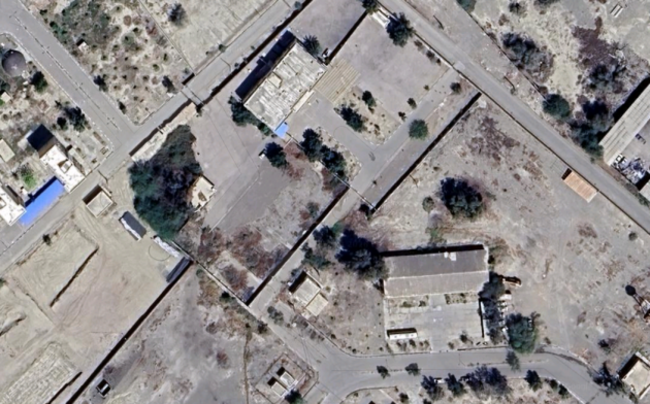
Satellite imagery shows that the school is north of a known IRGC navy base, but distinct and separated from the base’s buildings by roads, walls and open areas, including a car park.

Screenshot 2026-03-02 174025 Google Maps sattelite imagery shows that the school (the rectangular building at the top centre) was seperate from an IRGC compound to the south.

Both Israeli and US officials have said that they are targeting IRGC and navy bases — US Secretary of War Pete Hegseth said today that the US military aims are to “destroy the missile threat; destroy the navy; no nukes”.

(Statements by US officials about their war aims have been contradictory — and the US claims to have already “obliterated” Iran’s nuclear facilities in strikes carried out last June).

Casualties

Images from the blast showed not only backpacks and charred buildings. Footage released by Iranian sources also show rows of body bags, disembodied limbs in the wreckage and, in some cases, the identifiable bodies of deceased children.

(These images of bodies are consistent with verified footage, and multiple images have been published by verified news agencies. However, many of these images have not been independently confirmed to be from the aftermath of the blast).

While some influential social media accounts spread the claim that “no students were killed” in the blast, there is ample evidence that this is, sadly, not true.

Unlike most of Europe, the working week is generally Saturday to Thursday in Iran, with children usually attending Iranian public schools on Saturday, the day of the attack.

The reported death toll from the blast has risen dramatically.

The local governor had put the death toll at 165 while announcing the end of search operations, but that same day, spokesperson for the Health Ministry lamented “in southern Iran, around 180 young children lost their lives in a single missile strike”.

These figures have been reported by Iranian sources and cannot be independently verified.

One human rights group investigating the incident has said that about 170 students were expected to be attending the school at the time of the blast.

An analysis of footage by the New York Times estimated that half of the school building had been destroyed in the explosion.

Public statements

Iranian sources have blamed both Israeli and US forces for the attack. Meanwhile, in a statement reported by US media, United States Central Command said they were “aware of reports concerning civilian harm resulting from ongoing military operations” and that they were “looking into them”.

Israel said it was not aware of a US or Israeli strike on the school, though also said that it had struck multiple IRGC command centres.

The available evidence, including independently verified footage, shows that an explosion powerful enough to heavily damage a school building ripped across a school in southern Iran, close to, but not beside, a known military compound.

Given the scale and timing of the blast, this likely resulted in the deaths of young children, which has been corroborated by press photos, as well as reports from the Iranian Red Crescent.

The exact death toll is unconfirmed, and due to the ongoing war, as well as government restrictions on reporting in Iran, this is unlikely to be independently verified before the end of the conflict.

Despite misleading claims online, it is also unproven who is responsible for the blast. And due to the unreliability of reports from officials on both sides of the war, readers should be wary of any claims of blame or innocence presented without evidence.

With reporting from AFP.

The Journal’s FactCheck is a signatory to the International Fact-Checking Network’s Code of Principles. You can read it here. For information on how FactCheck works, what the verdicts mean, and how you can take part, check out our Reader’s Guide here. You can read about the team of editors and reporters who work on the factchecks here.

Readers like you are keeping these stories free for everyone...
It is vital that we surface facts from noise. Articles like this one brings you clarity, transparency and balance so you can make well-informed decisions. We set up FactCheck in 2016 to proactively expose false or misleading information, but to continue to deliver on this mission we need your support. Over 5,000 readers like you support us. If you can, please consider setting up a monthly payment or making a once-off donation to keep news free to everyone.

Close
JournalTv
News in 60 seconds