Sign in. It’s quick, free and it’s up to you.
An account is an optional way to support the work we do. Find out more.
Sign in. It’s quick, free and it’s up to you.
An account is an optional way to support the work we do. Find out more.
LABOUR LEADER IVANA Bacik has welcomed reports that whiskey, wine and dairy products have been left out of EU counter-tariffs on US products.
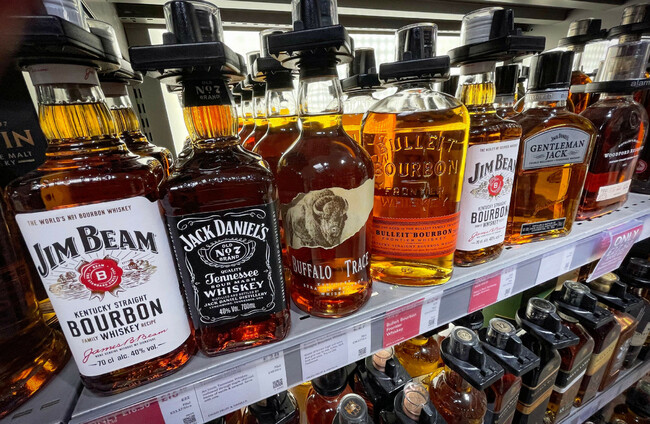
According to a document seen today by the AFP news agency, the EU plans tariffs of up to 25% on US goods in retaliation for levies on metals, but will spare bourbon to shield European wine and spirits from reprisals.
A 20% import tax will be slapped on EU goods tomorrow as part of a major tariff announcement by President Donal Trump last week.
The proposed counter-tariffs aim to show EU strength while Brussels seeks to negotiate over Washington’s broader tariffs onslaught.
Brussels scrapped bourbon from a preliminary list of targeted goods, after bowing to demands from major wine exporters France and Italy, which were spooked by Trump’s threat to hit European alcoholic beverages with a 200% tariff in retaliation.
The US-produced whiskey does not feature on the final list seen by AFP, which was sent to representatives of EU member states ahead of a vote tomorrow.
The list proposes levies on goods including soybeans, poultry, rice, sweetcorn, fruit and nuts, wood, motorcycles, plastics, textiles, paintings, electrical equipment, make-up and other beauty products.
Brussels has so far refrained from hitting back at the 20% duties on the bloc’s imports ordered as part of Trump’s global tariff onslaught, with EU states rallying behind a push to avert an all-out trade war through negotiations.
EU trade spokesman, Olof Gill, said today that the European Commission could present its planned countermeasures to the new levies “as early as next week”.
He added that the EU would consult with member states and industry on the plan before agreeing on “final measures” that EU capitals would then vote on.
It’s understood that if approved, the counter-tariffs will be imposed on 15 April.
“At global level, the tit-for-tat has started with China and the EU is to later today announce a response to the 25% steel tariffs,” Bacik said during Leaders’ Questions in the Dáil this afternoon.
“It’s welcome to hear that whiskey, wine and dairy products will be left out to protect EU and our own alcohol and food exports from further reprisals.”
However, she warned that the “likelihood is that once the EU package is announced, Trump will hit back with further tariffs”.
“Taoiseach, can you offer assurances to Irish businesses, farmers, workers and consumers? Workers facing the dreaded prospect of job losses.
“We’re hearing already from employers, particularly in the med tech and other export sectors, that contracts are being paused or cancelled due to uncertainty, and that what employers and workers need is a short term, State backed Work Support Scheme.”
Bacik noted that both IBEC and ICTU have called for such a scheme to be put in place.
“What we’re talking about is a targeted program,” said Bacik, “not the broad wage subsidy scheme that we had in the pandemic, but a more targeted scheme to address the real impacts of tariffs.
“Are you ruling out such a scheme now, or will you consider it?”
Taoiseach Micheál Martin remarked that the “European response has been a measured one designed to get negotiations underway”.
“We must give that opportunity in the first instance.”
Martin said that while there’s “no doubt that investment decisions are being passed”, he added that “people aren’t as yet, in pharma or med-tech, being laid off or anything like that”.
But Bacik pressed Martin on the Work Support Scheme and said: “We need to hear from government that you’re at least considering the prospect of that sort of scheme to support people staying in their jobs to help keep businesses afloat.”
Over the weekend, Finance Minister Paschal Donohoe ruled out a wage subsidy scheme to support exporting firms in response to Trump’s tariffs.
In response, Martin said that “whatever we do has to be financially sustainable over the long term”.
“It’s just far too early to be venturing anything on that scale just yet,” said Martin.
“This is not the same as COVID-19, and therefore our response has to be one that is sustainable, but also that we have to get some sense of where this is going to settle, if indeed it settles at all.
“But I do believe it will in time, and we will be in a better position to evaluate what the optimal response would be.
“If it doesn’t settle and this tariff war continues, that will have implications on everything.
“So we’ve got to be careful in terms of how we proceed, so that anything we do is financially and economically sustainable into the future.”
-With reporting from © AFP 2025

To embed this post, copy the code below on your site















have your say