Sign in. It’s quick, free and it’s up to you.
An account is an optional way to support the work we do. Find out more.
Sign in. It’s quick, free and it’s up to you.
An account is an optional way to support the work we do. Find out more.
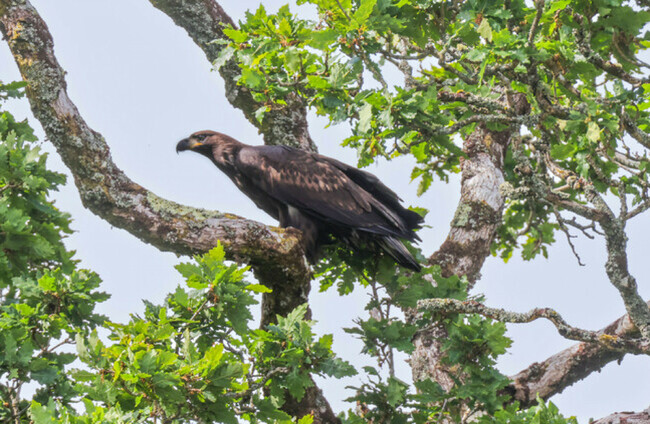
UP TO 150 white-tailed sea eagles have now taken to the skies in Ireland, as the final year of a reintroduction programme, launched almost 20 years ago, kicks to touch.
A total of 26 chicks will be reintroduced to Ireland this year through a programme by the National Parks and Wildlife Service (NPWS) and their Norwegian partners.
Four of them will be released from Killarney National Park this weekend.
The first sea eagles were brought to the park in Co Kerry in 2007, in what was the first phase of the programme to bring back the large bird of prey to Ireland. The bird was shot out and poisoned in the 19th century.
Since 2007, the programme has been a success. Despite some instances of poisonings, including three this year, the population of sea eagles is now healthy enough to sustain itself into the future, the NPWS believes.
Eamonn Meskell, a divisional manager with the NPWS at the park, believes the green space in Kerry provided the perfect nesting habitat for the birds, with its old, tall oak and pine trees, quiet surroundings “and an ample supply of fish available in the lakes”.
Junior minister for nature Christopher O’Sullivan has paid tribute to the collaboration between farmers, the NPWS and landowners in Ireland as well as the state’s partners in Norway, the Norwegian Institute for Nature Research.
“Over 18 years, work and collaboration has led to a growing white-tailed eagle population and also has seen habitat restoration and engagement with landowners and farmers to secure the eagle’s ongoing protection,” he said.
There was evidence now of white-tailed eagles breeding in counties from the south of the island in Cork right up to Donegal. More releases are planning throughout the end of this year.
Every chick is fitted with a satellite tag, so that their movements can be tracked as they disperse and establish in new areas. The chicks are also vulnerable to external factors such as adverse weather conditions, avian influenza, disease, and illegal poisonings.
Aslak Brun, Norway’s Ambassador to Ireland, said he hoped the programme will lead to future reintroduction projects between the two countries. Niall Ó Donnchú, Director General of the NPWS, said the project displayed “best practice” for future ventures.
To embed this post, copy the code below on your site















have your say