TheJournal.ie uses cookies. By continuing to browse this site you are agreeing to our use of cookies. Click here to find out more »
Dublin: 11 °C Sunday 19 May, 2013

7 Dublin curiosities that tell of capital’s inventive past

New book, Ingenious Dublin, charts the world-shaking discoveries, inventions and feats of engineering that came out of the capital – and helps you find physical signs of them yourself.

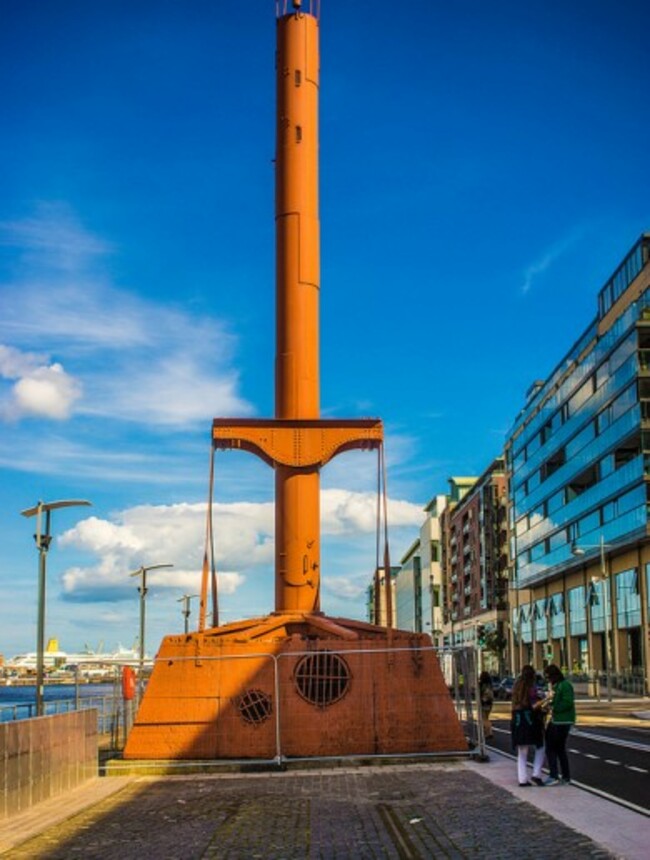
Do you know what this artefact on Sir John Rogerson's Quay was used for? Read on...
Image: infomatique via Flickr/Creative Commons

AN AWARD-WINNING science writer has done the digging on Irish people whose discoveries and feats of engineering have changed the world.

Mary Mulvihill’s Ingenious Dublin is available for an introductory 99 cent on Kindle’s app until 15 September, which means it can be read on everything from a smartphone to a laptop. The idea, Mulvihill told TheJournal.ie this week, is that readers can use it as a quirky tour guide of the capital.

To this end she has helped us identify some of the hidden curiosities to keep an eye out for around the city as they give a real insight into great inventions, scientific discoveries and industrial feats of Dublin’s past.

Mulvihill previously won the IBM Science Journalist of the Year award for her first book, Ingenious Ireland (2002). That is currently out of print but she has plans to bring counties together in individual guides of discovery.

You can download the free Ingenious Dublin maps to help you track over 80 locations mentioned in her book here or download podcasts to help you take a walking tour.
  • As a matter of interest, there is an Ingenious Dublin walking tour starting from Fishamble Street at 3pm today. Its title? Blood and Guts! 1,000 years of Dublin’s medical history. If you’re intrigued, it’s €10 a ticket and you should book here.

7 Dublin curiosities that tell of capital’s inventive past
1 / 10
  • One of Europe's oldest psychiatric hospitals

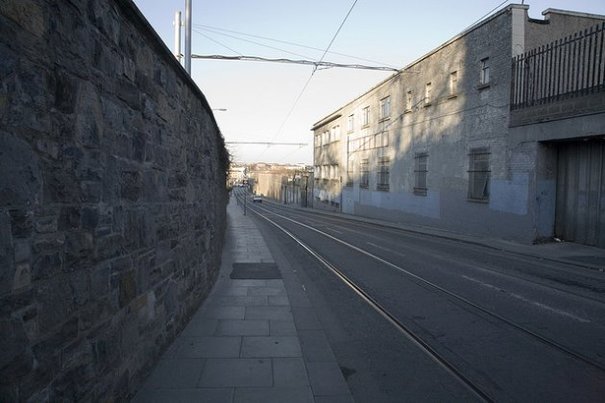
    St Patrick's Hospital on Steevens Lane - this photo shows the still lane-like entrance to it - was lfounded in 1749 and left £11,000 by Gulliver's Travels author Jonathan Swift who was convinced by deafness and dizziness in his later years that he was losing his mind. It turned out he had a disorder of the inner ear, not mental health problems. Image: infomatique/William Murphy/Flickr.
  • The world's oldest tyre factory

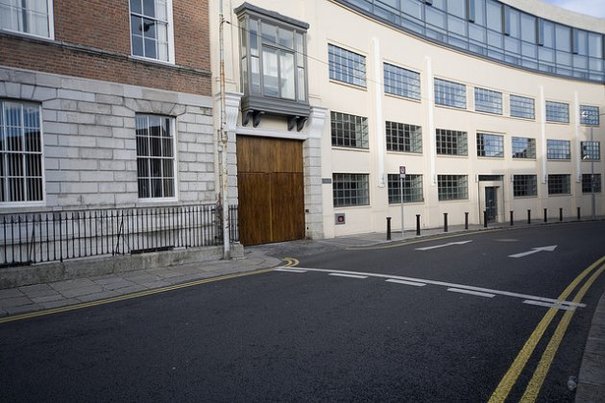
    It's now the site of Dunnes Stores HQ but a plaque at this entrance on Stephen's Street (off South Great George's Street) shows where the factory of Scotsman John Dunlop once stood. It was the first factory in the world to make pneumatic tyres on a commercial level and only moved to Coventry in England in 1892 after Dublin residents objected to the fumes from the manufacturing. Image: infomatique/William Murphy/Flickr.
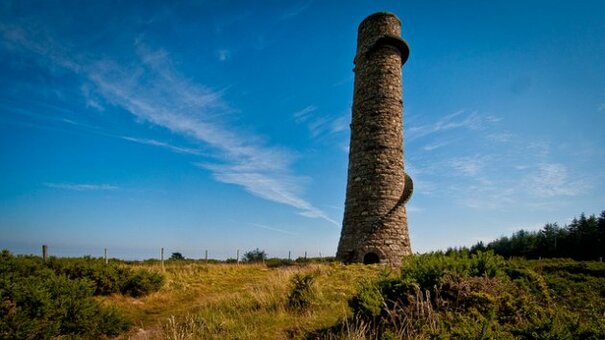
  • A 19th century lead mine chimney at Ballycorus

    This one isn't too far from Shankill village in south Dublin to where mined lead ore was brought from the small lead vein at Ballycorus. The smelter closed in 1913 but this chimney, built on a hill an dused to conduct away the noxious fumes, still stands. Image: Joe King/Flickr.
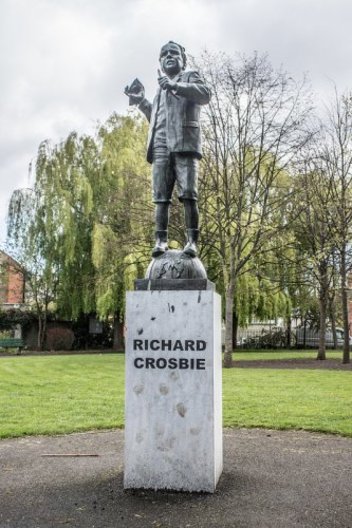
  • The world's first manned hot air balloon flight

    Wicklow-born Richard Crosbie flew in a hot air balloon - the first such manned flight - from Ranelagh Gardens (where this statue now stands) to Clontarf - in 1785. Image: infomatique/William Murphy/Flickr.
  • Victorian diving bell on Sir John Rogerson's Quay

    This was designed in 1860 by Offaly-born Bindon Blood Stoney, who invented it so that workmen could work inside it and underwater on the construction of new quays. Bindon Blood Stoney was dubbed the "father of Irish concrete" for his work on the docks in Dublin. Stoney Road near East Wall is named after him.The same man also worked on the Boyne railway viaduct at Drogheda, which is still in use. His brother George Johnstone Stoney 'invented' the electron. Image: infomatique/William Murphy/Flickr.
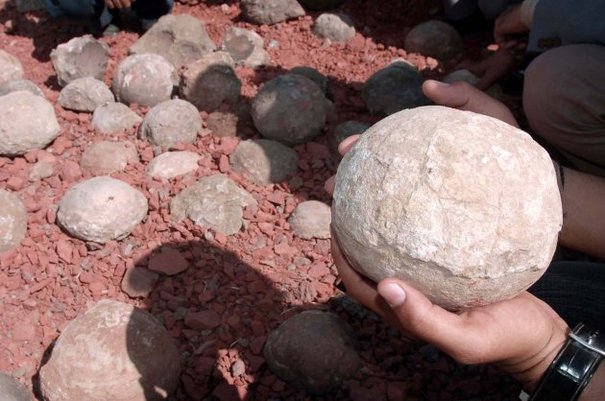
  • Dinosaur eggs and 540-million-year-old fossils in an attic at Trinity

    Dinosaur eggs like these above (file pic); 540-year-old fossils called Oldhamia, the oldest fossils in Ireland; a lump of meteorite that fell in Co Tipperary in 1865 and 50,000 fossils are among the treasures in the little-visited geology museum in an attic area of Trinity College Dublin. Image: PA archive.
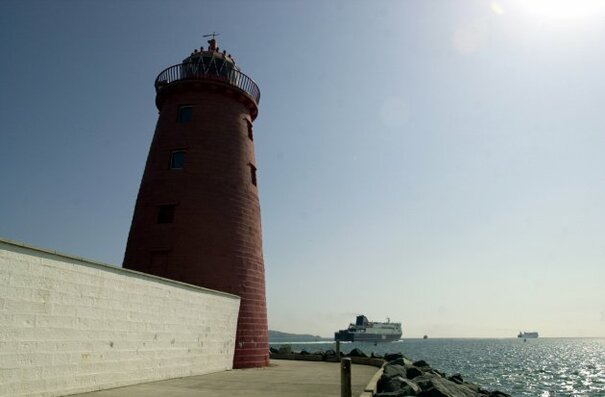
  • Spot heights on Poolbeg Lighthouse

    Mary Mulvihill writes: "On April 8, 1837, surveyors from the Ordnance Survey of Ireland recorded the low-water mark of the spring tide by chiselling four notches onto the outside of Poolbeg Lighthouse. Their crow's foot mark - shaped so as to fit their surveying equipment - became the reference point against which all the heights for the rest of the country were measured in the survey's massive mapping project, which was underway." The marks can still be spotted on old walls and on Poolbeg Lighthouse at very low water. Image: Eamonn Farrell/Photocall Ireland.
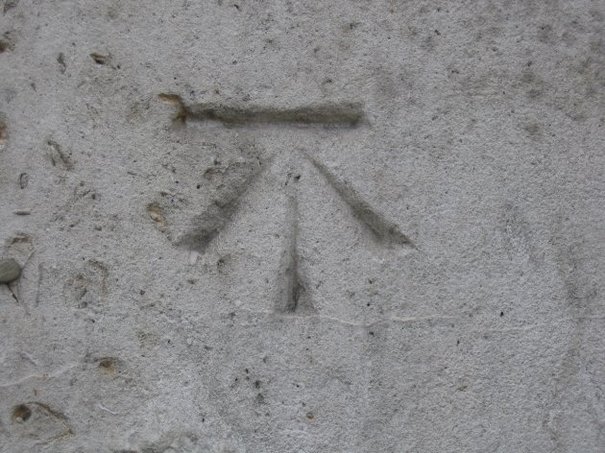
  • Spot heights elsewhere in the city

    This is what the crow's foot or benchmark as mentioned in previous silde looks like. They appear elsewhere around the city, including this one at Cork Hill/Castle Street. Image: Ingenious Ireland.
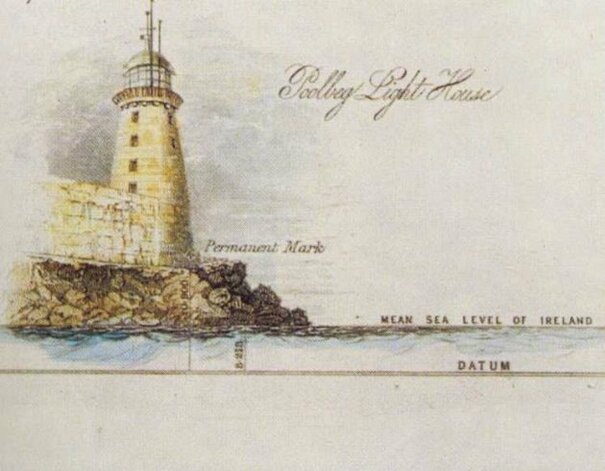
  • Poolbeg lighthouse archive sketch

    This sketch shows the 'datum' at Poolbeg lighthouse which gave a baseline for Ordnance Survey measurements. Image: Ingenious Ireland.
  • Department of Justice foyer as geological gallery

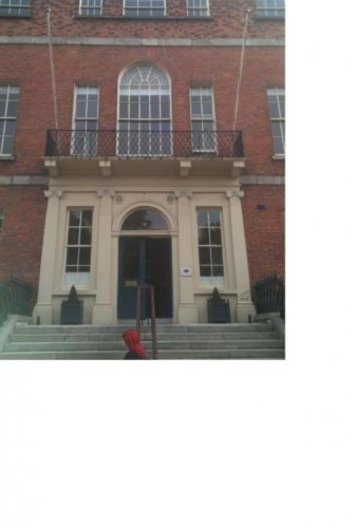
    "The foyer of 51 St Stephen's Green is adorned with 40 large slabs of beautiful stone. This unusual geological gallery was erected in 1845 by Sir Robert Kane to promote the commercial potential of Ireland's quarries and natural resources." Kane was director of both the Museum of Economic Geology and the Museum of Irish Industry, which were then at no. 51 - the building is now home to the Department of Justice and Equality.

Read next:

Comments (24 Comments)

  • Pass that diving bell on sir john rogersons quay every day on the way too work and always wondered what it was! Explains the name of the street adjacent to it too. Good work Journal.ie. interesting little article.

    Reply
    • you’d think the Dublin Council would stick a little sign post beside it with some info, I always wondered too. It’s quite interesting.

      Reply
    • The diving bell was made in Grendons foundry in Drogheda where Scotch Hall shopping centre is now, right beside the Viaduct bridge mentioned in the caption. They were going to scrap it until protests from a group of conservationists forced Dublin County Council to restore it and display it where it is now.

      Reply
    • I’ll tell you what’s a Dublin curiosity: The place is a complete dump.

      The British gave the Irish their modern cities and as soon as they left, the Irish made a complete balls of the place. Out will the old Georgians and in with the concrete tat.

      If you want to see a massive planning disaster on a monumental scale, go to Dublin.

      The ugliest citiy in Europe just keeps getting uglier.

      Reply
    • Think you are getting confused with Belfast, now that is a complete dump.

      Reply
    • Dublin didn’t suffer years of bombings and terrorism, Mark.

      Having said that, urban planning in Belfast is 100 times better than Dublin.

      It takes people with appreciation and aesthetics for architecture to keep a city in shape – something people in Dublin lack in general.

      Reply
    • Your right Dublin did not suffer years of terrorism like Belfast, it was just blown apart by the British army. Dublin is the biggest most beautiful Georgian city in the world. Sure it has got a few ugly buildings, what big city doesn’t. Im from London we have alot of ugly buildings. But i totally disagree with your comments. I visit Dublin many times and it has alot of beautiful architecture.

      Reply
    • You must be blind then, Mark. The complete historical fabric of Dublin has been destroyed by corrupt councilors and developers over the past 50 years.

      And you can’t expect the British army to just stand around while a bunch of yobs run riot.

      Reply
    • When i said it was just blown apart by the British army, i was talking about Dublin, just before the Irish kicked them out. There has been some bad planning decisions in Dublin over the last 50 years i agree. But the city has some beautiful areas. The reason why the city gets millions of tourists every year. If you want to see very bad planning come to many english towns and cities we have alot of ugly ones unfortunately.

      Reply
    • Belfast is nowhere near as nice as Dublin.
      You’ve overlooked Glasgow in your assessment of Europe’s ugliest cities but then again it’s not really the point,you’re merely here to stick it to the Taigs.

      Much of Georgian Dublin is still standing,i doubt you’ve ever set foot south of the border,let alone in Dublin.

      Reply
    • When one has hatred for a place or people they tend to hate everything about the country and wish it was not there. It is a sad way to live a life. Dublin is a beautiful city just like London, both have there downsides what big city doesn’t. But as far as big cities go in the UK and Ireland they are the best we have. Even if a few disagree.

      Reply
  • Really enjoyed this thank you a nice way to start Sunday

    Reply
  • Those crow’s foot benchmarks are to be found all over Ireland. They were put on things like stone bridges or at the base of granite entrance piers. You could locate them from the OS Maps. A good number of them can still be found around the country.

    Reply
  • Work in that diving bell was horrific. The men suffered greatly health wise from the pressure . In fact it shortened there life considerably. Another fantastic sight to see was the Dublin dry docks in Dublin port the older of which was recently filled in to make space for containers. I had the pleasure to work in these docks and it is such a shame to see it filled in.

    Reply
  • Fantastic article.

    Reply
  • Nice article, love finding out about quirky things in cities. Also, sound for including an explanation on what a crows foot mark is…there is one on the stone gate into my house and although I guessed that it was something to do with measurements, I never really knew what it was for.

    Reply
  • Now theres some really interesting things about Ireland that give an insight into history and link modern day

    Reply
  • Great article. St. Andrews Resource Centre has published a booklet explaining the full history of the diving bell: “Dublin’s Diving Bell – A History”. I’m not sure if it’s still available.

    Reply
  • Barro 02/09/12 #

    1st pic isn’t 51 Stephens green, that’s on Stephens green south, think it’d the dept of foreign affairs building.

    Reply
    • Hi Barro – you’re absolutely right so I went and snapped a pic of number 51 on my way into work today to give people an idea of which building it is, should they happen to be passing by. It’s the last pic in the slideshow there now.
      Cheers, Susan

      Reply
  • Jim 04/09/12 #

    The Diving Bell on Sir John Rogersons Quay was actually saved by St. Andrews Resource Centre Pearse Street in Partnership with Dublin Port and others. The City Council were not involved and the space on the Quay was given by the DDDA. The whole project was written about in a book published by the St. Andrews Heritage Project in 2003. The book is available free from St. Andrews in Pearse Street and it gives the History of the Diving Bell and details of the the project to restore it. For more information on this fascinating piece of Irish and Dublin’s history contact:
    Betty Ashe 01 6771930.

    Reply
  • Re Pic 7 – pity the lump of meteorite that fell in Tipperary in 1865 wasn’t a whole lot bigger.

    Reply
  • This is a good answer to the lack of Dublin “discoverability” in the “Why does Dublin have no fountains” blog post at http://blog.likeplace.ie

    Reply
    • You think? Fountains do not make cities. We have fountains in trafalgar square, they are off most of the year. What traveller wants to see the same in every city they visit. How boring. I like the way Dublin has the beautiful old georgian street lights. Then you travel to smithfield and you have something completely different, funky and arty, something you would see in new york. Thats what is great about Dublin and its districts. Many european cities especially along the med are very similar. I like difference, unique. Not boring and mirror image of somewhere else.

      Reply

Add New Comment