Sign in. It’s quick, free and it’s up to you.
An account is an optional way to support the work we do. Find out more.
Sign in. It’s quick, free and it’s up to you.
An account is an optional way to support the work we do. Find out more.
ALIBABA STOCK ROSE 38% on their first day on the New York Stock Exchange (NYSE).
That comes after raising around $25 billion in its initial public offering (IPO) overnight.
Trading under the ticker “BABA,” shares opened at $92.70 and nearly hit $100 within hours, a gain of 46 percent from the initial $68 per share price set Thursday evening. Demand was so high that the company raised its price ahead of the debut.
But, what is it?
Alibaba has become by far the dominant e-commerce company in China, a country with the world’s greatest number of Internet users, in only 15 years.
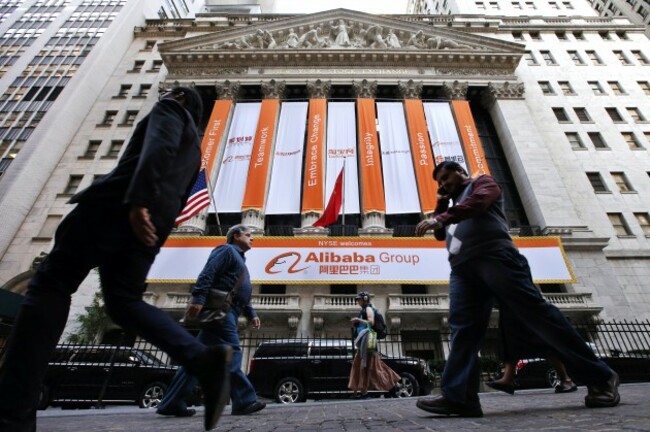
The Hangzhou-based company is largely unknown outside Greater China, but a historic listing on the New York Stock Exchange Friday and its recently-launched US shopping website, 11 Main, are expanding its global stature.
By raising $25.02 billion, Chinese it has broken the record for the largest initial public offering in history.
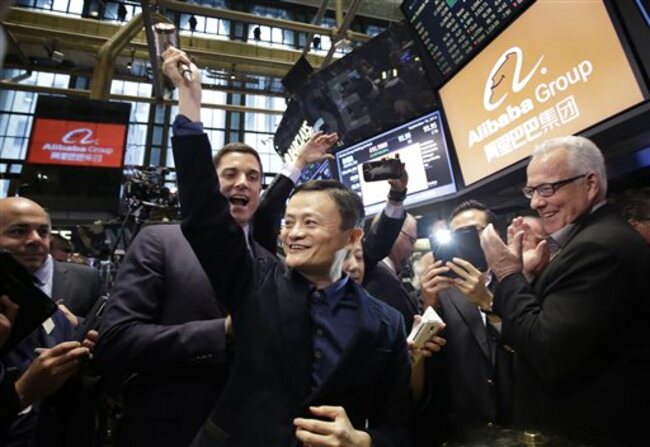
With ambitions beyond online retailing, the company is guided by Jack Ma, a diminutive yet charismatic onetime English teacher who is now a billionaire entrepreneur.
“Fifteen years ago, Alibaba’s 18 founders were determined to set up a global Internet company originated by Chinese people, with hopes it would become one of the world’s top 10 Internet companies, a company which will exist for 102 years,” Ma said in May, meaning the company would span three different centuries.
“We have a dream,” said Ma, who was on the floor of the New York Stock Exchange on Friday before trading opened.
“We hope in the next 15 years the world will change. We want to be bigger than Wal-Mart.”
Alibaba had originally planned to list in Hong Kong, thereby staying on Chinese soil, but talks between the company and the exchange broke down last year because listing rules prevented Ma and top management from retaining control over the board of directors.
The controversial structure has proved to be an issue even with a US listing, prompting Alibaba to disclose the identities of more than 20 partners who have the power to appoint a majority of the corporate board.
“Unlike dual-class ownership structures that employ a high-vote class of shares to concentrate control in a few founders, our approach is designed to embody the vision of a large group of management partners,” it argued in a filing with US regulators.
Ma chose the name Alibaba from “1,001 Nights” because it is easily pronounced in both Chinese and English, and the literary work’s “open sesame” catchphrase signifies the company can “open a doorway to fortune for small businesses”.

To embed this post, copy the code below on your site








have your say