Sign in. It’s quick, free and it’s up to you.
An account is an optional way to support the work we do. Find out more.
Sign in. It’s quick, free and it’s up to you.
An account is an optional way to support the work we do. Find out more.
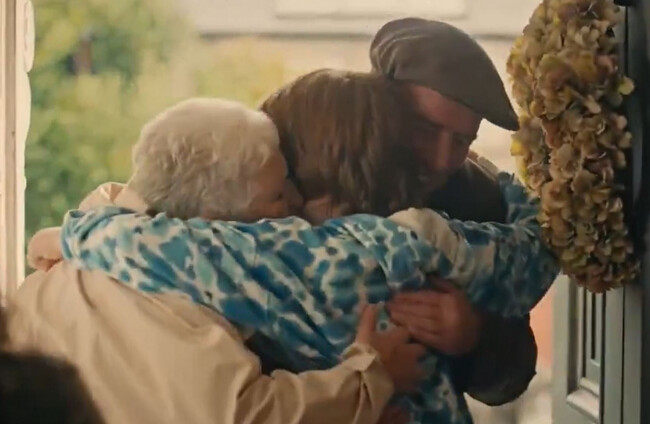

WHO WOULD BE a content creator for the Dublin Rape Crisis Centre?
Whoever made that ad on why grandparents shouldn’t hug a grandchild without consent has had a bad few days. Within 24 hours of it being widely shared on social media this week, it was pulled – but not before it received international coverage in the New York Post and the Hungarian Conservative, as well as plenty in the Irish media too.
Government ministers Jim O’Callaghan and Jennifer Carroll MacNeill condemned the video. The Dublin Rape Crisis Centre noted that “the video was launched exclusively on social media in mid-September but we have removed it from our social media channels due to the negative attention it has attracted in the last 24 hours.
“We do not want that negativity to impinge on and distract from the vital work that we as a centre do in supporting victims and survivors and improving awareness of these important issues across society.”
The DRCC said it will not be commenting further until a review is carried out. I wouldn’t want to be one of the people subject to that review.
The ad received ferocious online criticism, some of which was extreme – but I felt the ad made an important point on consent and unwanted physical contact, even from grandparents. I am perhaps the only conservative in Ireland who had this reaction. Perhaps I am wrong. But it is worth examining why this video caused such a visceral reaction in so many. Why, in the parlance of our time, were so many triggered by it?
Leaving aside those who are just in it for clicks and general outrage, it is clear many people were offended at the suggestion or implication – which I do not believe was intentional by DRCC – that grandparents are predators.
This tweet clearly explains that line of thinking: “This campaign preys on the fears & insecurities of vulnerable elderly people AND vulnerable young people. Demonising grandparents in young people’s eyes & making grandparents fearful of accusations from their grandchildren is unconscionable. Has enough harm not been done to the elderly by Covid?”
Then there was the other side, as summed up by this tweet: “The first child in the ad hugs the grandparents. The second child is uncomfortable with physical touch. The ad is highlighting differences in children’s needs and the importance of consent. It is not campaigning against grandparents.”
The video may have been better received if, instead of depicting the grandparents as overbearing and clueless elders unable to read strong social clues, they understood their teenage granddaughter didn’t want a hug and this was respected.
When a dispute like this occurs we should ask why people hold the views that they do. One reasonable person watching it thinks this was an ad about consent, boundaries and that some children are not comfortable with physical touch. Yet another person – also reasonable – is concerned that this demonises grandparents, some of whom are vulnerable.
I think both of these views are legitimate. I’m a mother of four and I always ask for a hug. That might seem odd to some, but it is just a habit. When children are young, it can be a superfluous request, as young children love attention and physical comfort. But the same does not apply to older children. When your children become teenagers it is even more important to ask them for a hug and not simply demand it. Children are not merely an extension of their parents or grandparents – they are people in their own right with their own rights.
Others believe that making children do something they might not necessarily want to do builds resilience. But I don’t want my child to be resilient to others seeking physical contact without their consent. We do have duties towards our parents and grandparents but that should not include unwanted physical contact. Some adults remember being made to embrace, hug or kiss a relative when they did not want to. We should listen to their concerns.
If a child or grandchild is not forthcoming with a hug, grandparents should ask themselves why. Children trust those who they know and have a close relationship with but not all grandparents have a solid relationship with their grandchild or at least not as close as they would like it to be.
I resent the relative who does not visit from one end of the year to the next and then expects the full Disney treatment from nieces, nephews or grandchildren when they do arrive at your door.
Instead of complaining about a government ad, ask yourself: is there something I could do to improve a relationship with a niece, nephew or grandchild going forward?
Children are very perceptive. They know who has spent time (not money) on them and who has not. Reading is a great way to connect with a child. You could take them to visit the library or the cinema or organise a movie night (which most parents would appreciate). If you watch a film with grandchildren it is important to really be present with them and not on your phone. Hopefully they will sit beside you and you can talk to them about the film. This builds the relationship.
Adults should have compassion and understanding for children and teenagers. This includes respecting their physical boundaries.
Laura Perrins is a mother of four and writes on Substack at The West Brit
To embed this post, copy the code below on your site











have your say