Sign in. It’s quick, free and it’s up to you.
An account is an optional way to support the work we do. Find out more.
Sign in. It’s quick, free and it’s up to you.
An account is an optional way to support the work we do. Find out more.

SOME 422 MILLION PEOPLE worldwide have diabetes – almost one person in every 11.
Between 1980 and 2014 the number of adults with diabetes quadrupled from 108 million to 422 million.
A new study published in The Lancet gives the most comprehensive overview of worldwide diabetes trends to date.
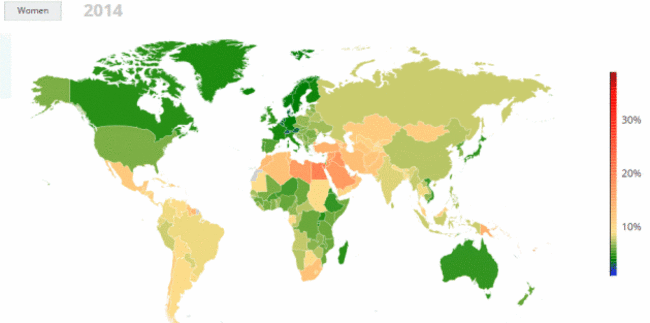
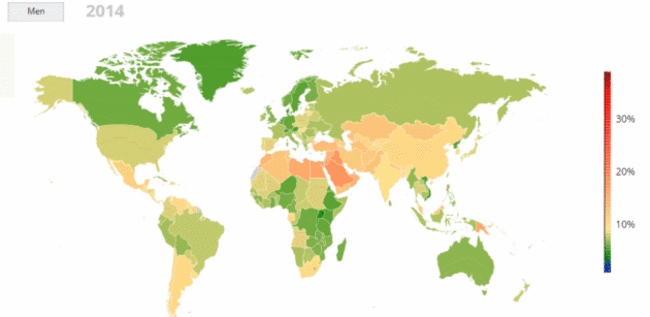
In Ireland 3.3% of women had diabetes in 1980 (about 44,000). This rose to 5.1% in 2014 (about 110,000 women). In 1980 4.3% of men here had the condition (almost 50,000), while this rose to 7.3% in 2014 (more than 143,000).
The study did not differentiate between type-1 and type-2 diabetes, but 85-95% of cases of adult diabetes are type-2 so researchers say the rise is likely due to increases in this version.
Diabetes is a lifelong condition caused by a lack of the hormone insulin, a substance made by the pancreas that regulates blood sugar.
As set out by Diabetes Ireland, type-1 diabetes tends to occur in childhood or early adult life, and always requires treatment with insulin injections. It is caused by the body’s own immune system destroying the insulin-making cells of the pancreas.
Type-2 diabetes usually develops slowly in adulthood. It is progressive and can sometimes be treated with diet and exercise, but more often may require medicine and/or insulin injections.
Professor Majid Ezzati of Imperial College London, a senior author of the report, said: “Diabetes has become a defining issue for global public health. An ageing population, and rising levels of obesity, mean that the number of people with diabetes has increased dramatically over the past 35 years.”
The study, released ahead of World Health Day tomorrow, includes data from 751 studies totalling 4.4 million adults.
More common in men
It estimates age-adjusted diabetes prevalence for 200 countries – meaning that researchers adjusted the results to account for diabetes becoming more common as a person ages and for some countries having older populations.
Between 1980 and 2014 diabetes was more common among men than women. The global age-adjusted prevalence of diabetes doubled among men (4.3% to 9%) and increased by two-thirds among women (5% to 7.9%).
Here are some other findings:
The research shows that the condition is fast becoming a major problem in low and middle income countries.
Obesity is the most important risk factor for type-2 diabetes and our attempts to control rising rates of obesity have so far not proved successful.
“Identifying people who are at high risk of diabetes should be a particular priority since the onset can be prevented or delayed through lifestyle changes, diet or medication,” Ezzati stated.

To embed this post, copy the code below on your site
















have your say