Sign in. It’s quick, free and it’s up to you.
An account is an optional way to support the work we do. Find out more.
Sign in. It’s quick, free and it’s up to you.
An account is an optional way to support the work we do. Find out more.
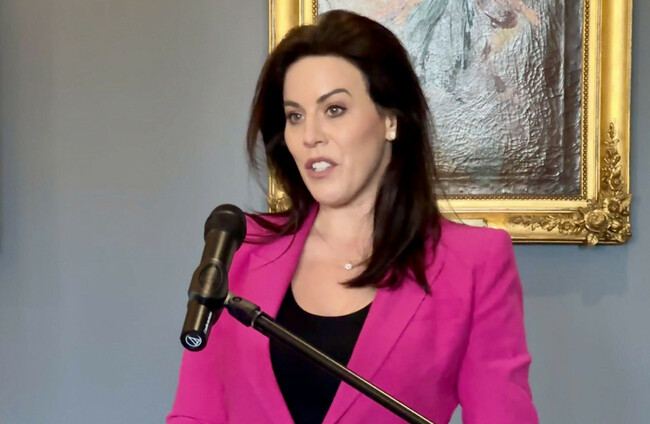

MUCH OF THE attention in this week’s budget was on tax cuts, childcare reform and fuel costs, with everyone rushing to budget calculators to see how much better off they will be.
But it was a press conference in the bowels of Government Buildings on Wednesday morning where alarm bells were ringing.
Health Minister Jennifer Carroll MacNeill, flanked by her junior ministers, ran through what she sees as wins for her department in this year’s budget, such as the expansion of free contraception.
However, the elephant in the room was the health service’s financial deficit, which is forecast to hit €1 billion by the end of the year.
Now when you talk about big numbers like that, it can be difficult to envision it and foresee what the knock-on effects might be for the public, but, needless to say, it’s not good.
After repeated questioning, the health minister said the health service was €781 million in the red at the end of September, confirming that spending is 8.6% higher than last year.
Despite being asked a few times if the €1 billion mark will be hit by the end of the year, the minister refused to go there, stating that the brakes have been pulled in some HSE regions.
However, she also said pay controls introduced in April and July have not been effective. The overruns have continued.
The blame is very squarely being left at the feet of the HSE regions and those that are in charge of them, with the minister stating that most of the overruns are pay-related, due to unauthorised staff recruitment.
She said half of the HSE’s regions have already “eaten into” their budgets for next year.
Carroll MacNeill said four of the six regions breached their pay budget by more than 2%.
“That’s not acceptable. That has to be reined in. If you’ve over-recruited this year, you’ve eaten into next year. This is about workforce planning. This is a test for management of the different regions that if you are given a budget by the taxpayers and patients of Ireland to recruit in strategic ways, you cannot do everything every single year.
“Within the first year of this regionally funded structure, we have two regions that have performed very well, one that could come to below two per cent and three others that very clearly have eaten into next year’s provision,” she said.
If you don’t recall how these relatively new regions work, let me remind you.
Back in 2023, it was announced by then health minister Stephen Donnelly that the HSE was to be split into six new health regions, as one of the promised reforms as part of Sláintecare.
According to the HSE Health Regions Implementation Plan, Regional Executive Officers (REO) run the regions, with the Department of Health saying at the time that each executive officer would be held accountable for their health region and for “the delivery of high-quality, safe, and accessible services” for the regional population.
The department also said at the time that these jobs would have salaries linked to the pay under the public-only hospital consultant contract – up to €257,000.
Two years since this new system has been up and running, the health minister has had to step in to take away some of the regional bosses’ day-to-day spending powers.
Basically, head office had to come in and take over. It’s at this point that questions should be asked about where the accountability is when it comes to these regional bosses.
However, the problem that quickly became apparent at the post-budget press conference this week is the lack of accountability at all levels.
That’s what happens when you create arm’s-length frameworks to run the health service.
Clearly the executives who are well paid to run the new HSE regions are falling short, but even when the HSE and department head honchos step in with ‘pay controls’, it doesn’t stop the overspend.
So, where is the accountability? It appears that there isn’t any.
Does the buck stop with the health minister or the HSE chief executive? If it does, there hasn’t been any mention of it yet. It is just a never-ending narrative of finger-pointing.
But what does this mean for users of the health service, and why should we care about these huge numbers?
Labour’s Marie Sherlock has said the reckless under-provision by the Department of Health, alongside mismanagement within the HSE, means there is little or no new money to operate the health service in 2027.
It means a supplementary budget will be needed to meet the largest health deficit in the history of the State, she added.
It also means that pre-election promises such as pledges to expand free GP and fertility treatment for those suffering with endometriosis were not mentioned in this year’s budget announcement.
What is more concerning is that when The Journal asked the minister about the 10-year national maternity strategy and national cancer strategy which are both due to expire this year, Carroll MacNeill said she didn’t have an overall funding allocation for their successors.
Because the health service is now being organised on a regional basis, the minister said “it’s not the historic way of allocating an amount of money to an illness”.
On two major national strategies, due to expire this year, the minister could not point to a specific funding allocation. That should be a concern. So too should the runaway train that is the current health spending, because the people that will suffer next year are the public.

To embed this post, copy the code below on your site














have your say