Sign in. It’s quick, free and it’s up to you.
An account is an optional way to support the work we do. Find out more.
Sign in. It’s quick, free and it’s up to you.
An account is an optional way to support the work we do. Find out more.
“Obscene in its greedy clawing at the earth, swelling as if with its regurgitation of all the life that it had consumed.”
… That’s how British pilot Leonard Cheshire, who was on the plane that dropped the second of two devastating atomic bombs on Japan, remembered Nagasaki.
Today, it’s exactly 70 years since the nuclear bomb was dropped on the port city.
Preceded by Hiroshima three days earlier, the effect of the destructive power of the two attacks was unprecedented.
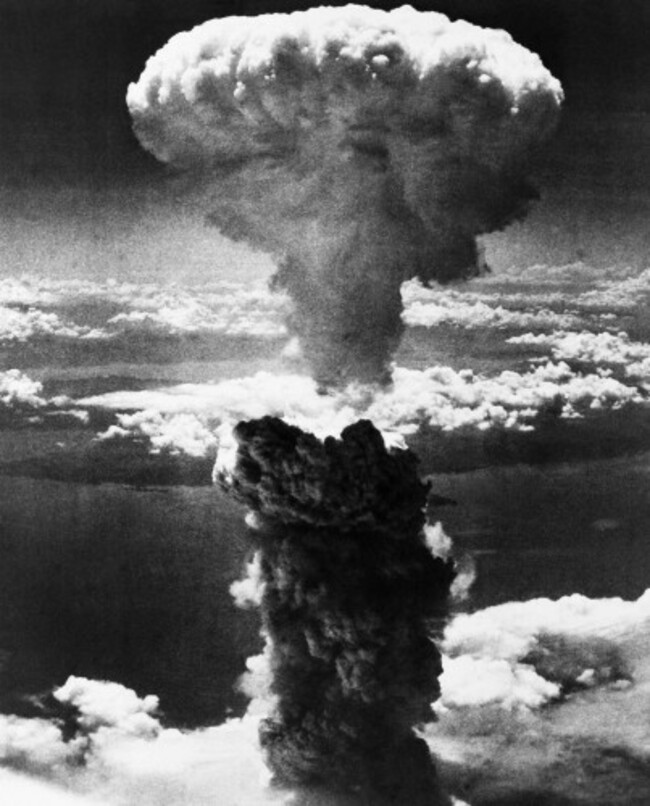
Buildings and people were incinerated, and the bombings left lifelong scars - physical as well as psychological – on survivors.
America’s decision
By the time the bombs had been successfully trialed in the United States, Germany had already surrendered in Europe.
At the other side of the world, the war between Japan and the US was still deadlocked.
Japan were seen as a stubborn opposition, continuing its resistance to the United States despite clear indicators that they were likely to lose the war.
American military experts warned that any prolonged conflict would result in massive casualties – with one general even warning that a conventional invasion would cost the US “half a million” dead.
As a result, a decision was made to drop the bomb.
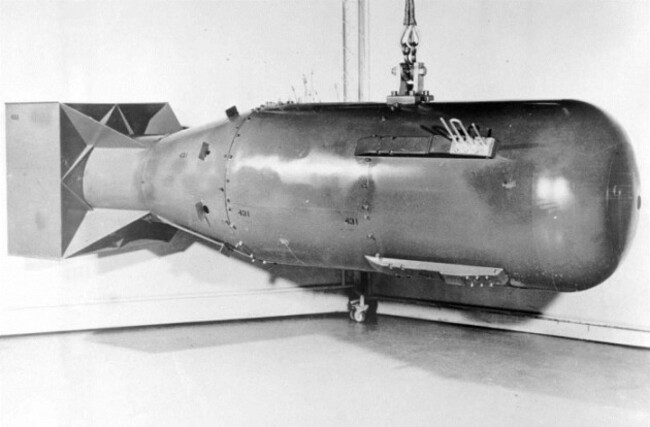
Detonation
The first blast happened in Hiroshima on 6 August, 1945.
It is estimated that between 60,000 and 80,000 people were killed instantly when the bomb fell for 44.4 seconds, before detonating 580 metres above the ground.
A large number of people died from the effects of radiation sickness, putting the final death toll at around 135,000 – although many estimate it to be higher.
On 9 August – seventy years ago today – it was followed by the attack on Nagasaki.
The estimated total death toll for the second attack is around 75,000.
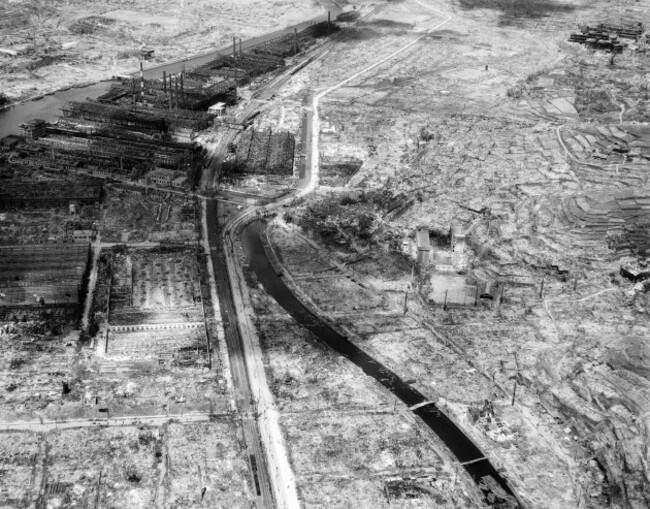
The majority of the population of Nagasaki were incinerated during the initial impact of the bomb.
Others suffered from injuries due to debris, and died later.
The few who survived were left with radiation poisoning.
The devastating aftermath
After the shell of the bomb exploded, 40% the city was destroyed.
Care for the injured was impossible with hospitals gone.
Schools, churches, and the rest of the city were completely flattened
In both Hiroshima and Nagasaki, people were unable to grow their own crops, drink water, or even hope to rebuild due to the severe radiation.
In the surrounding area, the health of the civilians was also compromised – as the severity of the radiation given off from the heat during the explosion made inhabitants more susceptible to cancer and other illnesses.
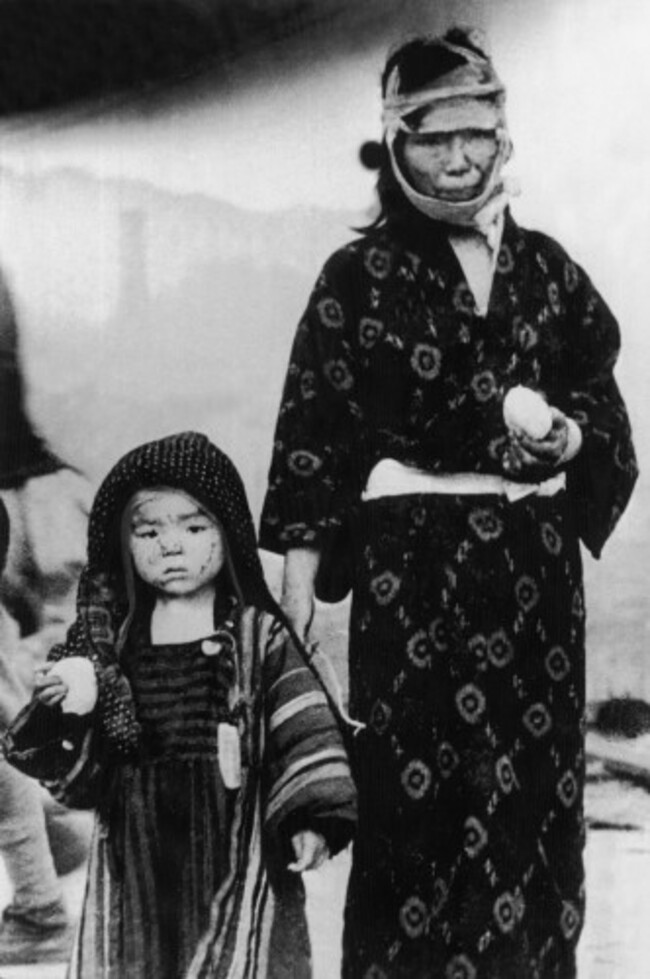
The dropping of the bombs, which were developed under strict secrecy, was hugely popular with war-weary Americans at the time.
Seven decades on, a majority today still think it was the right thing to do.
Remembering
Japan has been remembering the devastation of the attacks this week.
On Thursday, tens of thousands gathered in Hiroshima as bells tolled and a moment’s silence was observed – beginning at the same same time the first bomb detonated.
Delegates representing 100 countries, including children and elderly survivors, placed flowers in front of the cenotaph at a memorial park – and doves were released in the air.
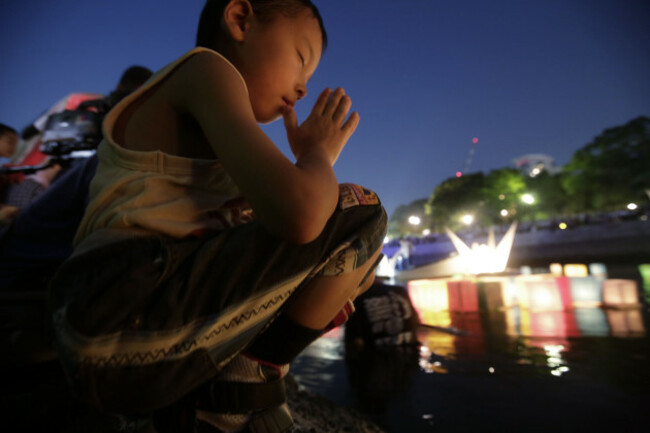
“As the only country ever attacked by an atomic bomb… we have a mission to create a world without nuclear arms,” Prime Minister Shinzo Abe told the crowd.
“We have been tasked with conveying the inhumanity of nuclear weapons, across generations and borders.”
86-year-old Yukio Yoshioka – a survivor of Hiroshima – pleaded to the leader:
Never make Japan a country that repeats the same mistakes.
To embed this post, copy the code below on your site











have your say