Sign in. It’s quick, free and it’s up to you.
An account is an optional way to support the work we do. Find out more.
Sign in. It’s quick, free and it’s up to you.
An account is an optional way to support the work we do. Find out more.
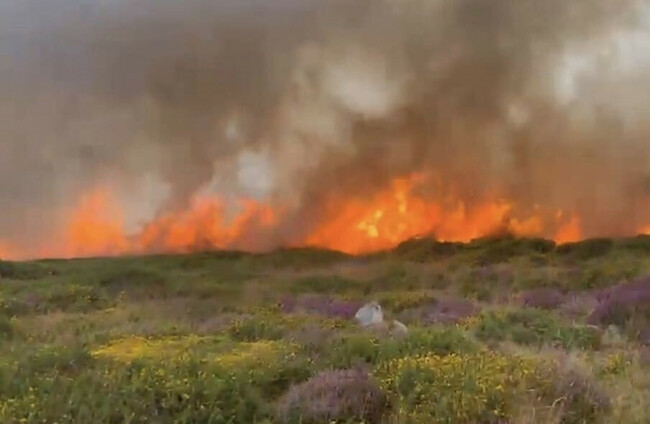
A WILDFIRE IN the Dublin mountains south of the city outskirts has “died down considerably” after reigiting yesterday.
The blaze at Glencullen reignited and units from Dublin Fire Brigade were on the scene last night.
More than 25 firefighters and other agencies had fought a blaze in the area on 31 July, which was brought under control, and it’s not yet known how the fire reignited.
However, such fires can smoulder underground in peat rich ground and substantial rainfall is needed to thoroughly dampen the ground and vegetation.
Smoke had been travelling from the south over Three Rock Mountain and into the suburbs of Dublin City last night.
Firefighters from Rathfarnham and Dún Laoghaire had tackled the gorse wildfire on the Dublin mountains.
Fire crews withdrew just after midnight but at one point, there were four fire engines, a water tanker, and a wildfire jeep at the scene.
Darren O’Connor, district officer with the Dublin Fire Brigade, told RTÉ’s Morning Ireland that the fire has “died down considerably” and is currently “being monitored by local landowner”.
He added that there was “significant change in wind direction and an increase in wind speed” yesterday, which brought the fire uphill.
He also remarked that a change in weather should help to “either eliminate or slow down the fire completely”.
“The ground is tinder dry,” said O’Connor, “so it’ll take a couple of days, maybe even a week of rain, to get the moisture levels back up from what they are.”
O’Connor said the fire service doesn’t yet know how the fire started.
“It started a number of days ago, maybe over a week ago now.
“We don’t have an exact cause of it, but they generally start near pathways and roadways, but it’s impossible at this stage to say what the source of this ignition was.”
Meanwhile, O’Connor remarked that this has been “one of the busiest periods we’ve experienced over the last number of years”.
“Across the country, you see what’s been going on,” said O’Connor.
“We’ve dealt with a number of significant fires, along the borderline of Wicklow as well.
“It’s been quite difficult, the weather has led to a difficult number of outbreaks and it’s very hard for us to work in as well, so it’s been quite difficult”.

To embed this post, copy the code below on your site














have your say