Sign in. It’s quick, free and it’s up to you.
An account is an optional way to support the work we do. Find out more.
Sign in. It’s quick, free and it’s up to you.
An account is an optional way to support the work we do. Find out more.

THE DEPARTMENT OF Health has updated its guidelines about PCR testing and self-isolation on foot of advice from the Chief Medical Officer Dr Tony Holohan.
The changes are aimed at freeing up Covid-19 testing capacity and easing disruption to businesses and essential services caused by large numbers of people becoming infected with the virus.
Public health officials yesterday confirmed an additional 20,554 cases of Covid-19 in Ireland.
This figure marks the fourth time this week that a new daily record was set. However, it is likely to be an underestimate and Holohan today said the actual figure could be closer to 30,000 cases.
So, what exactly are the updated guidelines?
Advice on PCR and antigen testing
Current advice is that all those with symptoms of Covid-19 should self-isolate and seek a PCR test.
A statement from Department of Health notes the following: “In view of the very large volumes of disease now being experienced and, to ensure best use of available testing capacity to ensure rapid identification of Covid-19 infection, and, to support adherence to the public health advice”:
Isolation period for those diagnosed with Covid-19
Current guidance in relation to self-isolation advises that adults who receive a positive PCR test result for Covid-19 should self-isolate for 10 days from commencement of symptoms (or date of PCR test, if asymptomatic).
This advice has now changed to allow for those who have been boosted, either through receipt of three vaccine doses or through a combination of primary vaccination and recent infection, and those who have not, as follows:
All others aged 13 years and older who receive a positive PCR test result should continue to self-isolate for 10 days from commencement of symptoms with exit after 10 days only if symptoms have substantially or fully resolved for the final two of those 10 days.
Current isolation requirements for young children (those aged up to and including 12 years) diagnosed with Covid-19 will continue in place.
If your child is told to isolate they need to:
However, the HSE has noted: “It’s not possible to ask young children to isolate on their own. They will need an adult to look after them.”
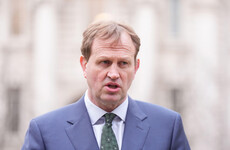
Speaking yesterday evening, Health Minister Stephen Donnelly said: “Antigen testing for those aged four to 39 years, who do not have an underlying condition will be provided using the model currently in place within the HSE – home delivery from a central distribution point.
“The HSE has advised that arrangements to provide for distribution of antigen tests can be operationalised from next Monday 3 January 2022.
“In the meantime, if antigen tests are available to you and you display symptoms of Covid-19, you can use antigen tests as directed as an alternative to PCR testing. As always, if you have any clinical concerns, at any time, please contact your GP.”
Minister Donnelly added that disease incidence has “continued to rapidly increase in Ireland, with recent daily case counts substantially exceeding the highest previously reported in the pandemic to date”.
“The 14-day incidence is now estimated at over 2,300 per 100,000 population. We are seeing levels of new daily cases in hospital that we have not seen since last January. The latest data on S-gene target failure data indicates that approximately 92% of cases are due to the Omicron variant.
““While our booster rollout programme is going extremely well, the extent to which the epidemic is continuing to accelerate means that there is still significant concern regarding the likely impact of such high case counts on our health services.”

To embed this post, copy the code below on your site











have your say