TheJournal.ie uses cookies. By continuing to browse this site you are agreeing to our use of cookies. Click here to find out more »
Dublin: 10 °C Thursday 23 May, 2013

Banks, government, regulators all criticised in stinging Nyberg report

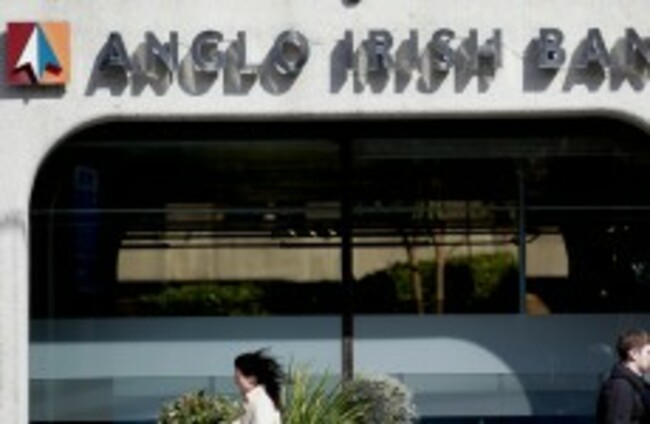
The Nyberg Report paints a damning picture of the banks, the regulators, and the government’s blanket bank guarantee.

Image: Peter Morrison/AP

Updated, 15.08

A REPORT INTO the governance of the Irish banking sector has concluded that the willingness of banks to issue high-value loans for risky commercial property – in vain attempts to keep up with the rapid development of Anglo Irish Bank and Irish Nationwide Building Society – was a fundamental cause of the banking crash.

The report, compiled by Finnish academic Peter Nyberg and completed last month, found that the rapid emergence of Anglo Irish Bank as a major player in the commercial lending scene led other banks to accept lower credit quality and a lower standard of risk management.

The report also slams the “consensus” that the rise in property prices would end with a “soft landing”, and that this “conformity of views and self-limitation of responsibility” meant there was little appreciation of the increasing dependence of the Irish economy on the property bubble.

It also bemoans the government’s decision to introduce a blanket bank guarantee as ill-informed, and criticises the roles of the Central Bank and Financial Regulator – painting a picture of two duelling institutions who worked together only when compelled to.

“Anglo and to a much lesser extent INBS are important for the wider crisis because they were both seen as highly profitable institutions to which other Irish banks should aspire,” the report reads.

“As other banks tried to match the profitability of Anglo in particular, their behaviour gradually, and even at times unintentionally, became similar. Accordingly, when the crisis broke, large losses were realised not only in Anglo and INBS but in other banks as well.”

‘Relationship banking’

The report also adds that governance at the banks “fell short of best practice” which allowed Anglo and INBS to engage into what it terms “relationship banking” – providing loans to certain developers without any apparent consideration of whether they could, or would, be repaid.

Other big banks then found themselves under pressure to adopt similar lending models or face the “loss of long-standing customers, declining bank value, potential takeover and a loss of professional respect.”

While the scale of Ireland’s banking crisis was exacerbated by the worldwide economy, the fundamental reason for the collapse was the “unhindered expansion of the property bubble” – which itself had emerged as a result of a “national speculative mania”:

Even obvious warning signs went unheeded in the belief that the world had changed and that a stable economy was somehow automatically guaranteed… Traditional values, analysis and rules could be gradually less observed by the banks and authorities because their relevance was seen as lost in the new and different world.

While some banks had scaled back their exposure to the property markets, others simply decided to pursue higher rates of growth “with little apparent realisation of the attendant risks; implementation (and risk policy) was implicitly left to staff.”

The government, meanwhile, had decided to introduce the banking guarantee on the incorrect assumption that the banks would remain solvent, but Nyberg said the alternative options to the blanket guarantee were “not seriously considered”:

If accurate information on banks’ exposures had been available at the time, it seems quite likely to the Commission that a more limited guarantee – combined with a state take-over of at least one bank – might have been more seriously contemplated.

The Central Bank, despite being able to advise the government and direct the Financial Regulator, apparently did not exercise the powers it had, and the report condemns the Central Bank and Financial Regulator – which have since been merged – for not working together to avert the country’s over-reliance on overseas funding until it was ultimately too late to do so:

Neither the Central Bank nor the Department of Finance seem to have considered the implications of a possible interruption in the flow of foreign funding. If such a scenario had been considered, the link between such funding, property market developments and bank solvency could perhaps have been uncovered. [...]

The primary problem with governance in the majority of the covered banks was not that it was lacking or poorly structured but that, over time, it changed as controls gradually weakened to allow increased growth.

‘Silent observers’

External auditors – which the report says had the “skills, opportunity and procedures required for detecting and evaluating asset and funding risks”  - were “silent observers”, who fulfilled the narrow functions asked of them without apparently reporting any excessive lending to the Financial Regulator.

The report opines that it is “particularly vital” that the Department of Finance hire more staff with the “financial market expertise… for it to be able to actively fulfil its part in the stability mandate”.

Nyberg’s report had been submitted to Noonan on March 22nd, and was approved for publication at this morning’s Cabinet meeting. No individual bankers are named in it.

Today’s report constitutes the final report of the Commission of Investigation into the Banking Sector in Ireland, which has now been disbanded with the completion of Nyberg’s duties.

Two preliminary reports had been published last year, with the first – by Central Bank governor Patrick Honohan, published last May - discussing the role of financial regulation.

A second report, compiled by Max Watson and Klaus Regling and published last summer, was intended at informing the future management and regulation of the sector.

Nyberg, a former senior advisor at the IMF, is also a former senior advisor at the Finnish ministry of finance and an advisor to the country’s central bank.

Copies of the report were also sent to the Director of Public Prosecutions, the Director of Corporate Enforcement, and the Gardaí.

Read the report in full (PDF format) >

Nick Leeson writes: The Nyberg Report cannot just pay lip service to reform>

Read next:

Comments (18 Comments)

  • People need to go to jail.

    Reply
  • A report that tells us what we already know, names and shames no one and probably cost the taxpayers millions. Now what? New tribunal? It’ll keep the barristers in business but for the rest of us this is about as useful as a one-legged man in an ass-kicking contest.

    Reply
  • “Consensus that there’d be a soft landing”, “conformity of views”, “no individual bankers are named in it” – basically, we’re all to blame so no-one’s to blame.

    Meanwhile the man who ran AIB during the year they ran up their worst losses in history pockets €3m despite a supposed salary cap of €500k, approved by a remuneration committee & former minister for finance. Again, people making terrible, costly decisions who are unlikely to ever be held accountable in any serious way (the committee, former minister Lenihan and Mr Doherty all).

    So the country is being run in to the ground paying for the latest “final” bank bailouts, the banks are still in rag order and nowhere near getting the sacred “market confidence”, but nobody is really to blame for it all. Yet plenty of folk at the heart of the whole mess seem to be doing very well for themselves indeed. ‘Tis a grand country, to be sure.

    Reply
  • Can someone please point out the bit where Nyberg discusses public greed as I have yet to find it ?

    http://www.bankinginquiry.gov.ie/Documents/Misjuding%20Risk%20-%20Causes%20of%20the%20Systemic%20Banking%20Crisis%20in%20Ireland.pdf

    Reply
    • Page 6:

      The way Irish households, investors, banks and public authorities voluntarily reacted to foreign and domestic developments was probably not very different to that in other countries now experiencing financial problems.

      However, the extent to which large parts of Irish society were willing to let the good times roll on until the very last minute (a feature of the financial mania) may have been exceptional.

      Reply
    • Gavan are you sure this is on page six , 1.5 Assigning Blame ? I still can’t find it . Found this bit on page 6 however ….

      People in a position to make decisions are and must be ultimately responsible for them
      regardless of what advice or suggestions they have received. The higher and more influential
      their position, the greater their responsibility. For instance, holders of public office are and must
      be responsible for directly and indirectly influencing others’ conduct within their, often large,
      remit. They, no less than everybody else including borrowers, are, of course, also responsible
      for knowing what they are saying and doing. Public commentators with trusting audiences
      (“media”) had a relatively large influence on how pre-crisis developments were perceived,
      discussed and acted upon

      Reply
    • Right got it thanks…. it’s in the “preconditions for the crisis” section rather than the “assigning blame” section, I just find it strange this one remark at the very tail end of this paragraph has been cherry picked by the national media to suggest the findings indicate public complicity, when clearly Nyberg lays the blame squarely at the feet of those in positions of responsibility.

      Reply
  • Above all else, I would like to see some heads role. If ever there was a time for action, it’s now. Diplomacy is dead.

    Reply
  • I think there was much more going on than they are saying:

    http://kathleenbarrington.blogspot.com/2011/04/secret-banking-in-offshore-world.html

    Reply
  • Don’t buy this bullshit. Another bloody report, another whitewash of international factors which precipitated the crash. In section 1.4.3 (which lists the factor needed to cause the financial crisis), reckless EU lending and bond purchasing isn’t mentioned, not once. It’s like writing up a report on the factors that led to a person overdosing on heroin, “Jimmy lost his job, Jimmy lost his house, Jimmy’s wife left him…” and leaving out the bit where someone supplied them with the stuff in the first place.

    “Developments in Scandinavia during the early parts of the 1990’s as well as in South-East Asia during the latter
    half should have been well within the professional memory of decision-makers in both banks and public institutions in Ireland during the 2000…” AND the foreign banks and bond holders, which lent and invested in ours. John Bruton had the gumption to correct Barosso on the matter last January http://www.irishtimes.com/newspaper/ireland/2011/0127/1224288403994.html

    Yes it was our banks, it was our government, it was us, but it wasn’t all us, and we shouldn’t let ourselves be fooled into believing it, there is an agenda out there which wants to shame us into thinking Europe is doing us a favour and that it was entirely our fault. They’re not, and it isn’t.

    It would be laughable if it wasn’t so detestable.

    Reply
  • *********BREAKING NEWS********
    A new report into Irish banking has just been published, it is authored by KJ Ward of ‘notabankingexpert’ fantasy bank Ltd and it is SHOCKING:

    “FINDINGS: GREEDY CORRUPT FEW GOT EVEN GREEDIER AND ANY OF THEM THAT WERE SUPPOSED TO BE “PUNISHED” HAVE BEEN GIVEN GOLDEN HANDSHAKES, FAT PENSIONS AND/OR NEW JOBS ELSEWHERE.

    CONSEQUENCES: LAUGHING ALL THE WAY TO THE BANK(EXCUSE THE PUN)

    RECOMMENDED ACTION: LOCK THEM UP FOR THE EQUIVALENT NUMBER OF YEARS THAT YOU WOULD LOCK UP AN ORDINARY CITIZEN FOR STEALING MILLIONS/BILLIONS OR EURO.

    p.s no further “reports” needed, we know what happened”

    Reply
  • A “stinging” report indeed; however I don’t recall any of those responsible being stung, just the rest of us

    Reply
  • The heads wont roll coz they all buddies and friends and family. Is Seany behind the bars? Nah, why? Everybody up there likes him. Now Irish banks are rated as junk. There more tough times to come to ordinary irish taxpayer. The question is – Wud dat be a lesson to Irish Banking sector and ireland itself? I have a feeling that no matter what lessons u teach them nothing gonna work, ever.

    Reply
  • The report, in my limited reading of it, seems to stop short of mentioning the belief of our leader at the time, i.e. that the property party would go on forever, and that anyone who said otherwise should “commit suicide”. When is Bertie going to do the decent thing?

    Reply
  • There was quite a bit of madness, several sucessful small business owners overnight became ‘property developers’ with some very tragic results including several high profile suicides, could not cope with the mess they got themselves into. You were nobody if you did not have a holiday home in spain or portugal. I saw acquaintances take top up mortgages to buy a car. What was that about, a 30 year loan on a car?? The banks enabled this type of daft lending and the goverment sat back on their useless laurels thinking the good times were here to stay but no-one was forced into this type of behaviour other than trying to keep up with the neightbours. Its simply immature not to accept some responsibility.

    Reply
    • Dearbhla I suggest you read the report. On page six which I have linked above, you’ll find Nyberg is quite specific when it come to appropriating blame and the public are not responsible, this property bubble and subsequent implosion collapse was brought about through irresponsible decisions made at the very highest levels. It is with these individuals that responsibility for the collapse rests.

      Reply

Add New Comment