Sign in. It’s quick, free and it’s up to you.
An account is an optional way to support the work we do. Find out more.
Sign in. It’s quick, free and it’s up to you.
An account is an optional way to support the work we do. Find out more.
NEW PHOTOGRAPHS appear to show evidence that the North Korean government is building new camps for political prisoners – and blurring the lines between its prison camps and the neighbouring populations.
Photographs commissioned by Amnesty International, and taken by the commercial provider DigitalGlobe, appear to show significant construction work at a camp in the Ch’oma-Bong valley, about 70 kilometres northeast of Pyongyang.
The photographs show that about 20 kilometres of fencing has been constructed in the area in the last six years, along with the construction of new accommodation buildings and suspected guard towers.
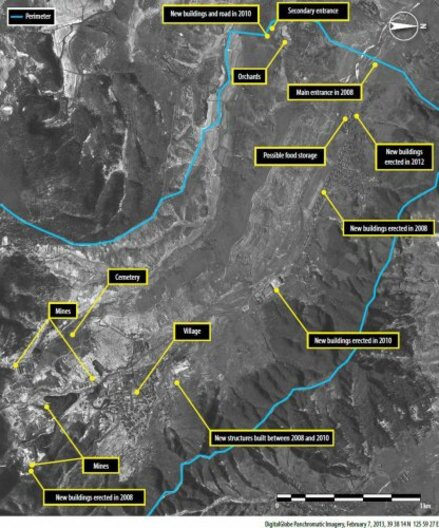
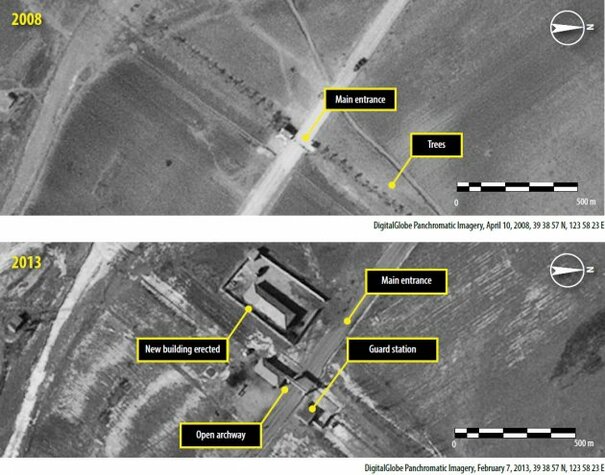
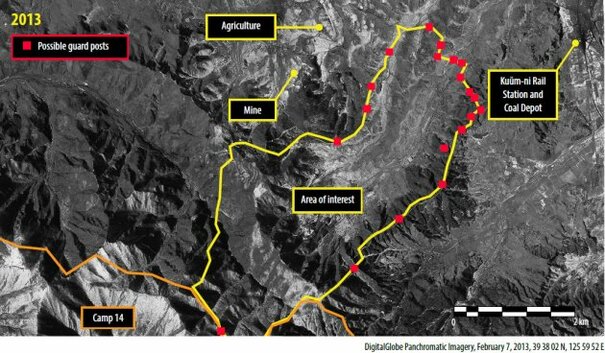
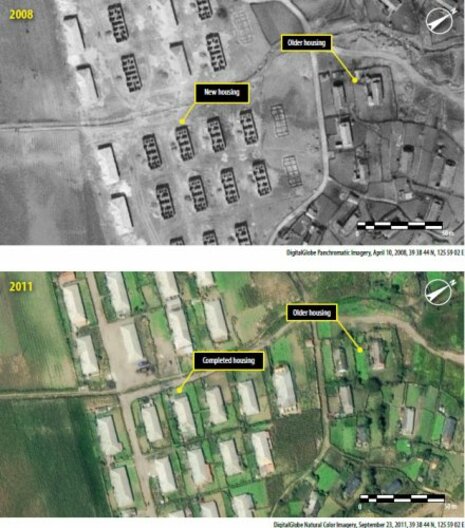
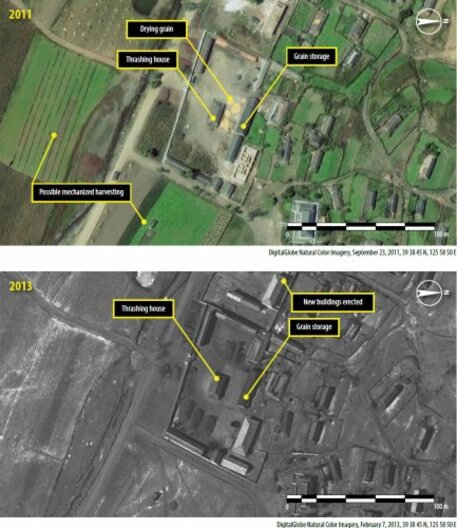
(Photos courtesy of Amnesty International)
Other photographs obtained by Amnesty appear to suggest that the population who live in rural areas beside an existing prison camp, in Kaechon in the South Pyongan provence, are slowly seeing their freedom of travel eroded.
Amnesty said this “muddying” of the borders between the prison camp and its local neighbours raised fears that conditions around the perimeter of the camp would slowly begin to mirror those who lived within the camp borders.
“The creation of a security perimeter beyond what appears to be the formal boundaries of Camp 14 blurs the line between the more than 100,000 people who suffer in North Korea’s prison camp system and the neighbouring civilian population,” said Amnesty International Ireland’s Colm O’Gorman.
Amnesty’s North Korea researcher Rajiv Narayan said the images underlined the need for international pressure to set up a UN-backed inquiry into possible human rights abuses in prison camps.
An interactive map produced by Amnesty, outlining the various camps in North Korea, can be accessed here.
It is generally thought that many of those who reside in prison camps have not themselves committed any crimes, but may simply be related to others who have expressed dissatisfaction with the political regime in the country.
Others may have attempted to leave the country: anyone who does so without approval is considered a defector and is liable to imprisonment if they are returned.
Many North Koreans who oppose the government are forced to reside outside its main cities; permission to live inside Pyongyang is routinely granted only to those who are firm supporters of the Worker’s Party and who are in good health, or who are army veterans.

To embed this post, copy the code below on your site














have your say