Sign in. It’s quick, free and it’s up to you.
An account is an optional way to support the work we do. Find out more.
Sign in. It’s quick, free and it’s up to you.
An account is an optional way to support the work we do. Find out more.

CONDITIONS WERE NOT overly pleasant in Irish prisons throughout 1984.
Confidential papers released under the 30-year-rule by the National Archives show that overcrowding was a constant problem, not least because Mountjoy Prison had been subject to a series of riots that saw prisoners transferred to other facilities, and also the fact that a substantial number of Irish prisoners at the time were “subversives”.
Overtime became a crucial problem for the government at the time – the budget for such work was exhausted which meant the manpower simply wasn’t there to keep an eye on everyone in the overcrowded prisons.
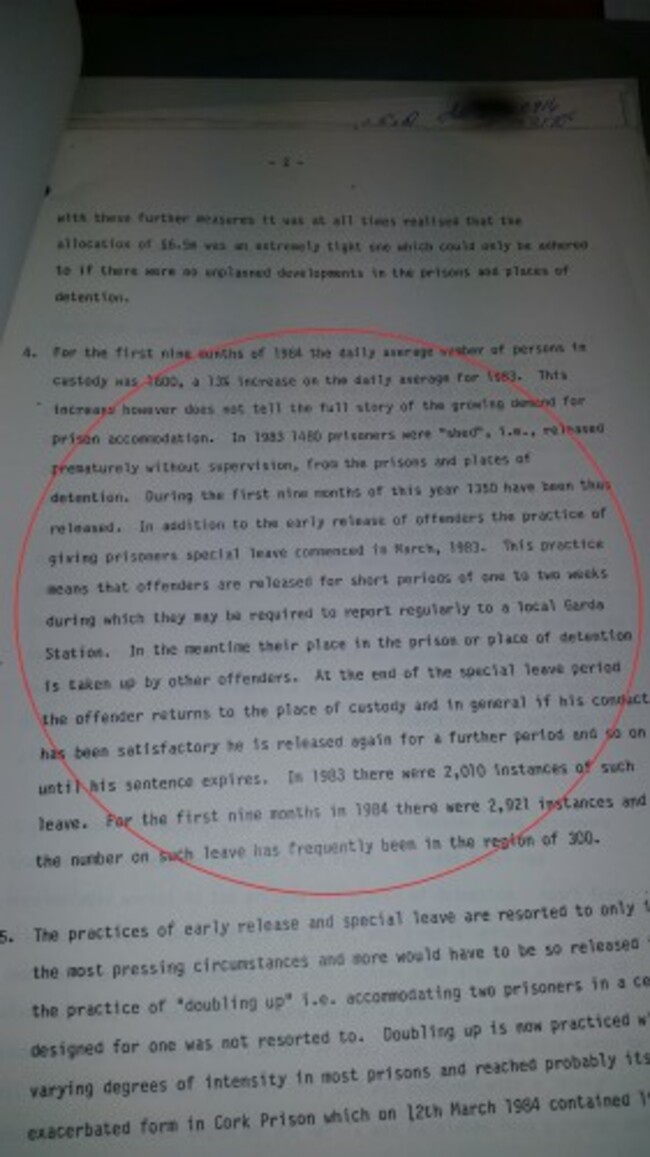
The initial solution? A process known as ‘shedding’. This basically saw prisoners ‘released prematurely without supervision’ with their places immediately taken up by other offenders.
Click here to view a larger image
1,350 prisoners were ‘shed’ in this manner in the first nine months of 1984, an increase of roughly 30% on the previous year.
A form of ‘special leave’ was also instigated. In the first nine months of 1984 2,921 prisoners were routinely let go for specified periods of time with the proviso that they periodically check in at their local Garda station.
At the same time, 1984 saw a particularly heavy period of unrest in Irish prisons, with five different hunger strike campaigns by prisoners in Limerick prison, who were seeking to be returned to their residency at Mountjoy in Dublin following an enforced move.
16 prisoners slashed their wrists during these protests according to the released documents.
Click here to view a larger image
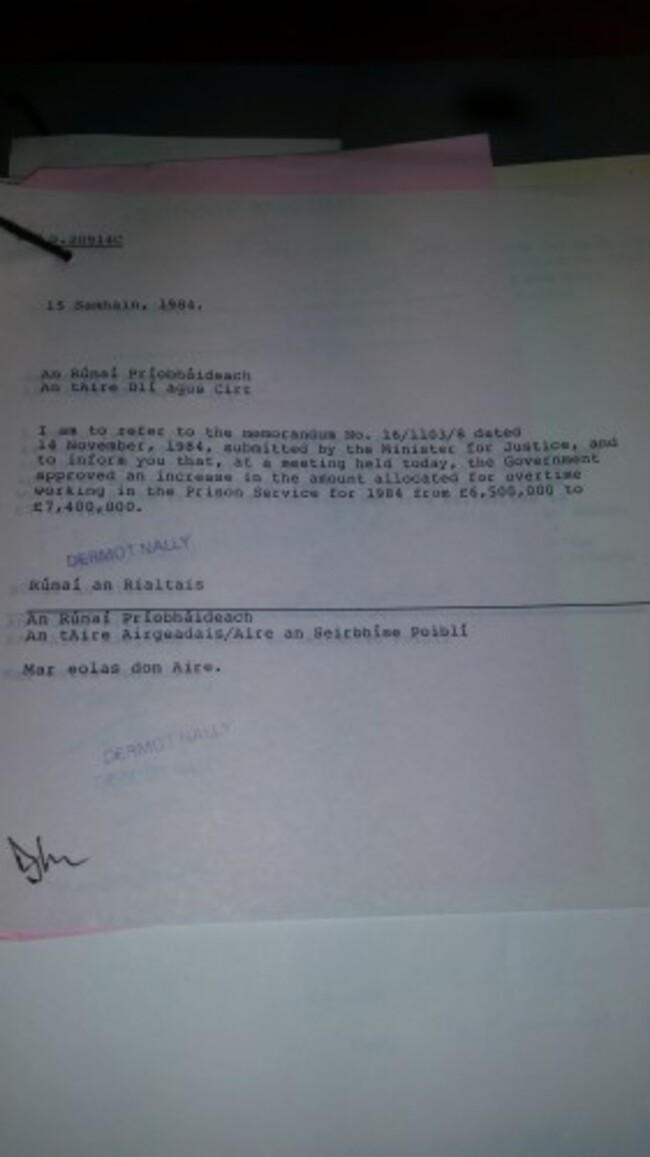
With the situation reaching crisis point, the government approved an increase of the Prison Service overtime budget to £7.4 million from £6.5 million.
Given the recessionary nature of the time (as evidenced endlessly in the released state papers), the increase gives an insight into the chronic nature of the problem in the country’s prisons.
See National Archives file 2015/88/242

To embed this post, copy the code below on your site













have your say