Sign in. It’s quick, free and it’s up to you.
An account is an optional way to support the work we do. Find out more.
Sign in. It’s quick, free and it’s up to you.
An account is an optional way to support the work we do. Find out more.
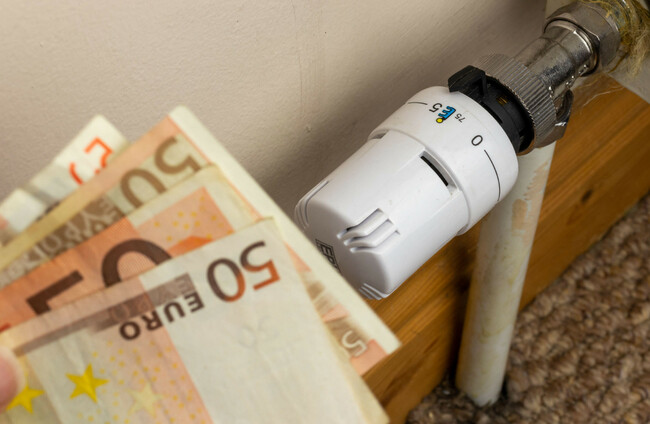

THE GOVERNMENT IS cutting the carbon tax on home heating oil and gas, and shelving planned increases for the rest of its term.
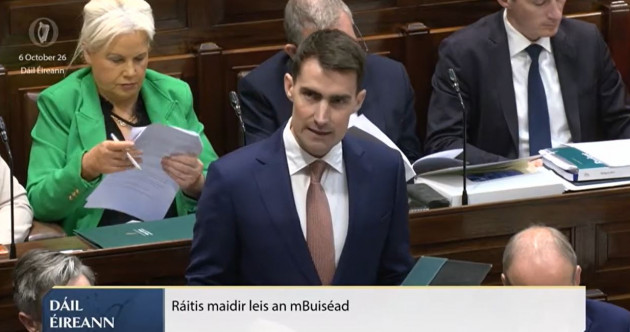
The carbon tax rate is to be cut from €63.50 to €48.50 per tonne of CO2, Minister for Finance Simon Harris announced as he unveiled Budget 2027 in the Dáil today.
Harris also confirmed that scheduled carbon tax increases will not go ahead for the remainder of the government’s term, marking a significant reversal of the long-standing policy of annual rises.
With the cost of home heating oil having soared since the US and Israel’s war on Iran, the move will take some pressure off households, but it has been strongly criticised by environmental groups, who said the government has “given up on climate”.
At the same time, cuts in excise duty on petrol and diesel, which amount to 27 cent per litre on petrol and 32 cent on diesel, are also to be extended until 28 February 2027.
The move is in addition to the reduction of the NORA levy until 31 December 2026, and the extension of the enhanced Diesel Rebate Scheme until the end of December 2026.
Harris said excise will be restored gradually from February with full restoration not occurring until 30 June.
“I want to be very clear there will be no increase in any form of tax either at the pump or in your home during this winter period,” Harris said.
Harris said the changes “do not signal a weakening” in the government’s resolve to decarbonise the economy. He said the government is committed to facilitating and speeding up the transition to renewable energy, but said it must be done in a way that is fair.
More than one-third of Irish households depend on oil for heating, according to the latest figures from the Central Statistics Office.
A price tracker on OilPrices.ie shows the average price nationwide of home heating oil soared from €480 per 500 litres in 2025 to €807.57 today – an increase of over 68%.
Carbon tax on home heating oil, which was first introduced in 2010 as part of Ireland’s commitment to tackle climate change, was due to increase to €71 per tonne of CO2 emitted – up from €63.50 – on 1 May this year. The Finance Act 2020 sets out that carbon tax rates are to increase annually by €7.50 per tonne until May 2030, when all liable fuels are to be taxed at €100 per tonne.
But after April’s fuel protests, the government announced the deferral of carbon tax increases planned for May until 14 October. Now, the government has said there will be no more increases until its term ends in around three years.
Darragh Cassidy, a spokesperson for comparison site Bonkers.ie, told The Journal that households using oil heating currently pay around €180 in carbon tax to fill a 1,000-litre oil tank, and the new cut will save them around €45 per fill.
He said the carbon tax currently adds around €137 to the average annual gas bill including VAT at 9%, and the households using gas heating will now save around €30 to €35 a year.
According to the government’s tax strategy group, postponing the tax increase on heating oils and gas from May to October has already cost around €5.4 million.
The report said the government took in over €400 million in carbon tax from home heating oils and gas last year.
Irish Road Haulage Association President, Ger Hyland, has welcomed the continuation of the fuel excise cut reductions, as has Fuels for Ireland.
However, Fuels for Ireland ]said the reduction of carbon tax on home heating oil represents a “significant retreat from coherent energy and climate taxation while doing very little to address the actual scale of household heating costs”.
It said more meaningful assistance could have been provided through VAT changes on home heating oil.
The Green Party has said the carbon tax fiddling shows that the government has “given up on climate”.
Capital allocations of over €650 million for the Sustainable Energy Authority of Ireland (SEAI) home and community energy upgrades were announced by Harris, but Green Party leader Roderic O’Gorman said today’s budget does not include a long-term commitment to help households retrofit.
Speaking outside Leinster House today ahead of the budget, O’Gorman questioned whether the pause in carbon tax, which funds decarbonisation measures, will defund home energy grants from the SEAI.
“Is the reason the government aren’t trailing an announcement about extra money for SEAI? Is it because there is less money for retrofit because of the deferral of the carbon tax?” he asked.
Green Party finance spokesperson, councillor Michael Pidgeon, said: “The Government has simply given up on climate change. Instead of developing targeted plans to help people with high bills, they’ve taken the easy way out and shafted the planet.”
Charity Friends of the Irish Environment (FIE) has said that the carbon tax freeze lets oil companies off the hook and takes funding away from renewable energy investment.
FIE Director Tony Lowes said: “The debate is being presented as a choice between helping households and tackling climate change. It is not. The real question is why households should pay for an energy crisis while oil and gas companies are making extraordinary profits from it.”
He said the pause will not make future energy shocks disappear, but will “reduce funding for the very measures designed to protect people from those shocks”.
Lowes called on the government to explain how programmes which help retrofit homes and expand renewable energy will now be funded if future carbon tax increases are paused.
Friends of the Earth Ireland have also expressed disappointment with Budget 2027′s reliance on excise duty cuts and carbon tax freezes.
Clare O’Connor, Programme Coordinator at the group, said: “Opting for further excise duty cuts and pausing carbon tax increases as a solution to the energy crisis is a short-sighted strategy.”
“Fuel tax cuts do nothing to insulate families from global fuel shocks in the long term, while simultaneously draining the exchequer of the funds needed to get off fossil fuels for good.”

To embed this post, copy the code below on your site












have your say