Sign in. It’s quick, free and it’s up to you.
An account is an optional way to support the work we do. Find out more.
Sign in. It’s quick, free and it’s up to you.
An account is an optional way to support the work we do. Find out more.

LAST UPDATE | 1 hr ago
THE GOVERNMENT HAS announced increases in an income tax band and thresholds for inheritance tax.
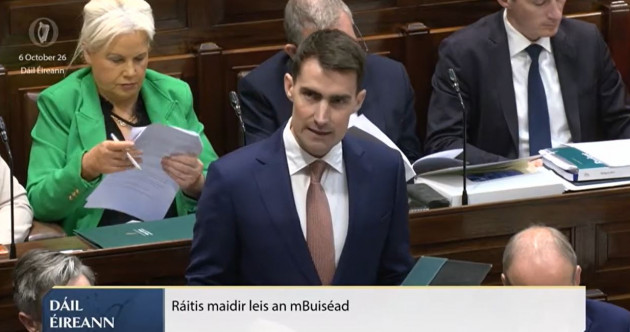
Addressing the Dáil today, Minister for Finance Simon Harris announced an increase to the entry band for the higher rate of income tax.
The entry threshold will increase by €2,500 from €44,000 to €46,500 for those paying 40% tax. There are proportionate increases for married couples and civil partners.
Harris also announced an increase in personal, employee, and earned income credits by €125, and has increased the home carer tax credit by €100.
The entry threshold for the USC 3% band will also be increased from €28,700 to €30,300.
Harris said that these changes mean that someone earning €50,000 a year will pay over €700 less in income tax and USC. He said that for a couple with a combined income of €100,000 it will mean €1,500 less in tax.
These changes amount to a personal income tax package of €1.3 billion.
Harris also said that the Minister for Social Protection Dara Calleary will increase the Employer PRSI threshold from €552 to €600 per week for 2027, which he said will save businesses between €650 and €700 per employee below the new threshold over the course of a year.
The threshold at which capital acquisitions tax kicks in will also increase. This applies to gifts and inheritances.
A child can now inherit €420,000 from their parents in their lifetime before capital acquisitions tax of 33% kicks in – up from €400,000 previously.
The threshold for siblings, nieces, nephews and some other relatives has also increased from €40,000 to €44,000.
For non-relatives, the threshold has increased from €20,000 to €22,000.
Tax advisory firm Grant Thornton said that the change in these thresholds fails to address “inherent imbalance” for those who inherit from someone other than a parent.
A “disproportionate” amount of CAT is currently generated by those in groups B and C, with Revenue figures indicating that almost 59% of all inheritance tax collected came from beneficiaries outside the parent-child threshold category.
While increasing the thresholds will provide some additional relief, Grant Thornton said that adjusting the existing bands does not address whether a system based predominantly on a beneficiary’s family relationship continues to reflect modern Irish society.
Julia Considine, Private Client Partner at Grant Thornton Ireland, said: “Family dynamics and living arrangements have evolved over the years, but our inheritance tax system is still stuck in the past.
“Not everybody has children and for many people, the most important person in their life may be a long-term partner, sibling, niece, nephew, or somebody who does not fall within their immediate family at all.
“You could be partners in life, but strangers in blood and penalised because as a couple, you didn’t tick the box of a traditional marriage.”
To embed this post, copy the code below on your site












have your say