Sign in. It’s quick, free and it’s up to you.
An account is an optional way to support the work we do. Find out more.
Sign in. It’s quick, free and it’s up to you.
An account is an optional way to support the work we do. Find out more.
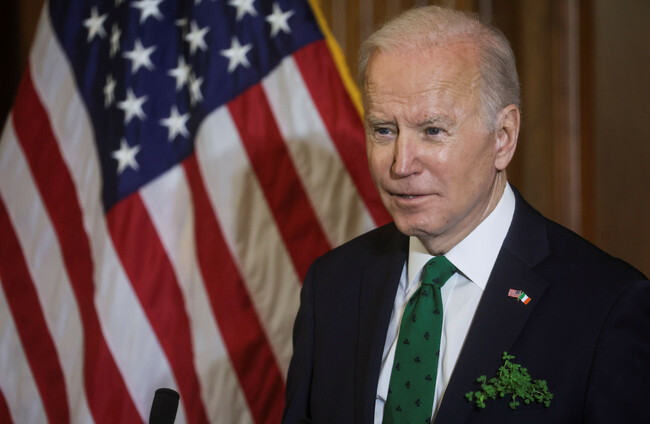

WHEN A GRINNING president-elect Joe Biden told a BBC reporter, teasingly, “I’m Irish!” back in 2021, Nigel Farage nearly had a fit.
He called it “proof that Biden hates the UK”. Biden’s often lumpish fetishisation of his Irish heritage notwithstanding, a return to a rational, rules-based world order was an affront to the medieval death cult which had formed around Brexit.
A UK-US trade deal – the Holy Grail for Brexit’s high priests – was off the table until London sorted out its Northern Ireland problem.
Ireland’s remarkable soft power in America was a hindrance that Leavers wilfully ignored until stung by its sticky reality. Republicans and Democrats are even more bitterly divided than their equivalents in the United Kingdom, and yet an affinity for the Irish Free State is something that they still broadly agree on.
In a country organised more like an anarchic patchwork of city-states than a cohesive cultural whole, Americans have often sought out a sense of personal identity in their ancestral origin stories.
John F. Kennedy, Richard Nixon, Ronald Reagan, and Barack Obama were four very different kinds of politicians, but they all claimed Irish roots and arranged state visits accordingly.
Ireland has been quicker to embrace some American Presidents than others. Andrew Jackson, the 7th President of the United States, was born in the Carolinas in 1765 to Scotch-Irish planters from County Antrim. Styling himself as an anti-establishment figure, he railed against the elites of the day.
He is probably most remembered for his role in the ‘Trail of Tears’, where over 60k Native Americans were removed from their lands. A populist slave owner with a penchant for ethnic cleansing, his name is not likely to be invoked at the lucrative fundraising events held in America by Irish political parties.
Donald Trump is another President that the Irish collective imagination would rather forget. Trump, an unashamed Jackson stan, was similarly impressed by Boris Johnson and the diplomatic asbestos he brought to Brexit negotiations. His visit to Ireland in 2018 was aloof to the point of parody.
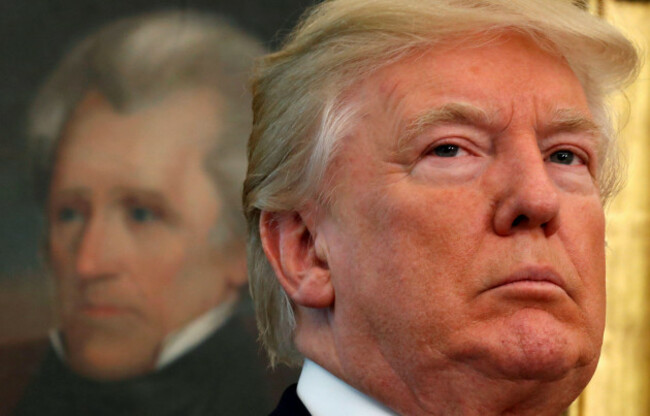
He first suggested that his meeting with Taoiseach Leo Varadkar take place at his golf resort in Doonbeg, but the Irish government refused. A compromise was reached whereby the two men sat uncomfortably in front of a makeshift curtain in a regional airport lounge. Trump spoke to journalists and likened Ireland’s border with the UK to the US border with Mexico. It’s unclear who he considered being the Mexicans in the Anglo-Irish situation.
The nation’s preference for a Biden victory in 2020 was fairly unambiguous. In County Mayo, the win was celebrated like that elusive All-Ireland cup triumph. Ballina, the birthplace of his great-great-great grandfather, was resplendent with the smiles of distant relatives and hangers-on, boasting to television cameras against the backdrop of a technicolour Biden mural.
The Biden fever was so acute at the time that it was not inconceivable that Mayo could secede from the Republic and campaign for US statehood like a mid-Atlantic Hawaii.
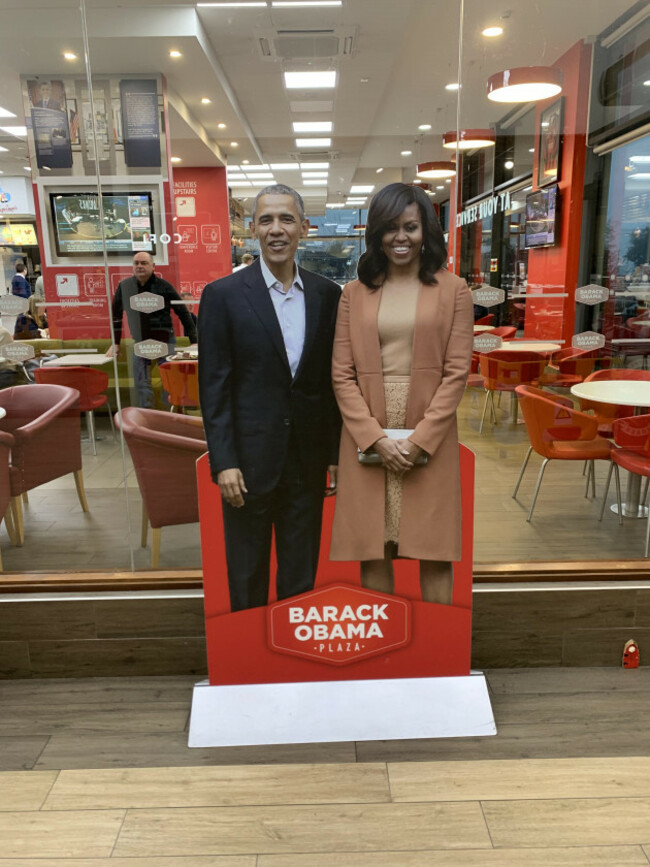
The small town of Moneygall was similarly transformed after an Obama visit in 2011, even erecting the Obama Plaza (a petrol station with a chipper and Papa John’s attached) in his honour.
I suppose you could say people got carried away. But the upset amongst some in the Luddite wing of the Conservative and Democratic Unionist parties was similarly delirious. In the binary world of nationalist ideologues, a positive inclination towards Ireland is the same as outright hostility towards Britain.
The reality is that Biden’s often tongue-in-cheek affection for his lineage is just political theatre. The President’s genealogy was never going to have a serious influence over matters of foreign policy and international trade. What counts in that world are treaties and the rule of law, and Britain had displayed a galling contempt for both under Johnson.
Britain’s current prime minister, Rishi Sunak, by contrast, might just be a man with whom the world feels it can do business. In reaching an agreement with the European Union on the Irish border, the new Conservative leader signalled to the world that he takes international law seriously. He ought to be rewarded for good behaviour.
Biden’s forthcoming visit to Belfast for the 25th anniversary of the Good Friday Agreement is a perfect opportunity for Broken Britain to rebrand itself. If a trade deal is what Sunak needs, then why shouldn’t Dublin leverage its unique relationship with Washington to help him on his way? A politically stable, economically prosperous neighbour is in the Irish national interest, after all. What an irony it would be if it is Ireland that finally gets Brexit done.
That is not to say that there won’t be some choppy waters on the way there. Biden’s plain, sometimes clunky enthusiasm for his ancestry may yet provide some delightfully uncomfortable moments for both Irish and British politicians. He made headlines on St. Patrick’s Day 2015, when he welcomed then-Taoiseach Enda Kenny to his home, joking to cameras ‘if you’re wearing orange, you’re not welcome here!’. Somewhere President Jackson, the son of Antrim Presbyterians, was spinning in his grave.
Peter Flanagan is an Irish comedian and writer. You can find him on Twitter @peterflanagan and Instagram @peterflanagancomedy.
To embed this post, copy the code below on your site














have your say