Sign in. It’s quick, free and it’s up to you.
An account is an optional way to support the work we do. Find out more.
Sign in. It’s quick, free and it’s up to you.
An account is an optional way to support the work we do. Find out more.
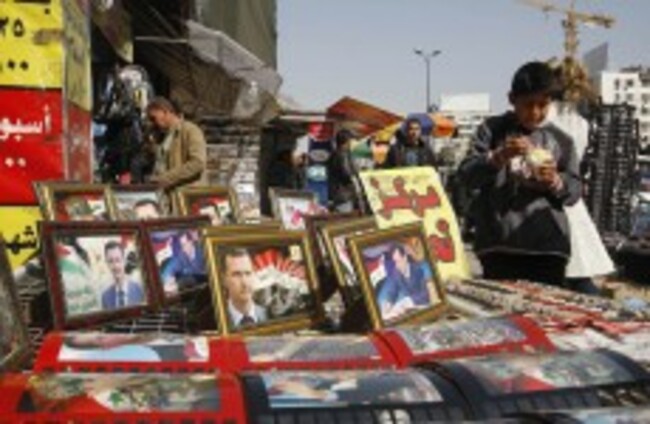

LEAVING SYRIA LAST month after five years was a bittersweet moment. I had made the country my home and had established a career (and a smoking habit). But the scenes of death and destruction I witnessed in the eastern Damascus suburb of Saqba in early February made me feel that continuing to live there on a long-term basis was too risky. The tanks that surrounded Damascus International Airport as we took off north towards Homs certainly helped reassure me that my decision was correct.
Since then, Syria has lurched further forward towards civil war. An armed insurgency has emerged, sidelining the peaceful protestors who have for months demonstrated their incredible bravery in the face of almost certain death. But neither the demonstrators nor the rebels appear able to take on the Bashar al-Assad-led regime, and win.
An activist in the Inshaat district of southwest Homs told me just this week of how “whole areas of Homs are empty”. Syria’s largest internal mass displacement of civilians has begun. Many families from Homs and Hama have fled to the towns around Damascus where rent is cheap. They are the new Iraqi refugees.
As the revolt unfolded last spring a bounty of debate and discussion filled the restaurants and cafes of Damascus. “People want freedom, but they don’t know how to rule themselves,” went one argument. “The Assads hold power in every corner of state and society, if they go there will be no structure in Syria,” was another. “We have a history of democracy in Syria, we can rule ourselves,” went a third.
But at no other time in a year of protest is the opposition movement at greater risk of failing than now.
Earlier this week President Bashar al-Assad toured the Bab Amr district of Homs, a declaration of strength and confidence by the regime. The regime and its supporters are thoroughly convinced they are right and that they are facing an international conspiracy to destroy Syria.
The so-called Free Syria Army, loose groups of defected soldiers with elements of armed civilians, was routed by regime forces in Homs in early March. After a month of ceaseless shelling by the regime, the FSA fled, apparently, because they wanted to spare the lives of civilian caught between the two warring forces.
Some Syrians – most noticeably those being shelled daily – want NATO to intervene as soon as possible. Others have told me that: “We do not want freedom if it is free or handed to us by a foreign soldier.”
As I have written previously, the arming of the opposition has probably been the opposition’s biggest failing. It gives the regime a carte blanche to use as much force when and where it desires. The militarisation of the opposition allows the regime to convince the millions of Syrians unsure of who to support – the ‘silent majority’ – that its actions are justified.
In central Damascus, where millions of the silent majority reside, one can live a relatively normal life. Cafes are still open, people still shop. There are taxis and buses operating in the streets and schools and universities still hold classes. Here, many still support the regime. Some because they fear civil war, others because they believe Syria is not ready for democracy, others don’t want the value of their million-dollar apartments reduced. It is somewhat ironic that the granddaughter of one of the leading Syrian fighters against French occupation of the country in the 1920s and an acquaintance of mine, firmly backs the regime. She lives in the Malki district of Damascus, close to her former statesman father and where property prices rival London and New York.
A wealthy Sunni friend once told me of his position: “I hate the regime but I will go to the [pro-regime] rallies because the alternative is so much worse. We will slip into civil war.”
Other Syrians have repeated the same point over the past several months: “There is no right and wrong anymore – both the regime and the opposition are wrong. The only important issue to discuss now is this: do we want thousands more Syrians dead or not?”
At the same time, the only way to beat the Syrian regime is to threaten an armed invasion of international forces – not until troops and tanks are massed at Syria’s borders will the regime halt its actions against protestors and seriously pursue a reform process.
But even so, the opportunity for securing a free Syria any time soon may well have passed.
The Syrian army is today a battle-hardened entity following a year of ‘work’. Its soldiers are also far more convinced of their actions than they were last spring (when it was patently obvious they were firing at unarmed, peaceful protestors, unlike today). Protestors and rebels have been routed in every area they have held and their morale is surely low. The heady days of last summer when promise, hope and images of dictators falling in north Africa filled their thoughts are long gone. Today, the real fight for Syria is only beginning.
Stephen Starr is a freelance Irish journalist and author of ‘Revolt: Eye-witness to the Syrian Uprising‘ out in June. He is also the founder and editor in chief of Near East Quarterly.
To embed this post, copy the code below on your site











have your say