Sign in. It’s quick, free and it’s up to you.
An account is an optional way to support the work we do. Find out more.
Sign in. It’s quick, free and it’s up to you.
An account is an optional way to support the work we do. Find out more.


MAYBE IT’S BEEN the recent lovely weather. Maybe it’s hormones.
Maybe it’s the full moon, but recently I’ve begun to notice that alcohol is hitting very differently. Now, after just two glasses of wine, it can take several days before I feel right again.
A late bloomer when it came to drinking, at the start, I wasn’t a fan of wine, preferring instead to socialise with beer.
Once, I even deliberately rejected her by covering the wine glass in front of me with my hand before the waiter could pour.
“None for me thanks.”
Occasionally, someone would try to tempt me into having a taste. “How do you know if you don’t try?”
“Because it’s vinegar,” was my usual response.
She was always there, though, white wine. Tagging along with work colleagues or whenever I met friends for a meal.
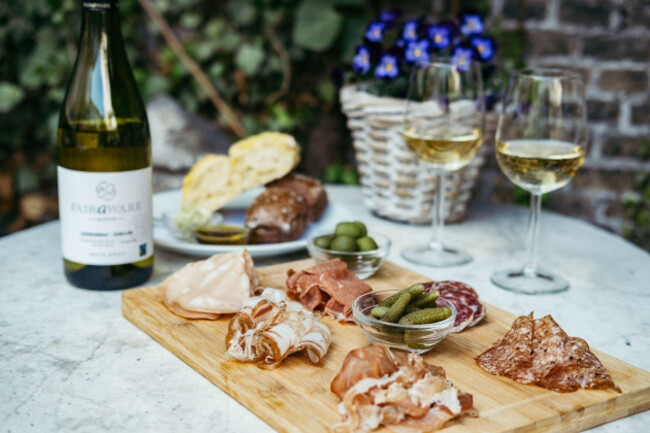
And then, one day, we just clicked. From there on, she has been my plus one on numerous occasions, good and bad, happy and sad.
I’m talking family get-togethers and glorious summery Saturday evenings in the pub. I’m talking break ups and stressful work situations. I’m talking engagements and weddings, christenings and birthdays. I’m talking funerals and Covid.
Alas, now that wine is my frenemy, and it looks like we are on the cusp of consciously uncoupling, I admit to feeling very sad.
Breaking up is hard to do, and in this case, made all the harder because I am surrounded by celebrities peddling their delicious wares. I’m looking at you Kylie, Amy Huberman and Graham Norton.

In the past, I successfully participated in several Dry Januaries — one continuing for more than six months. The occasional Sober October also proved not to be hugely difficult. Full disclosure: I strongly suspect I managed both challenges because (a) I had no intention of staying on the dry long term, and (b) both had an endpoint.
Previously, that finish line was a huge incentive. But now that I have entered negotiations rethinking my affinity with alcohol, I am evaluating everything through a very different filter indeed.
The Sober Curious movement has been on my radar for quite some time. Initially, I was of the belief it meant abstaining altogether. However, it seems it is more about checking in on your relationship with alcohol, reassessing your drinking habits and drinking less.
Because I am not ready or interested in being teetotalist, sober sometimes is a lot more feasible for me and within the bounds of possibility.
We live in a country that has a complex history with regard to drinking. Growing up, I was very familiar with expressions like ‘alco’, ‘plastered’, ‘in the horrors’ and ‘ossified’. Judgy parlance flung around like snuff at a wake. Although attitudes may be changing, albeit slowly, favouring a moderate drinking lifestyle has to be better than struggling with a trendy idea of prolonged sobriety. One that may become unsustainable very quickly, possibly leading to binge drinking.
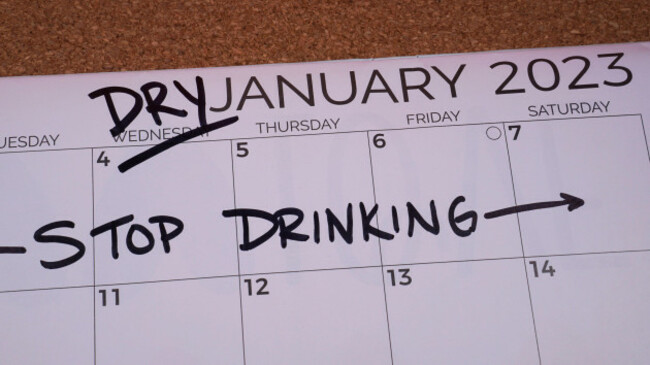
These days, with the emergence of buzzwords including clean drinking, sober curious, mindful drinking and grey drinking, there is an evident sea change regarding the language around alcohol.
According to AAI (Alcohol Action Ireland), reframing how we talk about any substance use is essential if we want to undergo a change in perceptions.
Use of negative stigmatising terms can feed into the already present label of shame surrounding addiction. Research shows that the use of correct terminology and compassionate language is helpful to those who are already in a vulnerable situation. It makes them feel safe and, furthermore, better able to seek help.
Spencer Matthews, former Made in Chelsea star, is one of several celebrities who call themselves “non-drinkers.” The entrepreneur behind Clean Co., a low and no alcohol drinks company, Matthews has been candid about his alcohol dependency in the past. Although sober for six years, he says he is open to moderate alcohol consumption in the future.

There are many well-thought-out strategies available that can help us quit alcohol or limit our inclinations towards it. The internet, widely accessible to everyone, is saturated with Apps that track alcohol use, DrinkControl and MyDrinkaware being just two. The HSE has an online calculator to assist in determining how your drinking affects your health and wallet.
The cost-of-living crisis has reached an all-time high, and enjoying a drink or three on a night out can be eye-wateringly expensive. Keeping a drink diary to document when and where you imbibe, plus how much you spend, keeps you accountable.
When we try to cut back on drinking, it’s worth knowing what can trigger that urge to have a drink. This desire can be sparked by something as simple as having the house to ourselves at the end of the day or a gorgeous evening casting beer garden vibes after work.
The 20-minute rule is another approach. It simply stipulates waiting 20 minutes after one drink before ordering another. Alternating water or a non-alcoholic beverage in between drinks is another option. Mocktails have improved immensely and have grown in popularity for those driven by health-conscious choices.
Back in the day, lining our stomach was par for the course prior to heading out. Eating beforehand and remaining hydrated still hold ground today. As does pacing our consumption and ordering a glass or a small can instead of a pint.
I do realise the negative impact alcohol has on many people. I do not promote nor do I condone excessive drinking under any circumstances. But we’ve all done it. Alcohol is there. It always will be. Some of us can handle it, some of us can’t. Alcoholism is a disease like any other.
Rather than knowing The One, perhaps educating ourselves as to what our relationship with alcohol is and how it affects us is more befitting.
Gwen Loughman is gatekeeper of four boys, one husband and watcher over two dogs.
To embed this post, copy the code below on your site













have your say