Sign in. It’s quick, free and it’s up to you.
An account is an optional way to support the work we do. Find out more.
Sign in. It’s quick, free and it’s up to you.
An account is an optional way to support the work we do. Find out more.

THE OTHERWISE BRILLIANT climate emergency programming on RTÉ last week was marred in my view by the food aspect of the family sustainability challenges set by their What Planet Are You On? programme.
The programme accepted as a baseline that a strictly vegan diet is always better for the planet, and so the families began a vegan diet.
They were corralled around the supermarket by sustainable diet adviser Marco Springmann in search of supposedly planet-friendly vegan foods.
Marched quickly past the meat and dairy aisles, they were encouraged to build meals around imported avocados and mangoes – ham was swapped out for processed vegan ham, milk for almond milk.
There was no encouragement to buy in-season, local fruit and veg. No discussion about the alleged questionable sustainability credentials of avocados or almonds. No discussion about the health implications of eating processed vegan ham. No attempt at balance whatsoever in some of the meals.
In my favourite piece of nonsense, the family that kept their own hens even had to stop eating the eggs so they could be properly vegan. You read that right – eggs from their own backyard were not considered sustainable.
Of course, the programme merely reflects the narrowness of the food discussion in society in general. Like most things in life, it has become simultaneously louder and more contentious.
People line up on both sides to shout at each other about what foods are healthy and sustainable and what ones aren’t.
This entirely ignores what seems to me to be the obvious point: all foods, whether that be fruits, seeds, nuts, grains, vegetables, meat and dairy can be grown or reared, and processed, in a way that is ecologically sound, or not.
They can be grown in a way that makes them nutritious for us, or not. To say avocados and almonds are always good, always healthy, always sustainable is a nonsense particularly when we ignore when, where and how they were grown, and how they got to Ireland.
So in a week when I found myself shouting at the television a lot, I found reason for optimism in a podcast featuring New York chef and author of The Third Plate, Dan Barber.
Barber tells the story of a carrot grown for his restaurant on his farm in New York and how it tasted sweeter and more delicious than any carrot he’d ever had.
The carrot was so good, that he would serve it up by itself, just so his customers could taste its magnificence. By comparison, the standard carrot he used in his stock pot was a rather bland, imported organic carrot from Mexico.
Determined to try to find out why one was so much better than the other (particularly since both were organic) he embarked on tests to discover why.
Using a refractometer (a device used to measure an index of refraction) he was able to measure the nutrition and sweetness in the carrots and was amazed to discover that, while the carrot grown on his farm was off the charts, the imported carrot barely even registered.
The conclusion? The health of the soil on his farm meant the carrot was bursting with nutrition. The imported carrot, on the other hand, did not have the same nutrition as it was mass-produced in a more conventional way. Does this mean that deliciousness and nutrient density are one and the same thing?
This provides hope that perhaps science can prove something that growers have known all along. That growing food in living, nutritious soil and eating it as soon as possible afterwards means eating food that is more delicious and more nutritious.
That could be the silver bullet a sustainable food future needs to convince consumers to choose that type of food.
Imagine a world where you’ve an app on your phone that can compare the nutrient density of two apples side by side on a supermarket shelf?
Would consumers default to food that’s grown in an ecologically sound way, and that is better for them and taste delicious? I bet Dr Marco’s avocado wouldn’t make it into the trolley in that scenario.
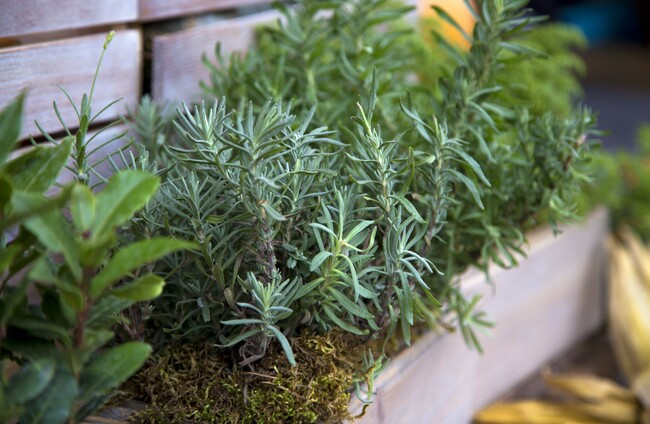
The Basics – Herbs
If ever there was a great starting point on the GIY journey, then it is surely growing your own herbs. They are relatively easy to grow and low maintenance and will save you lots of money from day one. Here’s a guide to growing the most popular herbs.
Annuals and Biennials
Perennials:
Recipe of the Week – Root Veg Pie
I’m really into warming, root-based, one-pot dishes at the moment and this is a delicious and healthy pie that will utilise vegetables that are still available in the December vegetable patch like carrots, celeriac and squash.
It’s one I return to again and again at this time of year. You don’t need to stick too slavishly to the recipe – use whatever root crops you have and experiment. You can leave out the pepper if you want (it’s not likely to be seasonal). Serves four.
Ingredients
Directions
Preheat the oven to 180 degrees Celsius.
To the make the filling place the potato, celeriac, pumpkin, mushrooms and pepper in a baking dish and toss with the oil and rosemary – season well.
Bake for 30 minutes until golden. Leave to cool.
Roll out the pastry and use it to line a pie dish, trimming away the excess.
Mix the vegetables with the ricotta and cheddar, and then fill the pie dish.
Sprinkle the parmesan over it.
Bake for 35 minutes until the pie is golden.
Michael Kelly is an author, broadcaster and founder of GIY.
To embed this post, copy the code below on your site














have your say