Sign in. It’s quick, free and it’s up to you.
An account is an optional way to support the work we do. Find out more.
Sign in. It’s quick, free and it’s up to you.
An account is an optional way to support the work we do. Find out more.
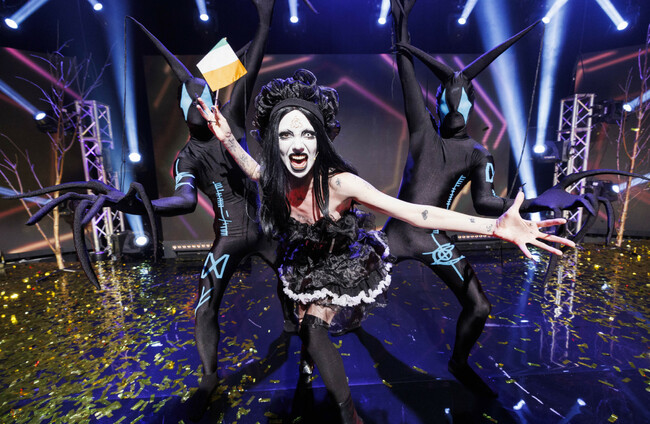

IN THE MULTIFACETED landscape of Ireland’s music industry, a disconcerting narrative unfolds, spotlighting the persistent gender disparity.
Bambie Thug, the latest Irish Eurovision entrant, faces a resounding silence on both local and national radio stations in Ireland. Despite winning the Eurovision voting rounds to represent the country, ‘Doomsday Blue’, has shockingly received minimal radio play on Irish stations — less than 100 plays.
This alarming discrepancy is not an isolated incident but a symptom of a broader issue: a reluctance among radio playlisters to champion women and non-gender conforming artists.
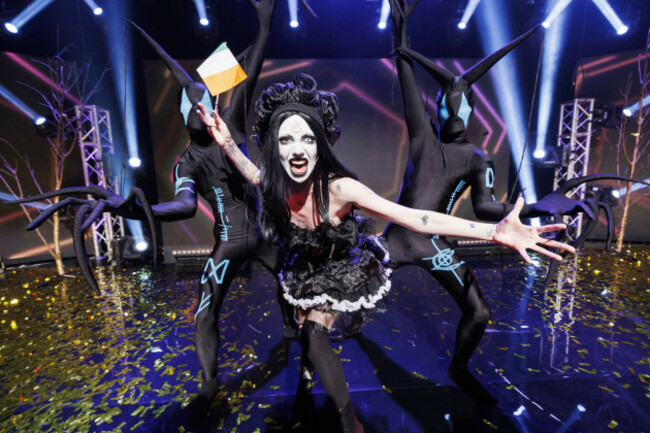
For five years, our advocacy group, Why Not Her? has meticulously documented and exposed this gender imbalance, revealing a disheartening reality. In 2022, not a single Irish female or non-gender conforming artist secured a spot in the Top 100 songs played on Irish radio throughout the year. Only three female Irish artists broke through this exclusionary barrier in 2023 (one being the late Dolores O’Riordan). Furthermore, contemporary artists find themselves relegated to the graveyard shift, between midnight and 6 am, reinforcing the systemic side-lining of women and non-gender conforming artists.
This lack of barriers at home often leads to acclaim abroad for female and gender queer Irish artists (CMAT, Wyvern Lingo, Ruthanne, Áine Tyrrell, Wallis Bird, Orla Gartland, Bambie Thug, Biig Piig etc). In an age where the music industry should embrace inclusivity and diversity as core values, the current behaviour is not just disheartening but downright unacceptable and perplexing.
It’s high time for a radical shift, our auditory tapestry craves diversity. Across the pond, the UK embraced a rich mix, featuring 48% domestic British artists in their Top 100 radio songs of 2023, showcasing near gender parity and even featuring some non-gender conforming artists. Yet, back home in Ireland, a staggering 81% of the most-played songs on our radio waves were from international artists over the past year.
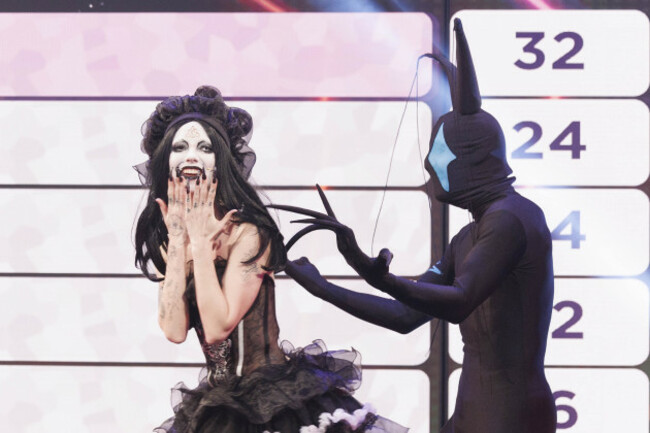
Isn’t it time we considered implementing a quota to spotlight our home-grown talent, encompassing all genders? Do those in control truly prioritise cultivating our indigenous musical talent? A mere 19% of domestic music gets airplay on our stations—is that satisfactory? In this era of rapid change, we’re missing a golden opportunity to chronicle history through a diverse musical lens in our nation.
Even RTÉ 2fm, a prominent national dual-funded radio station, has given ‘Doomsday Blue’ a paltry six spins. With a mere 95 plays across the nation, we must question the industry’s hesitancy to champion Irish artists diverging from the conventional straight white male narrative, particularly within the esteemed Eurovision context.
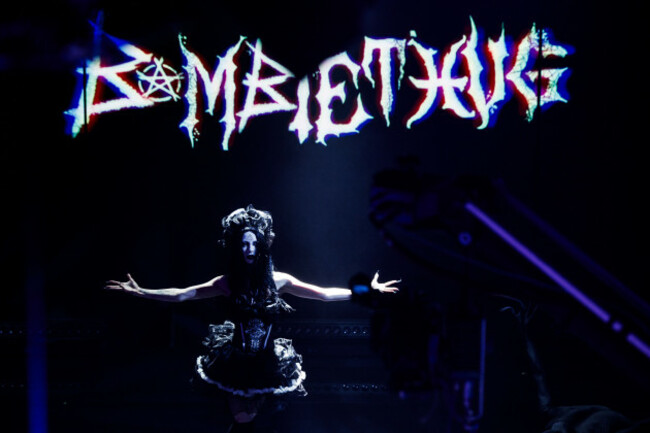
‘Doomsday Blue’ by Bambie Thug may be Ireland’s best Eurovision chance in years. Readers of one of the top Eurovision news blogs, Wiwibloggs, have in recent weeks twice voted Bambie Thug as tops in their poll of officially announced Eurovision songs so far. And we even have three-time winner Johnny Logan saying it’s “probably the best and most original entry Ireland has ever had”.
Fans and experts alike have been praising the star’s creative staging, original song, and arresting Celtic-Witch-Goth persona. There hasn’t been this kind of buzz around an Irish Eurovision contestant in ages.
Speaking of Celtic origins… in the land that sprouted creatives like O’Connor, McGowan, O’Riordan, Morrison and more, are we to settle on having to look back instead of shifting forward? Rooted in Irish soil, Bambie Thug’s relocation to London for their music career echoes the challenging landscape at home. Armed with sharp lyrics and an explosive Hyper/Ouija mainstream pop mix, they fearlessly delve into exploration, touching on the darkest desires and deeply personal matters, drawing inevitable comparisons with global sensation Billie Eilish.
We know there is more to this artist, an entire career already being carved out that has led them to perform at Download Festival and receive acclaim from Rolling Stone, Kerrang!, BBC Radio 1, and more notable platforms, yet little support from Ireland. Artists like Bambie Thug compel anyone harbouring bias to confront their reflection because, by simply existing, they challenge the established norms.
In the perplexing landscape of Irish radio, it’s evident that the gatekeepers—largely comprised, surprise, of white men—are at a loss, grappling with the unfamiliar.
The idea of an Irish individual not fitting the white male mould belting out their own song, asserting their narrative, appears alien to the airwaves. Sadly, this circumstance compels some of our finest artists to cross the Irish Sea, seeking refuge in the more receptive embrace of English radio, ala BBC 6Music or BBC Radio 1.
Alas, as Irish journalist Ann Marie Hourihane recently pointed out, and I have to agree; the persistent echoes of a post-colonial mindset find a disconcerting home deep within the core of Irish music.
Linda Coogan Byrne is a Gender Equality Campaigner & Music Consultant.
To embed this post, copy the code below on your site
















have your say