Sign in. It’s quick, free and it’s up to you.
An account is an optional way to support the work we do. Find out more.
Sign in. It’s quick, free and it’s up to you.
An account is an optional way to support the work we do. Find out more.
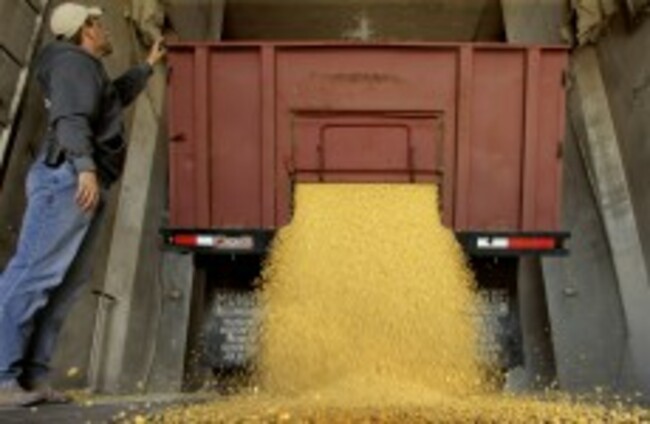
THE 32nd WORLD Food Day being marked today brings mixed news regarding the fight against hunger.
Latest figures show that we have made progress in reducing hunger in the past two decades. Around one billion in the world went hungry in 1990: today 868 million are still undernourished and, with an extra push we can achieve the first Millennium Development Goal of halving the prevalence of hunger on the planet by 2015.
However, we should be concerned with the fact that one in eight persons are still undernourished, that progress against hunger has slowed since 2007 and that we seem to be losing the battle in Africa and the Near East. In these regions, the hungry have increased from 192 million to 275 million, with 234 million of them in sub-Saharan Africa.
Moreover, we have the wider challenge of a forecast 60 per cent increase food demand by the middle of the century. Add to this the challenge of climate change, water scarcity, the depletion of soil quality and biodiversity loss, and one can realise just how serious the global food security challenge has become. And this is where policy is vital in setting the right direction and providing the predictability that the agriculture sector needs – whether in developed or developing countries.
Meeting the challenge to end hunger will depend on transforming political will into concrete action, strengthening global governance of food security, promoting pro-poor long-term economic growth, creating enabling environments for sustainable production, supporting small-scale production, building resilience and reinforcing social protection.
“Investment in rural areas”
To achieve this, we need to increase public and private investment in rural areas. However, over the last 30 years, financial aid for agricultural cooperation and development has fallen significantly, although there are signs that the trend has been reversed recently. Policy can play a role in providing the stability that will encourage this investment.
We also need to bring together all the knowledge that exists in the world concerning agriculture and economics, as well as public policy, in order to promote family and small-scale farming. Let’s not forget that over 70 percent of the world’s extremely poor live in rural areas and many of them are subsistence or small-scale farmers.
Every day, the FAO and the European Union are concerned with food security, working together with national governments to achieve this goal. We are part of a greater effort that includes other international organisations, farmers’ associations, NGOs, civil society and the private sector – the participation of all is essential in the fight against hunger.
Important partners in this effort are cooperatives. The theme of this year’s World Food Day highlights the role of agricultural cooperatives in feeding the world. They are of crucial importance because they allow small-scale producers to access the information, tools and
ervices they need. This allows them to increase food production, market their goods and create jobs, improving their own livelihoods and increasing global food security.
We also know that while small farmers acting alone often do not benefit from higher food prices, those acting collectively in strong producer organisations and cooperatives are better able to take advantage of market opportunities.
“Price volatility in agricultural markets”
This is especially important in the current context of increased price volatility in agricultural markets. The establishment of the Agricultural Market Information System (AMIS) last year has given the international community a new and effective instrument in responding to uncertainty. It is already giving an important contribution by increasing market transparency, facilitating coordinated international response and highlighting the extent to which there is sufficient global production available to make up for the drought-related losses in certain major producing countries this year. This is one important component of the global governance of food security, which has the Committee on World Food Security as its
cornerstone.
While the goal of halving world hunger is within reach and remains our short-term priority, we should look beyond 2015 towards a much more ambitious target: the total eradication of hunger, answering the call made by UN Secretary-General Ban Ki-moon in launching the “Zero Hunger Challenge” at the Rio+20 Sustainable Development Conference in June.
At Rio+20 the international community sent out a strong message – that we cannot call development “sustainable” as long as millions of people continue to suffer from hunger and extreme poverty. The Zero Hunger Challenge offers us a comprehensive set of bold goals – zero hunger, zero stunting for children under 2, all food systems sustainable, 100 per cent increase in smallholder productivity and income, zero loss of waste and food – to favour our advocacy work and move towards the sustainable future we all want.
With hunger, the only acceptable number is zero.
To embed this post, copy the code below on your site














have your say