TheJournal.ie uses cookies. By continuing to browse this site you are agreeing to our use of cookies. Click here to find out more »
Dublin: 11 °C Thursday 20 June, 2013

Suggestions of government interference in ESRI paper withdrawal ‘unfounded’

The Economic and Social Research Institute has issued another statement in relation to the controversial working paper which it withdrew yesterday.

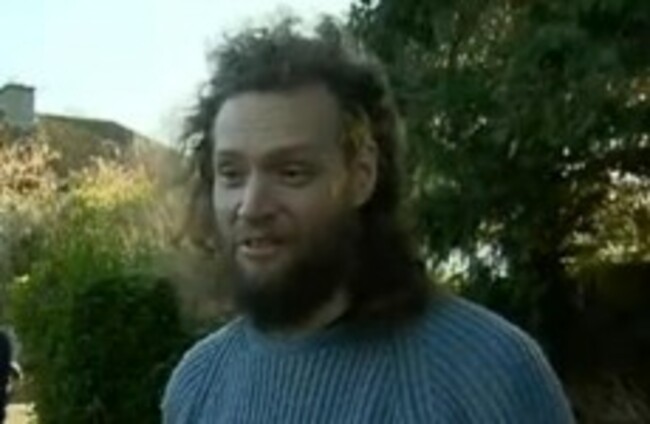
Richard Tol
Richard Tol
Image: Screengrab via RTÉ

THE ECONOMIC AND Social Research Institute (ESRI) has this evening issued another statement insisting that any suggestions its controversial paper on the costs of working was withdrawn because of pressure from government are ‘unfounded’.

The ESRI said that the sole reason for withdrawing the paper which stated that as many as 44 per cent of people with children would be better off on the dole rather than working was because its analysis was “seriously flawed”.

“Any suggestion that the paper was withdrawn because of pressure, of any sort, from government, or any other source, is entirely unfounded,” a statement said.

The paper’s senior author Richard Tol stood by his work in radio interviews this morning, saying: “I’ve absolutely no problem with my professionalism here.

You may say something about the ESRI’s professionalism but not about mine.

But the ESRI said this evening that its former employee was now in possession of a revised draft of the paper which came to different conclusions to the original working paper.

The statement continued: “We are aware that Professor Tol is now in possession of a revised draft of the paper which indicates that the percentage of people with children who would be better off on social welfare than working is not 44 per cent but less than 10 per cent.

“Professor Tol did not follow ESRI procedures when submitting the Working Paper, which is how it came to be posted on the website.”

Tol told RTÉ’s Morning Ireland that he did not see any reason to change the main conclusions of his paper and indicated that it would probably be published as a working paper of the University of Sussex where he is now based.

The thinktank said that in light of this incident it would be revising procedures for the release of working papers on the ESRI website “to ensure that a similar situation does not arise in the future.”

Column: The problems with Richard Tol’s ESRI working paper

Read: Richard Tol: This says more about the ESRI’s professionalism than mine

Read: ESRI paper which said many would be better off on dole withdrawn

  • Share on Facebook
  • Email this article
  •  

Read next:

Comments (34 Comments)

  • Yeahhhh the gubbermint had nothing to do with pulling it! The guy stated the obvious to what every working parent already knows!

    Reply
  • Just so I get it straight in my head

    The body that is 25% directly funded by the Dept. of Finance and counts most major government departments as its major customers (see http://www.esri.ie/about_us/the_institute/funding/) making a statement carried by the state funded national broadcaster informs me that everything is open and transparent.

    Did I tell you the one about the three little pigs?

    Reply
  • Im smelling a rat !!! . So why did it take the whole day to pass before the ESRI came out to say that it was inaccurate . Was it perhaps that the government and the ESRI underestimated the public and media reaction .

    Reply
  • Of course they withdrew it because of political pressure..

    You don’t bite the hand that feeds you…

    Reply
  • ”Any suggestion that the paper was withdrawn because of pressure, of any sort, from government, or any other source, is entirely unfounded,” a statement said.”
    That makes it all ok so. Perfectly clear ! Oh , I believe you.

    Reply
  • The paper when originally submitted was only a working paper and not peer reviewed. So by it’s nature, it’s not as reliable as a paper that has been through the peer review procedure and should be treated with caution. I think whole saga this says more about the media and the reliability of the sources they cite than anything else.

    Reply
    • Exactly, I remember on the article about this report on here there were commenters pointing out the flaws (eg, basing figures for expenditure and disposable income on info from 2004-2006 which is pre-crisis and liable to have changed due to introduction in new taxes etc). It was quite apparent from the offset that something wasn’t right..

      The media are prone to jumping upon the most sensational of studies, whether they have been independently verified or not.. If you were unfamiliar with how research works (which most people are) you would be forgiven for taking it as read when it appears in national media. It sure leads to a lot of confusion.

      Reply
  • Paul 13/06/12 #

    I would not be at all surprised if this is all orchestrated from upon high to get the public bitching and moaning about how high social welfare is so a hefty cut in the budget will be ‘justified’. The regime distancing itself from it and disputing it serves as a nice smoke screen.

    Reply
  • He’s a prof? The head on him!!

    Reply
  • Misdirection – works every time. Google “tol” and “esri” for the backstory. There’s an Agenda here, just not the one they’re trying to sell us…

    Reply
    • Interesting remark from Tol as quoted in the Irish Times of 2nd January last:

      “Ireland is facing 10 years of austerity. Leaving Ireland is the best thing you can do at the moment if you are responsible for a young family.”

      Reply
    • @ John – Without having any direct link to the ESRI, I’m a little sceptical with Tol’s criticisms of that institution. It easy to be a “people’s champion” after you’ve left/been pushed out. He criticises them for their policies and for towing the party line, but how much of this is sour grapes. The ESRI hasn’t been an institution that was and is carved in stone: the quality of its work and any agenda underlying its work has changed as the research staff and management has changed. Like any research department/institute, the quality of the research and the recommendations based on that research fundamentally depends on who is doing the research. It is ingenious of Tol to say that “In a university you can say what you like if you behave responsibly. It’s not the same with the ESRI,” he said. “If you violate policy and upset people, you can get into trouble.” In all honesty, I don’t think you’ll be able to find an academic who will fully and wholeheartedly back this up. University departments are equally riddled with politics.

      Ultimately, a working paper, clearly labelled as such and intended to be circulated as such amongst academics and specialists, had been pushed into the mainstream and is being judged, not on its academic worth, but on its possible political/cultural implications. As stated before, the data used ( perhaps only provisionally ) is not as current or reliable as it could be. He’s presenting an analysis of data, not a political policy.

      This has been hijacked to create a news story, and neither Tol, the ESRI or the Irish Times have handled the situation well. They have used it to further there own agendas or grudges, and inso doing, they’ve turned this paper into something it was never intended to be. The research does not say that people should stop working and should instead sign on. It is an analysis of available data. Tol, the ESRI and the Irish Times have all stepped outside their boundaries and have instead been showboating. The issue is not that this is an “explosive revelation”, the issue is that specialists in their given fields have a responsibility to stay within their fields when analysing a situation. When academics and academic institutions feel that they have a right to “Bonofy” and pontificate on topics that is not in their area of expertise, and this is happyly funneled into the mass-media to boost readership figures, then we cannot look at academic research objectively. Which, in my own naive way, is what I always believed academic research to be; the turning of ideas and opinions into objective, dispassionate analysis.

      Long post, apologies.

      Reply
    • Yep. “In a university you can say what you like if you behave responsibly.(!) It’s not the same with the ESRI, If you violate policy and upset people, you can get into trouble.” That caught my eye too.
      From that quote in Colm Keena’s article in the IT and others elsewhere one can clearly see that there is a thinly disguised case of an academic ego having being deflated accompanied by more than a little righteous indignation.

      Reply
  • More controversy to divert us away from the big issue to be considered. Should we be prepared for eurozone breakup?

    Reply
  • This says an awful lot more about ESRI than anyone else, if they can’t get this right (incompetence) then what else have they screwed up about???

    Reply
  • Young Fine Gaelers will love this news. Any chance to bash the needy and hunt down social welfare recipients.

    Reply
  • What was his wages bet it wasn’t 188e a week.

    Reply
  • wonder why he left the ERSI and what is he doing now … I am willing to bet he is not a stylist with peter marks or a buyer for Brown Thomas

    Reply
  • Well with 2 kids under 4 I needed a minimum of 33k to have anything to show for it…… 100 euro extra per month…..

    Reply
  • It does not change the fact that Social Welfare Recipients could use the information to make a better case.

    Civil Servant do not provide details because of using opinions.

    Social Welfare Recipients getting any information to make a better case is helpful.

    Reply
  • he looks like he did a Bear Grylles on it lived on the dole for two years, ate soup and lived on the mountain tops in cow hide tent and grew vegetables. good study if you wanna join a commune!!

    Reply
  • he luks bonkers

    Reply
  • He should get down to the barbers straight away and get a haircut and then he should but a razor and shaving foam and shave. Scruffy fool

    Reply
  • *Sorry I mean buy a razor

    Reply

Add New Comment