Sign in. It’s quick, free and it’s up to you.
An account is an optional way to support the work we do. Find out more.
Sign in. It’s quick, free and it’s up to you.
An account is an optional way to support the work we do. Find out more.
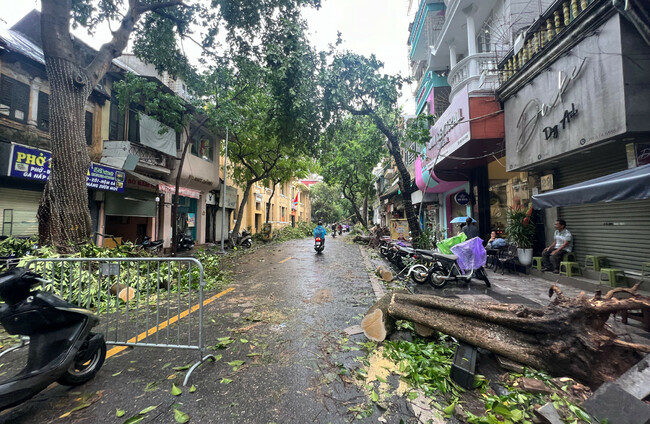
VIETNAM IS EVACUATING tens of thousands of residents from coastal areas today ahead of the arrival of Typhoon Kajiki, which is expected to lash the country’s central belt with gales of around 140 km/h.
The typhoon — the fifth to affect Vietnam this year — is currently at sea, roiling the Gulf of Tonkin with waves of up to 9.5 metres.
More than 325,500 residents in five coastal provinces have been slated for evacuation to schools and public buildings converted into temporary shelters, authorities said.
The waterfront city of Vinh was deluged overnight, its streets largely deserted by morning with most shops and restaurants closed as residents and business owners sandbagged their property entrances.
By dawn nearly 30,000 people had been evacuated from the region, as 16,000 military personnel were mobilised.
Two domestic airports were shut and all fishing boats in the typhoon’s path have been called back to harbour.
“I have never heard of a typhoon of this big scale coming to our city,” said 66-year-old Le Manh Tung at a Vinh indoor sports stadium.
“I am a bit scared, but then we have to accept it because it’s nature — we cannot do anything,” he told AFP, among a few dozen people camped out at the evacuation site this morning.
The typhoon is expected to make landfall around pm (8am GMT) packing winds around 139 kilometres per hour, Vietnam’s National Center for Hydro-Meteorological Forecasting said.
“Rain will continue today and tomorrow, and with that huge rainfall risks for flooding and flash floods on rivers are very high,” director Mai Van Khiem said.
Scientists say human-caused climate change is driving more intense and unpredictable weather patterns that can make destructive floods and storms more likely, particularly in the tropics.
“Normally we get storms and flooding, but never this big,” said 52-year-old evacuee Nguyen Thi Nhan.
The typhoon’s power is due to dramatically dissipate after it makes landfall.
The Joint Typhoon Warning Center said conditions suggested “an approaching weakening trend as the system approaches the continental shelf of the Gulf of Tonkin where there is less ocean heat content”.
More than a dozen domestic Vietnamese flights were cancelled yesterday, while China’s tropical resort island of Hainan evacuated around 20,000 residents as the typhoon passed its south.
The island’s main city, Sanya, closed scenic areas and halted business operations.
In Vietnam, more than 100 people have been killed or left missing from natural disasters in the first seven months of 2025, according to the agriculture ministry.
Economic losses have been estimated at more than $21 million.
Vietnam suffered $3.3bn in economic losses last September as a result of Typhoon Yagi, which swept across the country’s north and caused hundreds of fatalities.

To embed this post, copy the code below on your site














have your say