TheJournal.ie uses cookies. By continuing to browse this site you are agreeing to our use of cookies. Click here to find out more »
Dublin: 11 °C Saturday 25 May, 2013

Do you use what you learn in school… after you leave school?

The Leaving Cert results have been occupying the minds of over 55,000 students today – TheJournal.ie team reflects on how much of the senior cycle curriculum we go on to use in real life…

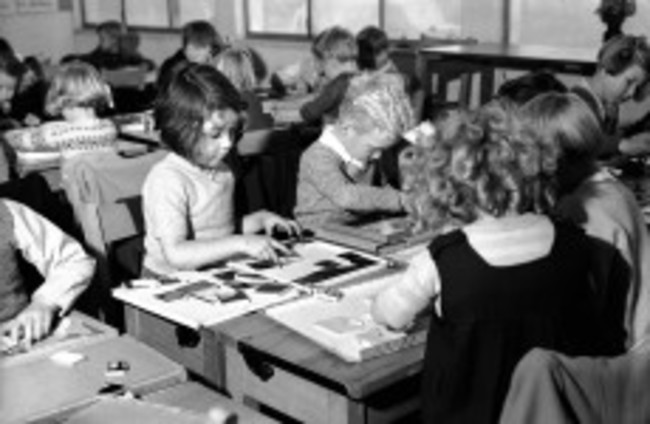
Image: AP Photo Archive

JUST OVER 55,000 students received Leaving Certificate results this morning, an end to the nerve-wracking wait to discover how they performed in the final State school exam.

For many, the results will determine the options available to them should they continue on into third-level education. Is the Leaving Cert a real measure of everything we learned in school though? How much of that do we actually go on to use in real life, beyond the points system?

Some of TheJournal.ie team has been contemplating those questions. We’d really like to hear from you in the comments section on your own experience – What did you learn in school that you continue to use today?

Jennifer Wade

Things I used: I was lucky enough to be able to take Classical Studies for my Leaving; it’s a fascinating subject that opens students up to a whole new world view and exposes them to type of storytelling that’s completely different what’s covered in English classes alone.

Things I didn’t use: Home Ec: I’ve never had to put my knowledge of domestic plumbing systems to use. Thankfully.

Christine Bohan

Some of the most useful things I learned in school weren’t on the curriculum – how to think for myself, that authority figures aren’t always right, and a deep appreciation for the noble sport of badminton are all things that have stuck with me since I graduated. However the most useful things I learned in the classroom were generally the most practical things: how to structure an argument in History class, how to cook in Home Economics (um, kind of) and how great the poetry of Philip Larkin really is.

The least useful things? Leaving Cert Biology. There’s two years of my life I’ll never get back (although I can now document the entire life cycle of a liver fluke. USEFUL).

Emer McLysaght

Even though I only ‘studied’ (under duress) Home Economics for two years in secondary school (first year and fourth year) I still find myself drawing on inspired memories from my time under Sr Brigid’s tutelage, from the cold utensils necessary for perfect pastry to the foolproof instructions for wiring a plug.

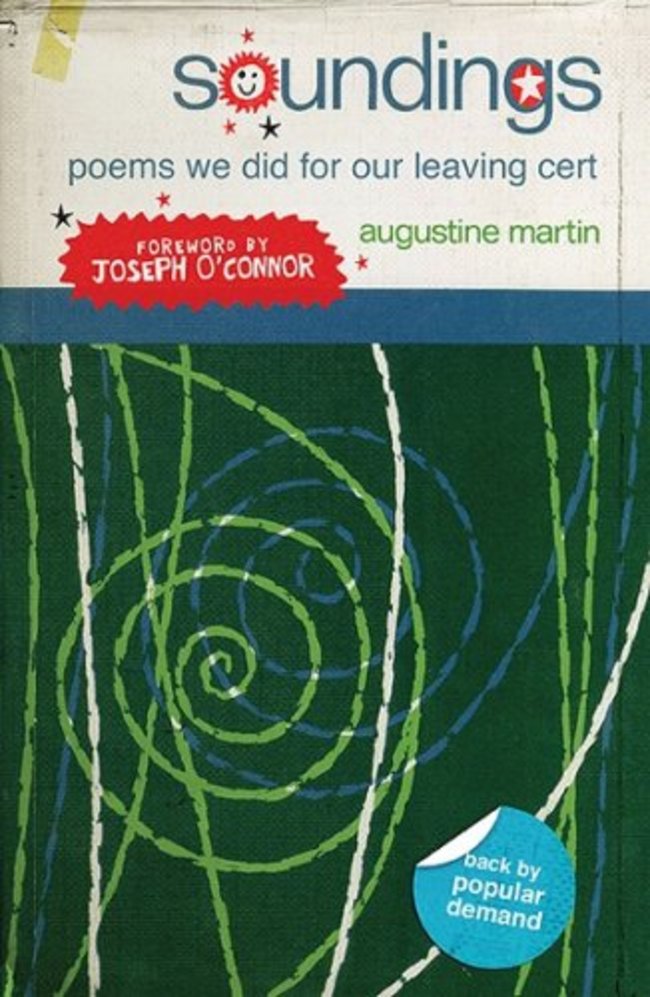
Apart from my brief dalliance with Home Economics, I think English, Geography and History are the subjects I have drawn on most since leaving school, especially working in the field of journalism. At the time I may have glared with hatred at my Soundings poetry book, or lamented the day the tectonic plates were discovered, but I have retained a surprisingly large cache of knowledge from those various subjects (including an almost encyclopaedic knowledge of the Norwegian tourism industry in the ’90s, which has yet to bring me any benefit, but I live in hope).

I left school and went on to study Science at TCD, trying to put my maths and biology to good use, before swiftly realising that biochemistry was my nemesis. I headed instead to Ballyfermot College of Further Education and DCU for the heady lights of journalism and media studies.

soundings

(Image: Gill & Macmillan)

Gavan Reilly

Sod all. I didn’t do Geography or History in school so the amount of practical stuff I learned there, and I still remember, is quite little. Most of the education I remember from my school days wasn’t actually delivered in a classroom but learned from other places (and no, I’m not talking about naughty talks behind the bike shed). Stuff I did for a Young Scientist project – to do with the special qualities that makes some music sound pleasant, and other music less so – has stuck with me far more than anything I learned in a classroom.

In all honesty, there are genuinely two things I learned in a classroom and still remember: the different names for grammatical terms that I learned in German (though in fairness, I studied German in college too), and Pythagoras’ Theorem.

Susan Ryan

Things I’ve used: Although I didn’t have much love for them at the time, studying French and German at school has proved really useful when travelling. The strangest place I’ve needed to use German was in southern Ukraine, to negotiate a taxi fare! Having some French was really useful when I went to Haiti with the housing charity Haven for TheJournal.ie last year.

Things I haven’t: I took Chemistry for the Leaving because at the time I wanted to design race cars and needed it to get in to a particular engineering course. I got the course, but it wasn’t for me and I’ve never regretted changing my mind about it. I haven’t gotten much use of the Chemistry since though!

Michael Freeman

Things I learned in school that I have used: For me the most important thing school teaches you is how to get along (or at least coexist) with large groups of people who you don’t know, and may well not like. Anyway – I’m convinced that those long weeks of sitting next to Lydia Smith in Biology class, while traumatic at the time, ultimately made me stronger.

Things that I have never used: Despite a name-in-lights role as Mr Bucket Snr in the school performance of Charlie and the Chocolate Factory, my talents in amateur dramatics have gone pretty much untapped since. But if TheJournal.ie ever puts on an office Christmas play, I’m a shoe-in for Shepherd #3.

(Okay, this is the English Prince Harry as Shepherd #3 – the one with the dark head-dress – in 1988, but we bet Michael Freeman was just as credible a young dramatic talent… Image: Bell Ron Bell /PA Archive/PA Images)

Aoife Barry

The remnants of my school education that still stay with me include rudimentary French and German phrases that came in handy when I needed to get to a train station or buy deux baguettes on holiday. But overall it was my English teacher Mr Dennehy’s love of writing that has stuck with me. If it wasn’t for his encouragement I’d likely be in a different career.

However, the ability to write non-stop for three hours during exam time was a skill that, in today’s technologically-advanced world, I no longer really use. As for my in-depth knowledge of coastal erosion, sadly I’ve never been called on to speak about this beyond the classroom.

Christina Finn

What I have learned since school and actually used would be my understanding of the how the Dáil and Seanad work. I think this was taught to us one day in CSPE class. Active citizenship and using your vote, always a great thing to teach the kids young.

What I learned and have not since used is probably some of the things from my Classical Studies class. While I loved learning all about Ancient Greece and Rome (it beat Irish class anyway) I probably have never needed to know that a tepidarium is a warm bathroom in the Roman baths or that a strigil was used to scrap olive oil off athletes at the Olympics in Ancient Greece – interesting facts though all the same.

Susan Daly

Aside from the obvious – emerging with the basic reading, writing, numerical skills in place – the minutiae of the other subjects haven’t really stayed with me. I have no idea how I managed an honour in French – I could barely say boo to the maman de la maison when I went to au pair in France two years later and gained more fluency in the language in two months there than in five years of the senior-cycle French curriculum here.

I do think subjects that helped me understand how the world works, or how it got to be in the state it is – Geography, History, Biology – gave me a good basis for journalism. The thing that changed me most? Being thrown from a small rural primary school into a year with 150 students was a sink-or-swim lesson in social skills and balancing the books with… er… boys.

Poll: Do you think Leaving Certificate results are important?>

Sausage rolls and Samuel L Jackson: Leaving Cert result nerves kick in>

Need advice on your Leaving Cert results?>

Read next:

Comments (68 Comments)

  • Learning my reeding riting and speeling stood me the test of time.

    Reply
    • You express it quaintly , but you are quite right ! We all know what you mean. You learned to communicate [ in a very good way].

      Reply
    • Exactly, primary school is more important for personal development whereas secondary school is more academically geared. Unfortunately there is a lot going on in the mind of a teenager and maybe not much sinks in, I know I learned a lot more college.

      Reply
    • Academic side is only one half of learning and schools only focus on this. I learnt a lot through scouts like leadership, initiative, team work and life skills. We also learn a lot from our family too. As an employer I don’t even look at leaving certs any more- while I look for a relevant qualification I look for that spark that makes a person stand out.

      Reply
  • I still put my hand up to go to the toilet.

    Reply
  • n365 15/08/12 #

    I use pythagorusses theory daily. I’m a sausage linker.

    Reply
  • I learnt to argue over Irish history :)

    Reply
  • Not a day goes by when People don’t ask me to find the value of X. That goodness I learnt Algebra

    Reply
  • Mjhint 15/08/12 #

    Yes some stuff. German mostly although what we learned in school was not the way its spoken. It definately helped me although Im not fluent. Metalwork also.

    Reply
  • Never trust a man in a black dress

    Reply
  • medred 15/08/12 #

    Learning to sleep in Irish class without getting caught.
    Learning to not pay attention to what was going on in class because nothing particularly interesting was going on.

    Reply
    • Irish…… Taught badly. A nightmare for 14 years and walked away from school without one word of it. Horrid and depressing.
      Enjoyed the science subjects and History but why in the name of all that is holy was it necessary to pass Irish to get into university.
      As you can see I’m not at all scarred from the torture of struggling with that wonderful story Peig Sayers. Arghhhhhhhhhhhhhhhh

      Reply
    • medred 15/08/12 #

      Always annoys me when I meet people who are all proud they can speak Irish.
      They missed the point, clearly the point was to teach people how to enjoy a quick snooze or fantasy and avoid getting in trouble by saying ”Ta…., sorry Sir I can’t say the next word. ‘ Skill for life.

      Reply
  • I was in a hedge school

    Reply
  • I always remember the quote from George Bernard Shaw ” I never let my schooling interfere with my education” he left school when he was 14? One should never confuse the two.

    Reply
    • Like this. Sadly in my experience many of those who leave school at 14 do not realise the truth of this. At my work one of the wisest and skilled colleague I know left school at 11. He is now 60 and still he doesn’t know how wise he is and struggles hugely to believe a compliment when he gets one. Sad really.

      Reply
  • I was able to sleep through a lot of my first year in college due to the amount of Biology I learned in secondary. We had an amazing teacher though, really went the extra mile. Had a fantastic German teacher too, and would remember a fair bit of German and have used it. I was really good at English, even though I hated it, but I suppose it’s helped me be able to write descriptively which is important for my work. I genuinely do think a lot of what I used in school helped me in college and work. I was even able to help a family member prepare for maths exams, even though it’s been years since I’ve opened the book. It all came back to me.

    Reply
  • A school year of practical courses and learning to better yourself should be compulsory . The system in place at the moment is for academics and not for people who possess practical skills we can’t all be doctors

    Reply
  • I think it’s unduly stressful as one is obliged to take subjects that may or may not be of interest. I was crap at LC but good in college. Go figure…… But you still need it until it gets replaced.

    Reply
  • siobeli 15/08/12 #

    Don’t use anything I “learnt” from my leaving! I learnt things off, put them on a page and immediately erased it from my brain that summer!!
    The only thing I’d use is a quote from macbeth, on the rare occasion I want to seem intellectual!!! And maybe irish when I’m abroad!

    Reply
  • Never use Irish, infact I’ve forgotten most of it.

    Reply
  • Does everything have to be USEFUL? Did none of you under 40s do Hard Times for the Leaving Cert? It argues against the utilitarian attitude to life which can stifle the individual person. Anything we learn is good for us. Hooray for all subjects.

    Reply
  • Shakespeare! I actually developed a love for Shakespeare’s work after I left school having studied ‘The Merchant of Venice’ and ‘Othello’. My love for the theatre began when I could appreciate it. Apart from this the other six subjects have not really been of any long term use except they got me to UCD.

    Reply
  • Back in school when I was young and reckless I used to bitch and moan about how I’d never use Algebra, Trigonometry, Physics etc in my day to day life, OH how that has come back to bite me in the ass!!!
    Now that I’ve FINALLY figured out that I want to get into Computer Science (at 36 years old) I need exactly those subjects. I’ve done a good job catching up, going from a bear pass to 2.1 at the end of the term in maths, for Algebra/Trig/Calculus, but I lack the physics qualification to REALLY pull out the stops. I’ve done the http://www.Udacity.com intro to physics course and it’s been great!! colleges don’t accept these on-line courses yet though. Tough to find an course in physics taught in English in a non-English speaking country.
    All good though.
    If only they’d used the super interesting teaching methods from http://www.udacity.com back in my day then perhaps the subjects would have lived up to my expectations.
    Ah well, just as well it’s never too late to change.

    Reply
  • I did accounting and business studies in the LC, I’ve gone on to become an accountant, so obviously I’ve retained (or regularly relearned!) most of that. The other subject I enjoyed back then was geography, being a scout at the time I enjoyed seeing the things I learnt about when out on activities and camps such as land formations and so on. As an amateur sailor these days, I take a fair bit of interest in the weather, some of my knowledge of this was originally learnt in school. Wasn’t very good at the social geography (see Norway tourist industry comment above) though, so only got a C!

    One thing I wish I retained was French, moving more into the international business scene a foreign language (esp French) would have been good so I have started this again. A piece of advice is try to never lose the languages you learn in school (even if it is Irish!).

    Reply
  • Never hated anything as much in my life as secondary school.

    Reply
  • Geography – Learning about the deposition of silt on meandering streams and V & U valleys was useless
    History – All good and very interesting personally, wouldn’t necessarily nab one a job though
    Maths – pain in the hole and theorems and sin, cos and tan did not prepare me for life in any way, I still can’t do long division from primary school ffs
    Economics – Generally found this useful, informative and a good basis for doing the shopping
    English – Enjoyed most of it, remember little, poetry and novels not really relevant to most careers
    Irish – Hated the course work bar one or two books, have managed to stay fluent through extenuating circumstances and very glad I have
    German – Loved it but it was my weakest subject, wish I had kept it up, usually it’s the language that generates the most banter, I miss Franzi the pig from Deutsch Heute as well

    Reply
  • (2x+4y) – (7x-3a) = abc

    No! And I never will use crap like this. Or pythagoras theorem!

    Reply
  • Very little of what you learn in school is useless, you may think so at leaving cert. but as you progress through life these ‘nuggets’ come back to you in your working and everyday life. I loved school and deeply regret I didn’t work harder, though I was very ill for a very large part of it too! Best of luck to all who got their results today, there is a way to your dream career, just sometimes it’s by the back door and takes a bit longer!

    Reply
  • I’m only sorry I didn’t listen more so I could help my teenage son with his Maths, it’s come back to bite me because I’m still shit at them and I can’t help him.

    Reply
  • Despite the national biting of teeth about Maths , it seems to me to be useless. Mainly through ignorance , I suppose, I could never get what the hype was about nor do I yet understand it after many years. I think I can add, subtract and divide and multiply [ I have 5 children] but ??????????????????

    Reply
    • What? You mean you don’t use Simpsons rule on a daily basis?

      Reply
    • It is one of my pet hates when people say maths is useless, maths is the very basis of EVERYTHING! Yes the vast majority of people don’t use coordinate geometry in their daily lives but for anybody in Science or Engineering is essential.

      Reply
    • Working in a bank you would think maths would be useful to me, however I mostly just press buttons. Learning control C and control V in college has benefited me enormously though. So based on my working experience a course in Microsoft short cuts is more beneficial than maths. Sad but true.

      Reply
    • For you to be able to have Microsoft all the people making it work need to do maths.
      People make money by understanding how to use maths and the principles. Effectively you need people with maths to make those who can’t use it.
      Use tons I learned in secondary daily. I also understand the world around me as a result too

      Reply
    • james o’donoghue. As in Bart ,right ?

      Reply
  • *sigh* I’m going to use this as an example of how not to do a vox pop – You ask a group of journalists what subjects they find useful. Given vast majority of journos are humanities students, hardly surprising they mainly pick humanities subjects, totally giving short shrift to more hard sciences and math. Evidently no one paid attention in math class under statistical biasing and balanced samples! Surely the journal could have seen this problem and asked outside the office?!

    As a scientist, and writer for the Irish Times and occassional contributor to this site too, the hard sciences and mathematics are vital. Mathematics especially – while it requires extra work to understand, it illuminates everything and makes much of our modern world (and did the ancient) world possible. In some ways, this article is an example of exactly what the problem is; There is a terrible Saganesque problem in so much as the people supposed to communicating the latests advances and news to us never bothered to learn how to handle the aspects they need to explain those very advances. This is not to denigrate the journal staff, but to highlight that there is a problem across the board

    And I get SICK of people going “oh some people are mathesy, some are artistic” like there is some bloody binary between the two; I am a professional physicist over at Oxford yet English and music were my strongest cards in the LC. I also spend most of my free time doing theatre; the whole idea there is two types of people seems one I encounter an awful lot from humanities graduates; “Oh, you can write? I thought you were a science-y person” *Facepalm*

    CP Snow, how the hell are you!

    Reply
    • Talk about bias in sampling!

      Reply
    • Erm, guys, no-one said this was a general vox pop.
      We just thought we’d put our own necks on the line for a change and share some of our own stories to get the ball rolling with the rest of you.
      I made that explicit at the top of the piece – in black and italics – that we wanted to hear others’ experiences.
      Sorry for any offence caused but I think you are inferring rather a lot about some sort of ignorance towards the importance of Maths. It’s meant to be a personal piece, kicking off a forum for other personal stories. Which you are now sharing. So I think that it works.
      Susan, Editor, TheJournal.ie

      Reply
    • *Facepalm* – must use that more in conversation!

      Reply
    • The way to use it not to say it but to cover your face with your hand.

      Reply
    • medred 15/08/12 #

      Any one else feel they should call the police to report an incident of public self abuse ??
      Haven’t seen anything like this since that incident in the jacks in Bus Aras.

      Reply
    • @David, are you the Second Coming?

      Reply
    • @David: I’m just going to discreetly nip in here and point out that my college degree was Commerce and German – a pretty happy medium of a maths-heavy course and humanities if ever there was one. Also, I’ve partiicpated in two Irish Mathematical Olympiads and one international one (yes, they DO exist; and yes, I HAVE seen Mean Girls so I know “it’s social suicide” to join the Mathletes).

      Nobody above tried to make the argument that some people are mathsy while others are literate – if anything, without trying to toot my own horn here, I’d like to think I’m a happy example of someone who’s been able to get a job that makes heavy use of both. WIth respect, you seem to have jumped to your conclusion unfairly quickly.

      Reply
    • Of course it’s a general vox pop – it’s a sampling of what people found useful and what people didn’t. I’m pointing out the sample group was short-sighted, regardless of the intention behind it. Just to check I wasn’t misunderstanding it, I did a histogram of frequency of the answers given by subject there; the most frequent “useful” subjects reported are English and history (tied first) followed by geography, french and German. All useful subjects of course; but then the subjects explicitly identified as useless include two of the hard sciences, biology and chemistry. No one mentions mathematics or physics, despite their extreme importance to the Irish economy; Intel, HP, Pfizer, Twitter, Google, Facebook, and all the big biotech firms aren’t just here because of our tax breaks and banter. Of course, in journalism I suppose there is not much call for high end mathematics or physical theory but for a large portion of us, we couldn’t do anything without it.

      And I’m certainly not offended; but it’s quite easy to see this is not a representative sample and even easier to predict why it wouldn’t ever be; statistics teachers often give a story about a food company who did a product test of their new pork snack in what they felt was a typical neighbourhood. The take up was minimal and they couldn’t understand why it faired so badly, until someone worked out they had opted to test it in a Jewish area by mistake.

      None of this is to disparage the journal staff, and I hope it didn’t read that way; but it does highlight a problem that is endemic in most reporting; that so many of our current stories and breakthroughs are reported to us by people who didn’t view having the math or science as that important.. And @Gavan, granted – but people DO make that assumption. I know of at least one major UK newspaper editor who doesn’t like having science graduates on staff because he assumes they can’t express themselves, and they nitpick when he runs wrong stories. What I’m saying is there should be no divide between humanities and science, we need both. That was CP Snow’s ideal. Sagan said years again “We have built a society dependent on science and technology, but are structuring our educational system so that almost no one understands science and technology. This is a recipe for disaster”.

      Reply
    • medred 16/08/12 #

      I think this was a reflective piece akin to Proust and Joyce writing about their life experience.
      ‘Not a representative sample of a population’ is a criticism I thought I would never hear of reflective writing.
      PS heresay is not a great form of evidence

      Reply
  • Feck all that’s why I never went I didn’t like it, I waited a few years and went to college as a mature student.

    Reply
  • I think most of my subjects turned out handy enough. Not necessarily the facts you learn but the understanding.
    Now Irish and French didn’t do me much good aside from being able to speak Irish and French but

    Maths me a bit of lateral thinking.
    English taught me how to express myself (but you need a good teacher for that) and critical thinking.
    Chemistry taught me a lot of stuff, how enzymes work, the chemical reactions in daily life – this applies to how to wash your clothes and why you shouldn’t leave your bike outside.
    Geography – not much to b fair but we did an economic module that I loved, all about push and pull migration and stuff. I find it interesting, not useful per say.
    Biology – I’m a physiotherapist so this was more a jumping off point for college.
    Hilariously ag science has proved very useful in my attempts at gardening!

    But the most useful subject I stopped doing at junior cert, it was Latin. It is a fantastic basis for learning most romantic languages, gives you a great basis for winging it with a lot of languages and understanding English words you’ve never heard before and also was fantastically handy when studying anatomy in college!

    Latin and chemistry combined gave me a great understanding of a lot of medical terms, to the extent that if I encounter a condition or medicine now that I’ve never heard of I can take a good guess (usually correct) at what it is, as long as it has it’s roots in Greek or Latin and isn’t named after someone that is!

    Reply
    • And don’t worry, I’m not randomly guessing at what is wrong with a patient but it puts a problem into context and gives you a more thorough picture of the patient’s history…oh you know, health professionals will get it!

      Reply
  • It’s more about exercising areas of the brain that deal with those maths/ science problems that we benefited from rather than the content itself. Of course we won’t need literally ’2x-3y’ in real life but the problem solving area of the brain that worked that out will be used every day for the rest of our lives.

    Reply
  • Ciara 16/08/12 #

    Why do subjects / topics need to be classified as “didn’t use it” or “didn’t need to know it” ? The purpose of education is not just to go to college and get a job, it’s also there to expand youthful minds. It’s sad that people can’t appreciate their education for what it is – an education – rather than to quantify it in terms of usefulness in the twenty first century.

    Reply
  • I think we’ve got a winner in the liver fluke comment.
    Personally, I shiver with excitement thinking about the day when I might explain the agricultural and economic differences between the Alsace Lorraine and Paris Basin regions of France.
    To a French person, if I’m lucky.

    Reply
  • Strangely enough, I used it on Sunday when your own Gavan O’Reilly tried to be smart and use Algebra to say where an Irish athlete had came. He had the equation wrong but I was right

    Reply
  • There was,a few years ago, a series of programmes on BBC television which argued the entire secondary school system is a poor fit for teenage boys, especially, and runs counter to their psychological development. I thought it made huge sense.
    There is much more to real education for teenagers other than what is taught formally but due to our cultural attitudes the damage done to people’s self esteem is incalculable for those that miss out on formal schooling. It’s mad.
    The narrow focus of modern education and it’s focus on creating profit is destroying our society. The Celtic cubs taught to make money no matter what are so ill prepared for life as it really is.

    Reply
  • I use Irish and German in conversation as the need arises, quotes from the English course to back up arguments, the physics and chemistry I learned allows me to follow exciting development in science (eg Curiosity rover, higgs boson).

    I use the maths I learned every day, from calculating change, to figuring out how much paint I need to decorate a room (some mechanical drawing knowledge may also come into play here. History and Geography

    Reply
    • (hit submit by accident) History and Geography enhances my enjoyment and understanding of life.

      I guess accounting commerce are the two subjects that I never use anymore but overall, yeah I learned a lot in school that’s proved useful over the years.

      Reply
  • Good man Paul il give it a go!!

    Reply
  • Vi Hart makes maths awesome with ease:

    http://youtu.be/ahXIMUkSXX0

    She recently got a (well deserved) job with the Khan Academy.

    Reply

Add New Comment