Sign in. It’s quick, free and it’s up to you.
An account is an optional way to support the work we do. Find out more.
Sign in. It’s quick, free and it’s up to you.
An account is an optional way to support the work we do. Find out more.
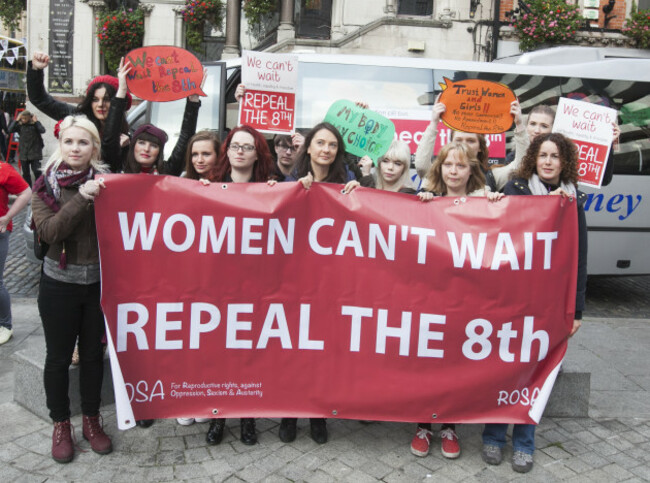
11 IRISH WOMEN who travelled to the UK for an abortion have allowed their photos to be shared online as part of a campaign to highlight the ban on terminations here.
The online campaign, known as the X-ile Project, was launched this morning to coincide with World Human Rights Day.
As part of the project many Irish women who have made the journey to the UK to seek a termination will be going public about their experiences.
Speaking to TheJournal.ie, photographer for the project Katie O’Neill said that “the aim of the X-ile is to de-stigmatise abortion in Ireland”.
“We want to put pressure on the public and the government to take a stance on abortion, to break the silence,” she said.
This is just the first phase – these women who have travelled are represented, but we also want to represent those who can’t travel, who have procured abortion pills or have found other ways to terminate.
These women are exiles. They have been treated like criminals in their own homes.
Currently abortion is banned by law here, although 2013′s Protection of Life during Pregnancy Act allows for a termination in very specific circumstances.
The eighth amendment to the Irish Constitution introduced in 1983, article 40.3.3, gives equal value to the lives of mother and baby. A campaign to repeal that amendment is likely to be a major talking-point of next year’s general election.
As part of today’s launch, the X-ile project will stage a human-chain protest at the gates of Trinity College in Dublin at 12pm.
“It will be a human chain in a figure eight, and we’ll be observing 12 minutes of silence,” says Katie.
The importance of the figure 12 from the project’s point of view is that it represents the average number of Irish women who travel to the UK seeking an abortion each day.
The 11 women that are currently featured on the project’s website were sourced following an open call online for people with such experience.
“We put out an open call and didn’t directly ask women,” says Katie.
We didn’t feel that would be appropriate. It was an open door where women got in touch with us.
Some of the women in the gallery are people we knew, some like Róisín Ingle and Tara Flynn have gone public with their abortion stories already.
She believes that once there are more images on the website more and more women will be encouraged to come forward.
“Plenty of women have been in touch but they aren’t comfortable with going public as they are not fully out about their experiences yet,” says Katie.
That’s the culture Ireland has created for these women.
We just want them to know that we’re there for them.

To embed this post, copy the code below on your site
















have your say