Sign in. It’s quick, free and it’s up to you.
An account is an optional way to support the work we do. Find out more.
Sign in. It’s quick, free and it’s up to you.
An account is an optional way to support the work we do. Find out more.
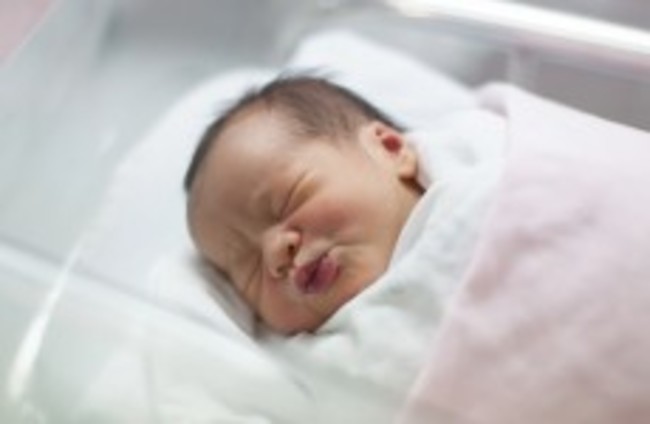
A NEWBORN BABY who died after just 100 minutes became Britain’s youngest organ donor after his kidneys and heart valves were given to adult patients, the National Health Service (NHS) said today.
Teddy Houlston and twin Noah were born in Cardiff, Wales, on 22 April, 2014, but parents Jess Evans and Mike Houlston already knew that Teddy would not survive after being diagnosed with incurable condition anencephaly — in which a baby is born without parts of the brain and skull.
Details of the case only emerged today as part of an NHS campaign to encourage organ donors.
“Following Teddy’s diagnosis we had some time to acclimatise to what might happen, therefore we decided early on as a family that we would want to go ahead with the pregnancy and donate his organs,” said Teddy’s mother Jess (28) in a statement.
Knowing that part of your loved one is living on in someone else is comforting. Teddy’s life had a very important role to play.
Father Mike (30) is quoted by the Daily Mirror as saying that his son had “lived and died a hero”.
“We can not say how proud we are,” he added, saying he hoped the story would “inspire others and help break any taboos people might still hold regarding organ donation.”
In the last 10 years, 39 babies aged younger than two have become organ donors in Britain.
Kidneys begin to function at 37 weeks in the womb, and Teddy’s 9.5 centimetre (3.8 inch) organs were given to an adult suffering from renal failure. The couple have since exchanged letters with the recovered patient.
Paul Murphy, National Clinical Lead for Organ Donation at NHS Blood and Transplant, said he was “in awe at the bravery and selflessness” shown by the parents.
Their determination to donate Teddy’s organs should be an inspiration to us all.
More than 7,000 people are currently on the waiting list for an organ transplant in Britain, the NHS said.

To embed this post, copy the code below on your site












have your say