Sign in. It’s quick, free and it’s up to you.
An account is an optional way to support the work we do. Find out more.
Sign in. It’s quick, free and it’s up to you.
An account is an optional way to support the work we do. Find out more.


HOW YOU HANDLE the first ten minutes of your workday can largely determine how productive and effective you’ll be the rest of the day.
“Getting off on the right foot isn’t just important with relationships. It’s important with the start of any workday, as well — particularly busy ones,” says Michael Kerr, an international business speaker and author of ”You Can’t Be Serious! Putting Humor to Work.”
“The first 10 minutes can also set the tone and your attitude for the day — so it’s imperative that you start it off right, with a clean slate,” he says.
Lynn Taylor, a national workplace expert and the author of ”Tame Your Terrible Office Tyrant: How to Manage Childish Boss Behavior and Thrive in Your Job,” agrees. “Those brief moments can predict your all-important mindset because they’re the first impression of your day ahead,” she says.
The first few minutes at the office can be the most stressful because there’s a level of anxiety about what you may face: A sudden onslaught of urgent emails; last-minute crises or meetings; a call to stop by the boss’s office; a cranky coworker, and so on. It takes greater self-awareness, a positive mindset, and self-training each morning to counter what feels like negative gravity pulling you down as you face overwhelming demands.
Kerr says successful people tend to thrive on routine and habits. “Creating consistent habits is largely what makes them successful,” he explains. “And a key time for habit-forming practices is at the start of the day.”
Here are 18 things the most successful people do in the first 10 minutes of their workday:

“If you arrive and walk into a tumultuous situation with phones ringing and people clambering to see you, you run the risk of starting off on the wrong foot, getting derailed both emotionally and time-wise, and letting other people set the agenda for you,” he explains.
Centering yourself and being fully present will help make sure you manage the day ahead, rather than allowing it to manage you.
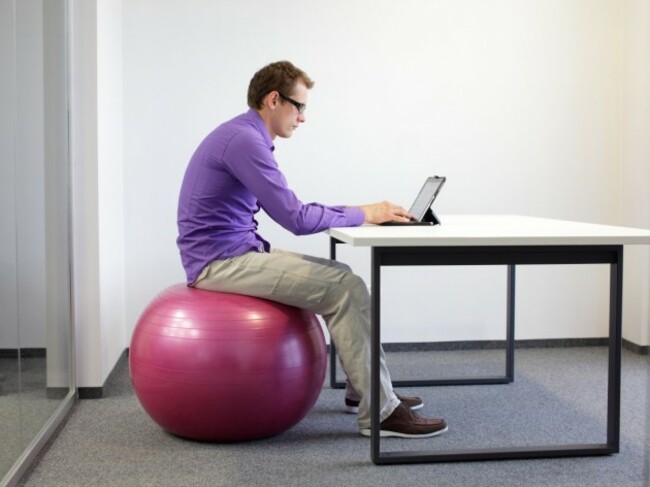
Successful people take a minute at the beginning of the workday to make sure their chair is adjusted properly and the items they frequently access — keyboard, phone, computer mouse — are all in comfortable reach, Taylor says. “Ensure that you have proper lighting,” she adds. “Your day will go well if you have an ergonomic environment that’s functional.”


It’s vital to put the most important tasks first. Though the least desirable but critical projects are easy to put off first thing in the morning, your energy is strongest then, so that’s the ideal time to confront the most difficult assignments.
“This helps them remember the need to stick to the plan and focus on the things that are truly important and not simply urgent,” Kerr explains.
Mentally running through the day “can also help you see where potential challenges may lie with how you’ve scheduled your day, so you can make the necessary adjustments,” Kerr says.
“These may include low-priority calls, unnecessary optional meetings, chatty coworkers, new incoming emails or texts, social media, or other low-priority notifications — all of which challenge you to focus on your day’s plan.”
If your boss needs you, that is clearly an exception. However, if you have crucial calls to make or meetings to attend, give your boss the heads-up.
Being a people pleaser isn’t good for anyone, Taylor explains. “Generally, no one ends up being pleased, as you can’t do your best work with conflicting priorities.”

Taylor says visiting and checking in with your boss and team will help yourself andothers kick-start the day.
“To advance in your career, you just can’t skimp on your people skills,” she says. “You can be the most technically savvy person in the room, but your attitude can amplify or chip away at the value of your technical skills.”
Being friendly first thing in the morning makes the workplace more pleasant for everyone — “and your humanistic approach will be contagious.”
“Many successful people I know have a routine of starting their morning with a simple chuckle — whether it’s from a ‘joke of the day’ email they subscribe to, or some tradition they’ve created to give themselves a chance to laugh each morning,” says Kerr. “Starting their day with a smile has become a must-do for them as a simple way to check their attitude and start with the right frame of mind.”
Taylor notes that studies consistently show that by using your “smile muscles,” your mood becomes more positive. “You don’t need to create a phony smile, but a pleasant expression will have the added benefit of reminding you of your power.”
Taylor says all successful people take advantage of the first few minutes of their workday to get grounded and focused. “Once you’ve adopted the right mindset and routine for success, the rest of the day flows much more smoothly.”
“When I am working for myself, any disappointing outcome is a stressful, unpleasant reflection on me,” he writes. “When I am serving, on the other hand, the work is always intrinsically valuable because of its intention.”
“I emphasize ‘strategically’ because email can quickly become a time-wasting, distracting quagmire,” Kerr explains.
“Checking email can become one of those tasks that make it feel like you are accomplishing things, wherein the danger is you are not attending to priority-action items, and you’re letting others set your agenda.”
Successful people understand this, and are extremely efficient with email, which means the first 10 minutes of the day may be a quick scan and prioritisation of emails to answer later as part of your preplanned day — not necessarily diving into the entire mass at once.

To embed this post, copy the code below on your site
















have your say