Sign in. It’s quick, free and it’s up to you.
An account is an optional way to support the work we do. Find out more.
Sign in. It’s quick, free and it’s up to you.
An account is an optional way to support the work we do. Find out more.
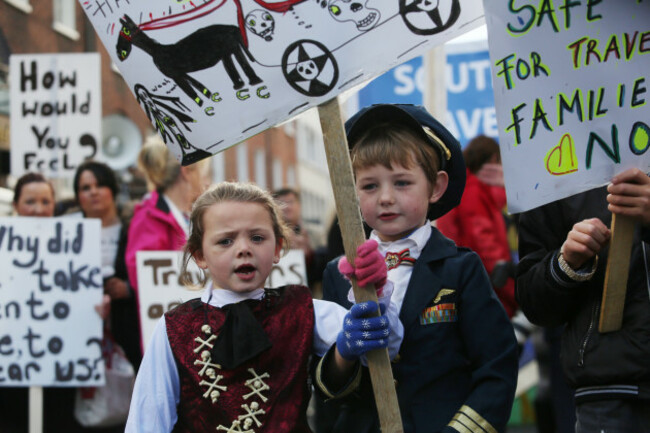
TRAVELLERS’ RIGHTS GROUP have been calling for the Travelling community to be recognised as an ethnic minority in Ireland for many years.
Pavee Point, for example, has said it is necessary if Travellers are “to attain human rights and improved living conditions“.
The organisation states: “The dominant view of Travellers in Ireland has been that Travellers are some sort of deviant settled people. The solution to the Traveller ‘problem’ has been to try to turn Travellers back into settled people again.
In other words, if Travellers are not a distinct community then they should be treated the same as the general population and assimilated into the general population. But in this way their specific needs will not be met. They become invisible to policy makers and service providers and the community suffers.
Meanwhile, the Irish Traveller Movement says Travellers qualify for ethnic minority status because they are “a small Irish community who share the same culture/way of life, language, belief, values and history”. The group believes official state recognition of this ethnicity is “a basic human right”.
Figures show that more than half of Travellers leave school before the age of 15 and only 1% of Travellers attain a third level qualification. Long-term unemployment (84%), health problems and lower life expectancy are also issues of concern. The community has a suicide rate six times the national average.
European pressure
In August 2000, a British court ruled that Irish travellers are a separate ethnic group entitled to protection under the Race Relations Act. A number of European bodies have called for Travellers to receive the same legal status here.
In October 2015, the Irish Human Rights and Equality Commission told the United Nations Human Rights Council that Travellers should be recognised by the Irish government as an ethnic minority.
Last month the United Nations called on Ireland “to conduct and finalise a timely review of the request for recognition of the Travellers as an ethnic group”, as well as “give special emphasis to employment, access to health care and the right to housing in the application of the national strategy on the inclusion of Travellers and Roma”.
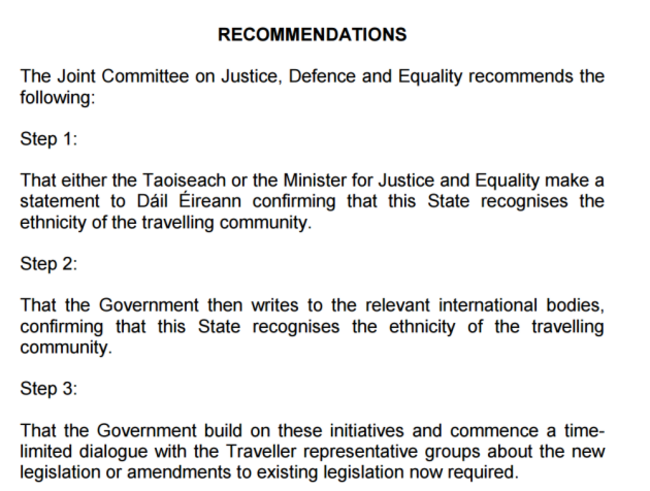
Back in April 2014, the Oireachtas Justice Committee, after examining evidence by various stakeholders, called on the state to recognise Traveller ethnicity.
The committee heard a number of reasons against recognising ethnicity. They included:
The committee said it “found each potential excuse or concern to be unsustainable when tested”, and concluded:
The formal recognition by this state of Traveller ethnicity will not be a magic wand or formula that on its own can address all of [the] challenges [they face]. But it will be a major step in the right direction and a permanent and positive realignment of the relationship between the settled community and the Traveller community in Ireland.
However, not everyone agrees with the stance taken by the committee and believes a strong enough case has not been made for Traveller ethnicity to be granted. Others also believe it would further separate them from other members of society and, as such, create a greater divide.
In November 2014, the then junior minister for equality, Labour’s Aodhán Ó Riordáin, said Traveller ethnicity would be a reality within six months.
The government rejected a Sinn Féin motion calling for the state to grant ethnic minority status to Travellers by 58 to 39 votes the same month.
Ó Ríordáin and Labour colleague Ciara Conway spoke in favour of the proposal, but were absent for the vote.
A new National Traveller and Roma Inclusion Strategy (NTRIS) 2016-2020 is currently being prepared in consultation with relevant stakeholders. It will look at a number of areas including ethnicity, and access to healthcare, education and housing. The Programme for Government says this document will be completed by the end of 2016.
Figures published by the Department of the Environment show that the number of Traveller families living on unauthorised sites was 534 in 2015, up from from 361 in 2013 to 445 in 2014.
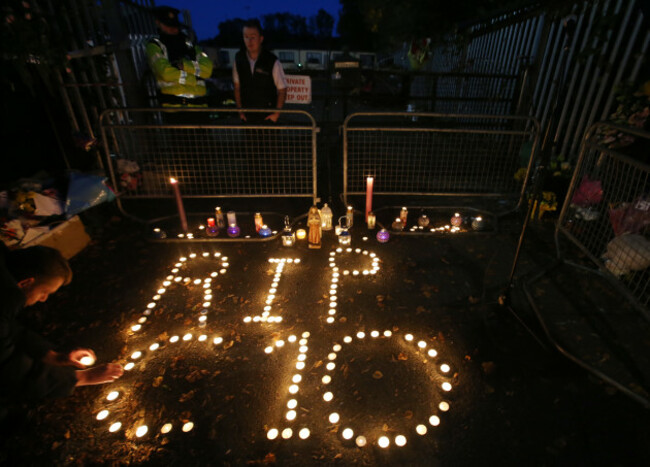
The nation was shocked when ten people, including children, died in a fire at a halting site in Carrickmines in Dublin last October. The safety hazards of a number of halting sites have been highlighted in recent months, with some being closed.
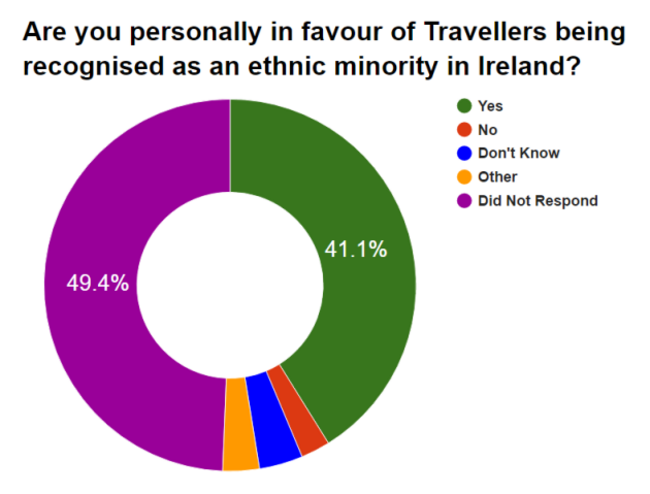
Over the past four weeks, TheJournal.ie asked every TD the following question: Are you personally in favour of Travellers being recognised as an ethnic minority in Ireland?
Each TD was contacted a number of times – via email and telephone. Just over half of TDs replied – 80 out of 158.
The vast majority of respondents want Travellers to be recognised as an ethnic minority: 65 (81%), while four (5%) don’t, six don’t know and five replied without giving a definitive answer.
A full list of what TDs said, and who did and didn’t reply, can be read here. Although some TDs may have voiced opinions on the subject in the past, this survey is not based on previous comments.
The Anti-Austerity Alliance-People Before Profit (AAA-PBP) (6 of 6)
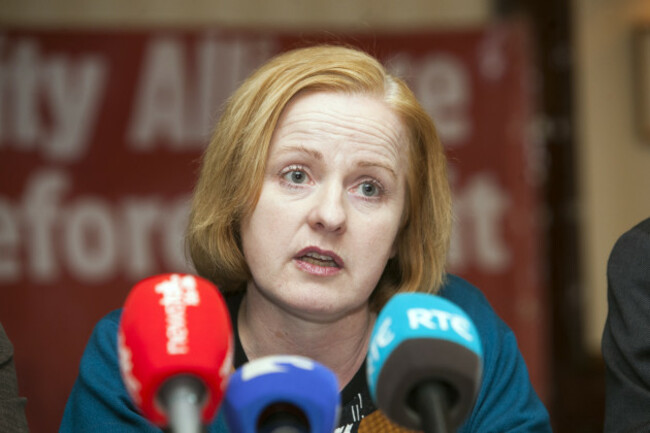
Travellers are a minority group in Ireland that are greatly neglected and subjected to discrimination in housing and many other aspects of life. They deserve full recognition of their identity and culture. The state needs to end the second class treatment of our Travelling community. – Ruth Coppinger
Fianna Fáil (15 of 44)
I am in favour of recognising Travellers as an ethnic minority as they are very badly treated in our society and suffer from very negative attitudes towards them as a community. – Éamon Ó Cuív

There’s an obligation and duty on local authorities to not only recognise them, but ensure there’s a plan to be adhered to in relation to adequate access to services, especially to housing. – Barry Cowen
Fine Gael (5 of 50)
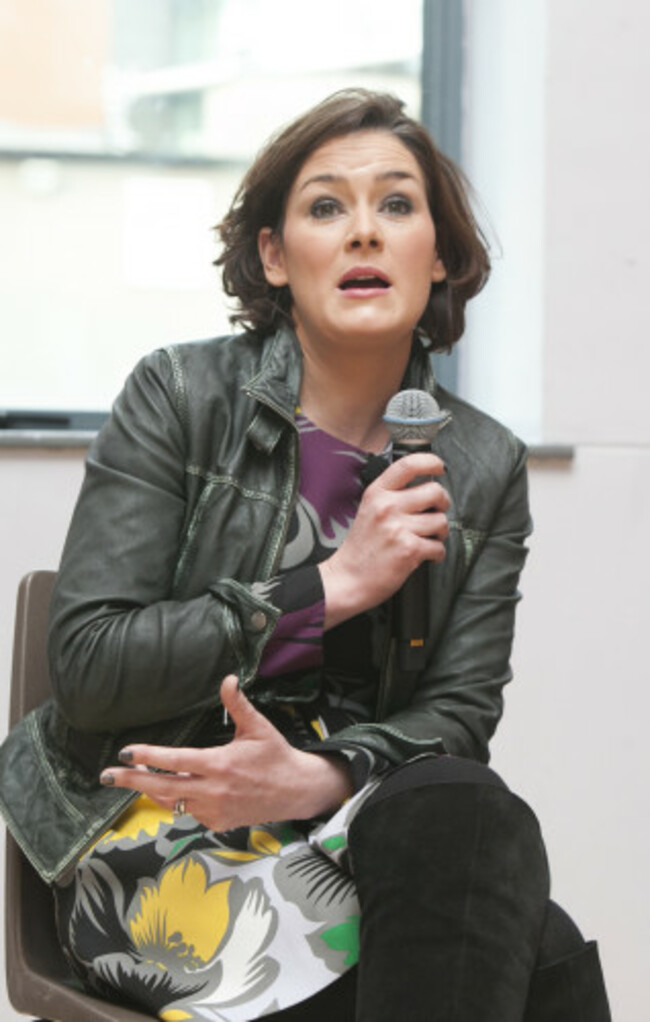
I believe that in keeping with human rights organisations’ recommendations, we must act to bring Ireland in line with international best practice. There are currently significant barriers to access when it comes to culturally appropriate housing, education and healthcare for members of the Travelling community. Recognition of these challenges is one thing, but moving forward with actual legislation is another – and now is the time for action. – Kate O’Connell
In principle, yes – if it’s done in order to establish their rights and responsibilities. More research needs to be done on the topic. – Andrew Doyle
The Green Party (2 of 2)
Travellers are a distinct ethnic group, and a distinct community. Recognising Traveller ethnicity will help to combat the racism and discrimination Travellers face on an ongoing basis, and will mark an important foundation in combatting the social deprivation, poor living conditions, education and employment difficulties that the Travelling community faces. – Catherine Martin
Independents, the Independent Alliance and Independents 4 Change (9)
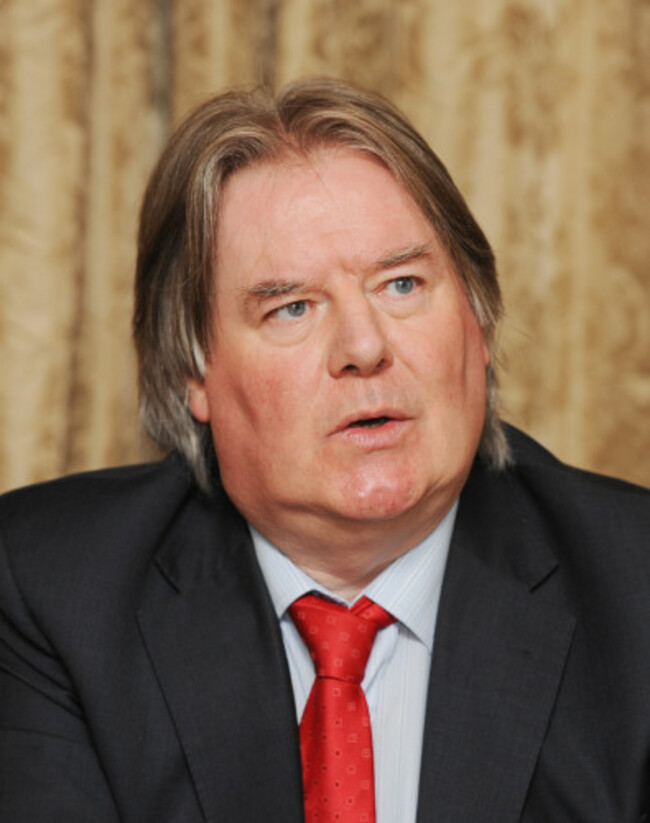
If it is the wish of Travellers. I believe that all citizens and residents should be treated equally. – Tommy Broughan
Labour (5 of 7)
Labour in government outlined the roadmap to achieving formal recognition of a distinct Traveller ethnicity by commencing work on a new National Traveller and Roma Inclusion Strategy. We want to see the Travelling Community formally recognised as a group in Irish society with a unique culture, heritage and ethnic identity. – Labour spokesperson
Sinn Féin (19 of 23)
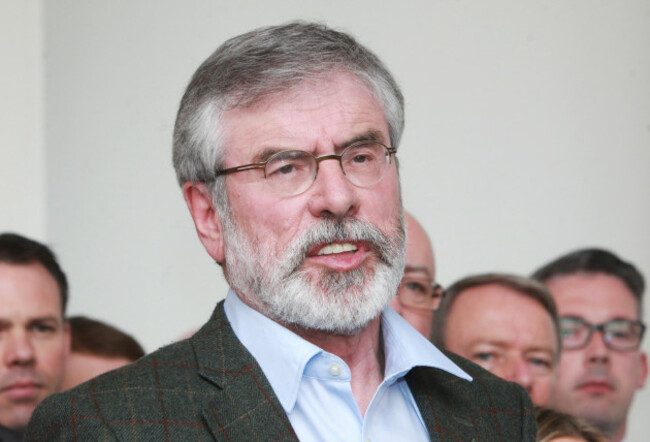
Having Travellers recognised as an ethnic minority will help address the discrimination and marginalisation of Travellers in Irish society as well as recognising Irish Travellers. Travellers are recognised as an ethnic minority in the six counties and in Britain. – John Brady
Social Democrats (3 of 3)
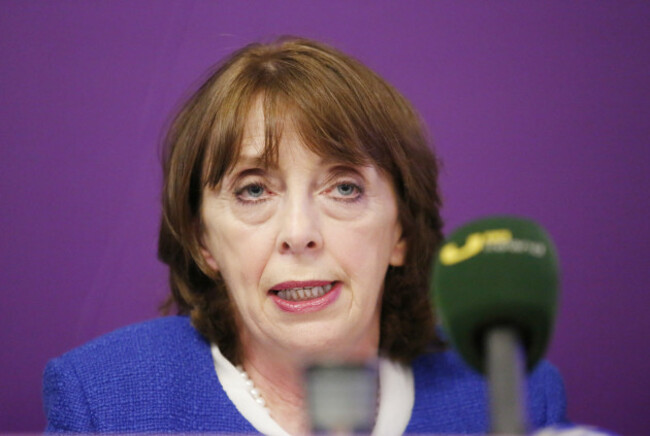
Recognising Travellers’ distinct identity will provide for a far more inclusive approach to tackling some of the issues faced by this community. – Róisín Shortall
Workers and Unemployed Action Group (WUAG) (1 of 1)
Fianna Fáil (2 of 44)
They are as much Irish as I am. – Kevin O’Keeffe
I believe we live in a republic where all our citizens should have equal rights and equal responsibilities. – Robert Troy
Independents
I wouldn’t see the point in singling them out as any different. They are the same as any human being. – Michael Collins
A case has not been convincingly made for the designation of a distinct ethnic status for the Travelling community. – Mattie McGrath
Fine Gael’s David Stanton was appointed junior minister at the Department of Justice and Equality with special responsibility for Equality, Immigration, and Integration in May. The issue of Travellers’ rights falls under his remit.
Speaking at the Traveller Pride Awards earlier this month, Stanton called on Travellers and their organisations to reach out to wider Irish society to explain the case for recognition and win support for it.
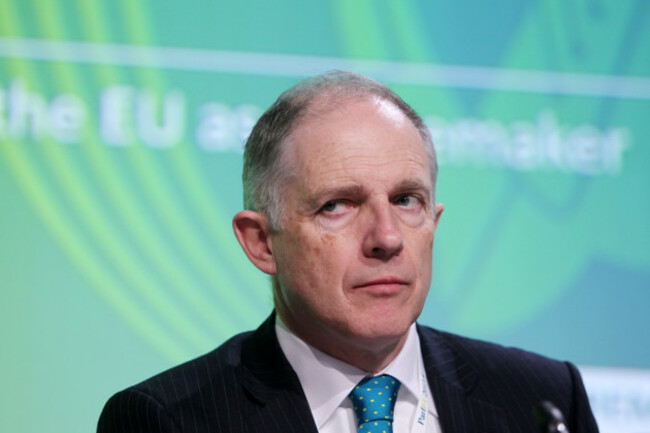
Stanton chaired the Oireachtas committee that called for Travellers to be recognised as an ethnic minority two years ago.
Speaking to TheJournal.ie recently, he said he was new to his brief and could not give a direct answer to our question, describing the situation as “a work in progress” and “extremely sensitive”.
Stanton said “a lot of people don’t understand what [Traveller ethnicity] means”.
There is a need to have a broader debate in society in general as to what it is all about, these kind of things aren’t simplistic.
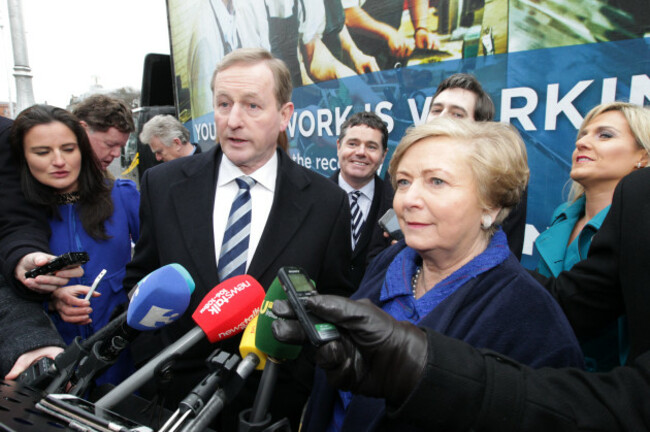
Tánaiste and Minister for Justice Frances Fitzgerald sent us this statement: “The question of recognising Travellers as a distinct ethnic group will be addressed in the context of the new Traveller and Roma Inclusion Strategy, which will be finalised and in place this year.”
A spokesperson for Taoiseach Enda Kenny also referred to the strategy. He said the issue needs to be dealt with in “as holistic and sensitive way as possible”, stressing the importance of living in “an inclusive society”.
Social Protection Minister Leo Varadkar and TD Josepha Madigan also fall into the Other category, again referencing the strategy.
Varadkar added that the new government “will develop the process of budget and policy proofing as a means of advancing equality, reducing poverty and strengthening economic and social rights”.
We will also develop a new Integrated Framework for Social Inclusion, which will outline measures to help eliminate any persisting discrimination on grounds of gender, age, family status, marital status, sexual orientation, race, disability, religion or membership of the Traveller Community.
His Fine Gael colleague Bernard Durkan told us the question can’t be answered with a direct Yes or No, noting: “It needs very careful consideration with a view to achieving the fairest result.”
The following TDs replied ‘don’t know’. Here are their reasons:
Jim O’Callaghan, Fianna Fáil: “I am inclined towards affording Travellers ethnic minority status but, before committing, I need to be more fully informed as to the full range of consequences that might arise from such a move.”
Jackie Cahill, Fianna Fáil:
Travellers are treated very well where I live (Tipperary). They need to be integrated into society, I’m not sure if ethnicity is a good thing.
Alan Farrell, Fine Gael: “I do not yet know enough about the implications of such recognition and the implications for our laws, budgets or public policy to make a determination. I am also unaware if such recognition would require constitutional protection or simply a legislative change/addition.”
Junior Minister Helen McEntee and her Fine Gael colleagues Maria Bailey and Tony McLoughlin also responded ‘don’t know’, but did not elaborate.
Fianna Fáil
Fine Gael
Independents, the Independent Alliance and Independents 4 Change
Labour
Sinn Féin
- With reporting by Róisín Nestor

To embed this post, copy the code below on your site












have your say