Sign in. It’s quick, free and it’s up to you.
An account is an optional way to support the work we do. Find out more.
Sign in. It’s quick, free and it’s up to you.
An account is an optional way to support the work we do. Find out more.
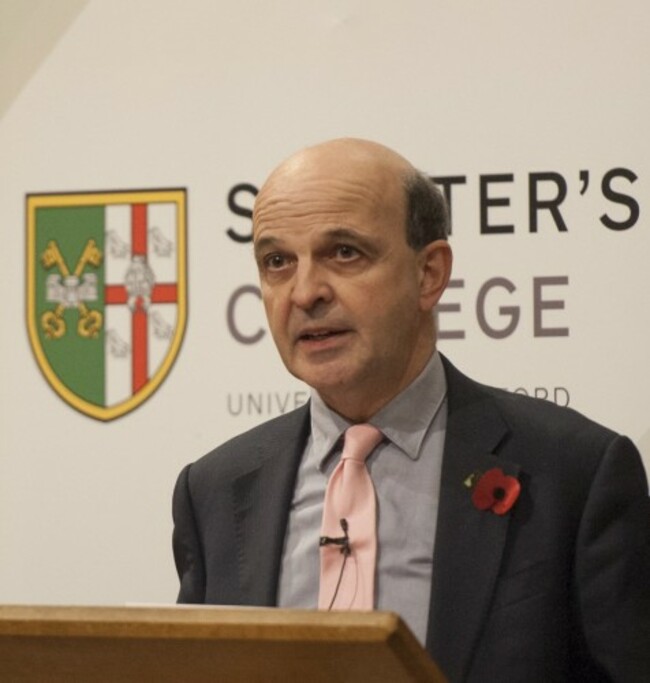
THE BBC’S BREXIT coverage has been “distinctly lacking in curiosity and depth” about Ireland, former Radio 4 controller Mark Damazer has said.
Writing in Propsect Magazine today, Damazer has said that BBC interest in Ireland waned after 1998 and that the broadcaster “missed the Irish dimension” of the Brexit campaign.
“The BBC Ireland correspondent’s job was once a big deal—on air almost every day. Sometime after the Good Friday Agreement, interest waned,” writes Damazer.
The main story—violence and peace—had gone.
“That may be why the BBC missed the Irish dimension of Brexit in the campaign and for a long time afterwards”.
Once Prime Minister Theresa May had her outline deal drawn up with the EU in late 2017…”it was greeted as a Westminster triumph with only minor genuflections towards the Irish conundrum that it left nakedly unresolved,” Damazer has said.
As a result, “Dublin-based journalism got barely a look in. Overall the coverage has been distinctly lacking in curiosity and depth about both the Irish economy and Irish politics”.
‘A decision easily reached’
Similarly, Damazer writes that coverage of Germany has “never been a big deal” for the BBC except for the fall of the Berlin Wall in 1989 and that tensions between the UK and Germany have been “left up in the air”.
The arguments fly but the reporting from Germany has never really taken off.
Damazer was BBC Radio 4 controller between 2004 and 2010. Five year later, he joined the BBC Trust – the broadcaster’s governing body – which had oversight of the BBC’s editorial performance during the Brexit referendum.
In today’s essay, ‘How Brexit broke the BBC’, he also critcises the Trust’s decision to “give broadly equal time” to the Remain and Leave campaigns.
“It was a decision easily reached, and yet it sowed the seeds of some of today’s difficulties”.
“Because many senior Remainers, in particular, were unprepared for the sheer volume of Brexit voices that the half-and-half policy would introduce to the airwaves”.
Britain is set to leave the European Union on 29 March.
EU Chief Negotiator Michel Barnier has suggested, however, that European leaders would be open to a short “technical” delay in Britain’s departure from the EU to give the British parliament time to formally ratify a final withdrawal deal.

To embed this post, copy the code below on your site













have your say